
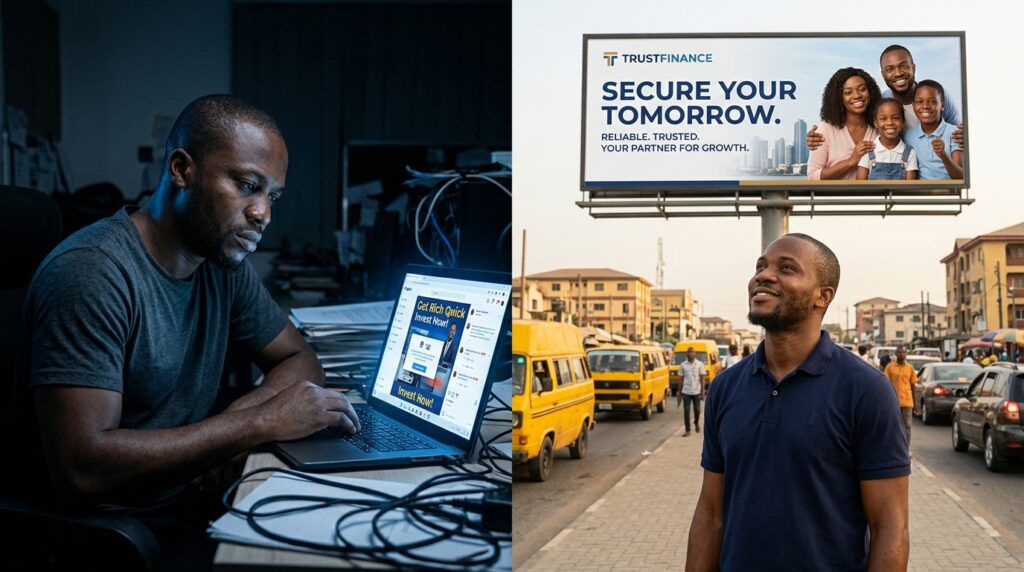
Your digital ads are running. Your targeting is sharp. Your creative looks good. But your potential customers are scrolling past them without a second thought, because they no longer know what to believe online.
This is not a small problem. It is a crisis that is quietly making digital advertising less effective by the day. And most Nigerian brands are sitting in the middle of it, wondering why their conversion rates keep dropping despite spending more on online ads.
The answer is not a better headline or a bigger budget. The answer is trust. And in 2026, billboard advertising builds more of it than anything you can run on a screen.
The Online Trust Crisis Is Real, and It Is Getting Worse

We are living in a moment where AI can generate a product photo, write a five-star review, create a fake brand website, and run a convincing Instagram ad, all in under ten minutes and for nearly zero cost.
Nigerian consumers know this. They have been burned by it. Fake products ordered on Instagram. ‘Verified’ companies that disappeared after payment. Testimonials that sounded too good to be true, because they were.
The numbers confirm what your gut already suspected. According to a 2025 report on Nigeria’s digital marketing landscape by Krestel Digital, 81.1% of Nigerian consumers already flag concerns about fake content online. That is more than 8 in every 10 of your potential customers, actively suspicious of what they see on their screens.
And globally, the situation is no different. Research by CivicScience found that only 12% of consumers would be more likely to buy from a brand if they knew it used AI in its advertising. Meanwhile, 37% would actually be less likely to buy. The very technology brands are using to save money on advertising is quietly destroying the trust that advertising is supposed to build.
Why Nigerian Consumers Do Not Trust Online Ads the Way They Used To
To understand why billboard advertising builds more trust than online ads in Nigeria today, you first need to understand why online ads have lost so much credibility.
Anyone Can Run an Online Ad
This is both the strength and the fatal weakness of digital advertising. A startup with no track record, a scammer with a stolen product image, and a legitimate brand with ten years of history all look roughly the same in a Facebook feed.
There is no way for a Nigerian consumer scrolling through their phone to tell the difference between a genuine brand and a fraud, because both use the same platforms, the same targeting, and increasingly, the same AI-generated content.
When everything looks professional, nothing looks trustworthy. That is the trap Nigerian digital advertising has walked into, and it is not one that better creative will solve.
AI Has Made the Problem Impossible to Ignore
In the past, a fake brand at least required some effort to look convincing. A real photo, a real product, a real person writing copy. Today, none of that is necessary.
Generative AI tools can produce photorealistic product images of non-existent products. They can write persuasive ad copy indistinguishable from human writing. They can create customer testimonials, brand logos, and entire websites in hours.
The Nigerian consumer who gets burned by this once becomes permanently sceptical of every digital ad they see after.
Research from the Nuremberg Institute for Market Decisions found that simply labelling an ad as AI-generated makes people see it as less natural and less trustworthy, which lowers their willingness to research the brand or make a purchase. AI is not just failing to build trust. It is actively destroying it.
Why Billboard Advertising Builds Trust That Online Ads Cannot
Now here is where it gets interesting. While digital advertising is drowning in a crisis of credibility, billboard advertising is experiencing something almost opposite.
You cannot fake a Billboard
This is the single most important sentence in this article. Read it again: you cannot fake a billboard.
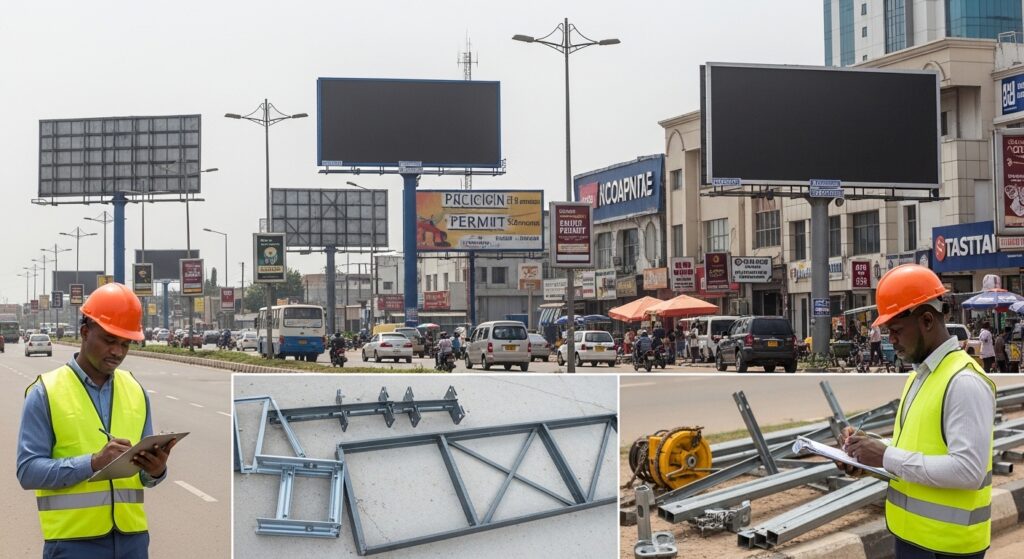
A scammer cannot generate a billboard with AI. A fly-by-night business cannot run a billboard campaign because billboard advertising requires real money, real permits, real planning, and real physical presence.
The ARCON vetting process, the LASAA permits in Lagos, and the FCTA approval in Abuja all of these create a compliance barrier that filters out the fraudulent operators that have flooded digital platforms.
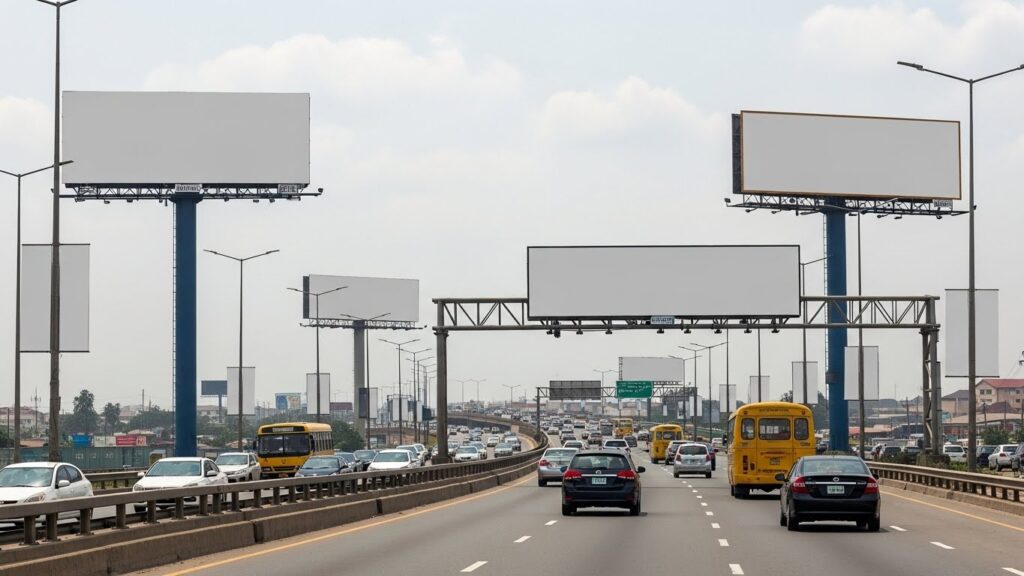
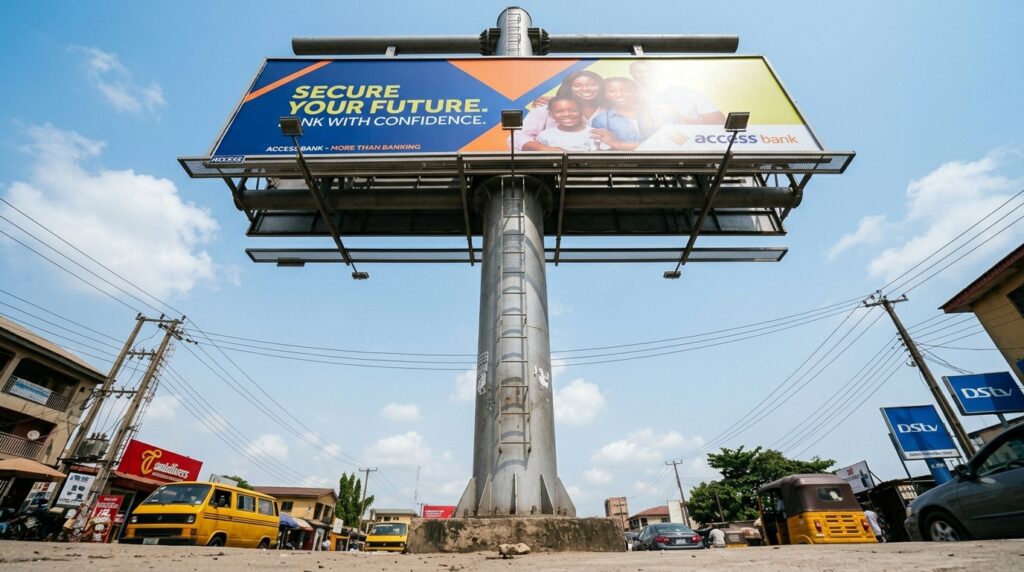
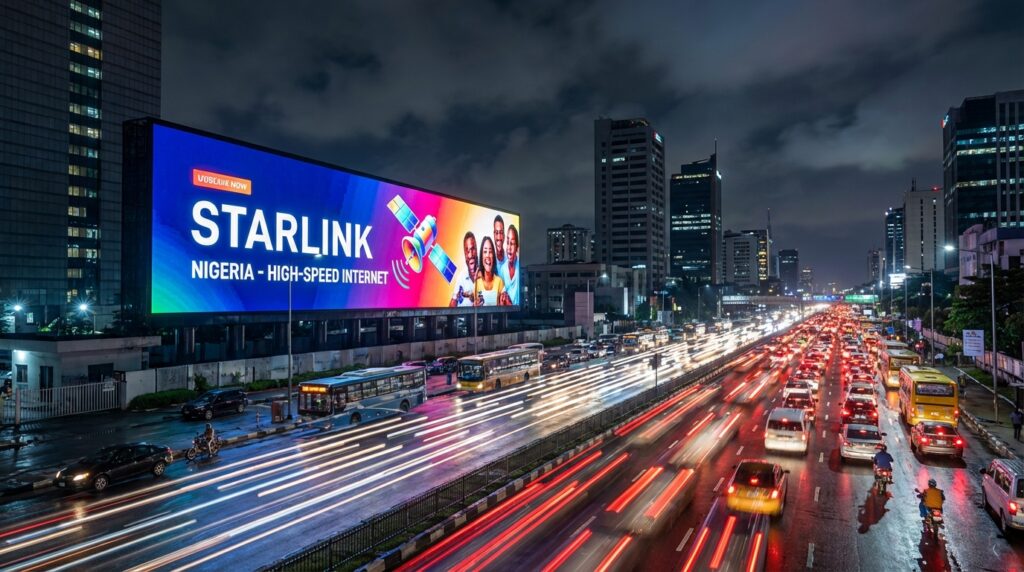
When a Nigerian consumer sees a brand on a large billboard on the Lekki Expressway or along Airport Road in Abuja, their brain processes a signal that no digital ad can send: this company spent real money to be here. That is not ‘nothing’. That is ‘legitimacy’.
Billboard Advertising Credibility Is Backed by Research
This is not a feeling. Nielsen’s consumer trust data puts outdoor advertising at 57% consumer trust globally. Compare that to online banner ads at 42%, social media ads at well under 40%, and online pop-ups at the very bottom of every trust ranking.
The five most trusted advertising channels in research consistently include traditional media: print, outdoor, television, and radio. The bottom eight are consistently digital. This is not about nostalgia for old media. It is about the psychology of physical presence.
Billboards exist in the physical world, the same world your customer trusts, walks through, drives through, and lives in. When your brand is on a billboard in that world, it borrows credibility from the environment itself. It feels real because it is real.
Read more: How Outdoor Advertising Builds Trust for New Brands in Nigeria
The Mere Exposure Effect: Why Repetition on a Billboard Works Differently
In psychology, the mere exposure effect describes a well-documented phenomenon: people develop a preference for things they see repeatedly, even when they are not consciously aware of it.
For digital ads, this effect is undermined by banner blindness and ad fatigue. People stop seeing digital ads because they have trained themselves to ignore them. But a billboard on the daily commute route cannot be ignored. It registers subconsciously every single time, building brand familiarity that eventually converts to trust.
Research cited by the Out of Home Advertising Association of America confirms that billboard exposure creates memory traces lasting three to seven days per single exposure.
Repeated exposure during regular commute routes builds long-term brand associations. That is a fundamentally different trust-building mechanism than a social media impression that disappears in 0.3 seconds.
What This Means for Your Brand’s Marketing Strategy
If you are a brand manager or business owner in Nigeria, the implication of everything above is straightforward: the brands that are building the most durable trust right now are not the ones spending the most on Instagram ads. They are the ones that are showing up in the physical world where their customers live.
Billboards Give Your Digital Ads a Credibility Boost

Here is something most brands do not realise: billboard advertising does not just replace digital trust. It amplifies it.
Research from the OAAA (Out of Home Advertising Association of America) found that more than two-thirds of consumers conduct an online search after seeing a billboard.
When someone sees your billboard on their commute and then encounters your Instagram ad that evening, they do not see two separate ads. They see one consistent brand that is everywhere, and that consistency is exactly what trust looks like to the Nigerian consumer.
Your digital campaign works harder when a billboard has already done the credibility work. The consumer who arrives at your website after seeing your billboard is already primed. They have already decided you are legitimate before they read a single word of your copy.
Read more: Billboard Advertising vs. Social Media Advertising in Nigeria: Which One Should You Choose?
The AI Era Makes Outdoor Advertising More Valuable, Not Less
There is a tempting logic that says as AI gets better, advertising will become cheaper, and digital will win. This logic misses the point entirely.
As AI flooding of online platforms continues, the value of any advertising format that cannot be faked goes up. A billboard is the opposite of AI. It is physical, verifiable, expensive to produce, and impossible to generate. In an environment where trust is the scarcest resource in marketing, outdoor advertising becomes the premium channel.
The brands that understand this in 2026 are building a competitive advantage that purely digital brands cannot replicate with any amount of budget or targeting sophistication.
You simply cannot buy Nigerian consumer trust with another Instagram ad. But you can earn it with a well-placed billboard.
Which Brands Benefit Most from Billboard Advertising in Nigeria?
Billboard advertising builds trust for every type of business in Nigeria, but certain categories see the most direct impact.
- New brands launching in a market where they are unknown: Physical visibility establishes legitimacy before any other touchpoint.
- Financial services and fintech companies: Where trust is the primary barrier to adoption, outdoor advertising credibility is direct conversion value.
- Real estate developers: Nigerian property buyers are among the most cautious in the world. A billboard on the Lekki Expressway does work that no Instagram ad can match.
- E-commerce brands: Jumia did not become a household name through digital ads alone. Their bold outdoor advertising made Nigerians believe the company was real enough to hand over their money.
- Healthcare and pharmaceutical brands: Medical decisions require maximum trust. Physical brand presence in the real world is a non-negotiable trust signal for this category.
Read more: Billboard Advertising for E-Commerce Brands in Nigeria
Frequently Asked Questions
Does billboard advertising still work in the age of digital marketing?
Not only does it still work, but it also works better relative to digital advertising than it did five years ago. As digital ad trust has declined because of AI-generated content, fake reviews, and platform saturation, the comparative trust advantage of outdoor advertising has increased. Billboards are now one of the most cost-effective trust-building tools available to Nigerian brands.
How does billboard advertising build brand trust in Nigeria?
Billboard advertising builds brand trust in Nigeria through three mechanisms. First, it signals financial commitment: any brand visible on a major Nigerian road has invested real money, which filters out fraudulent operators. Second, it creates physical presence in the real world, which Nigerian consumers instinctively trust more than the digital world. Third, repeated exposure through daily commute routes builds brand familiarity through the mere exposure effect, and familiarity consistently precedes trust.
Is billboard advertising better than digital advertising for Nigerian brands?
They serve different purposes, and the most effective Nigerian brands use both. However, billboard advertising does something digital advertising currently cannot: it builds immediate credibility and trust before the consumer has looked you up, visited your website, or read a single review. In a market where online scepticism is at an all-time high, that first credibility signal is worth more than any digital impression.
Can a small Nigerian business afford billboard advertising?
Yes. Static billboards on secondary roads in most Nigerian cities start from under N200,000 per month. When you factor in that a single well-placed billboard builds brand trust that lowers your customer acquisition cost across every other channel, the return on investment often exceeds what brands get from equivalent spend on digital platforms. The key is choosing the right location for your specific audience.
Read more: How to Calculate Billboard Advertising Cost in Nigeria
Conclusion
The Nigerian marketing landscape has changed. AI has flooded online platforms with content that looks professional but means nothing. Consumer trust in digital advertising is lower than it has ever been. And the brands that are still trying to solve a trust problem with more digital spend are running in the wrong direction.
Billboard advertising builds trust that online ads in Nigeria simply cannot replicate right now. Not because digital is dead, but because physical presence in the real world is the one signal that AI cannot fake and Nigerian consumers cannot ignore.
Your brand deserves to be believed. Put it somewhere that makes it impossible to doubt.
Ready to build real trust for your brand? Talk to the Oxbillbords team about billboard advertising options across Nigeria.