

You have been there. You see a product on Instagram. The photos look amazing. The reviews are glowing. The page looks professional. You pay. And then, nothing. Or worse, something arrives that looks nothing like what was advertised.
Welcome to the Nigerian online experience in 2026, where every brand looks real, every ad looks convincing, and the only way to know if a company is legitimate is to lose your money first.
But there is one place where this problem simply does not exist. One place where a fake brand cannot show up, no matter how much money they pour into AI tools and stolen photos. That place is the billboard.
Why It Is Getting Harder to Trust Anything You See Online
Let us be honest about what is happening online right now.
AI tools can now generate product photos of non-existent products. They can write customer reviews that sound completely genuine. They can create an entire brand, complete with a logo, a website, and a social media presence, in a single afternoon. And they can run paid Instagram and Facebook ads pushing all of it directly into your feed.
You are not imagining the scepticism you feel when you see an unfamiliar brand online. You are responding rationally to a real threat.
The Numbers Are Not Comfortable
A 2025 survey by CivicScience found that only 12% of consumers globally would be more likely to buy from a brand if they knew it used AI in its advertising. Almost four times that number said they would be less likely to buy.
Research from Deloitte’s 2024 Consumer Survey found that nearly 70% of consumers are concerned AI-generated content will be used to deceive them. Not some consumers. Not a minority. Seven in every ten people are sitting with their phone in hand, looking at the same feeds you are looking at, already suspicious of what they see.
In Nigeria specifically, this scepticism is not new. The combination of internet fraud, fake products, and online scams has made Nigerian consumers some of the most naturally cautious buyers in the world. AI has simply given fraudsters better tools, and Nigerians know it.
So, How Do You Actually Know a Brand Is Real?
This is the question that matters. When everything can be faked online, what signals can Nigerian consumers actually trust?
Word of mouth from people you know remains powerful. A friend who actually used a product and recommends it is still one of the strongest trust signals available. But your friends cannot have tested every brand you encounter online.
Reviews help, but they can be bought, fabricated, or generated by AI. Verification badges can be acquired. Professional websites can be built for next to nothing. The traditional trust signals of the online world are not what they used to be.
The One Signal That Cannot Be Faked
Think carefully about this question: have you ever seen an AI-generated billboard?
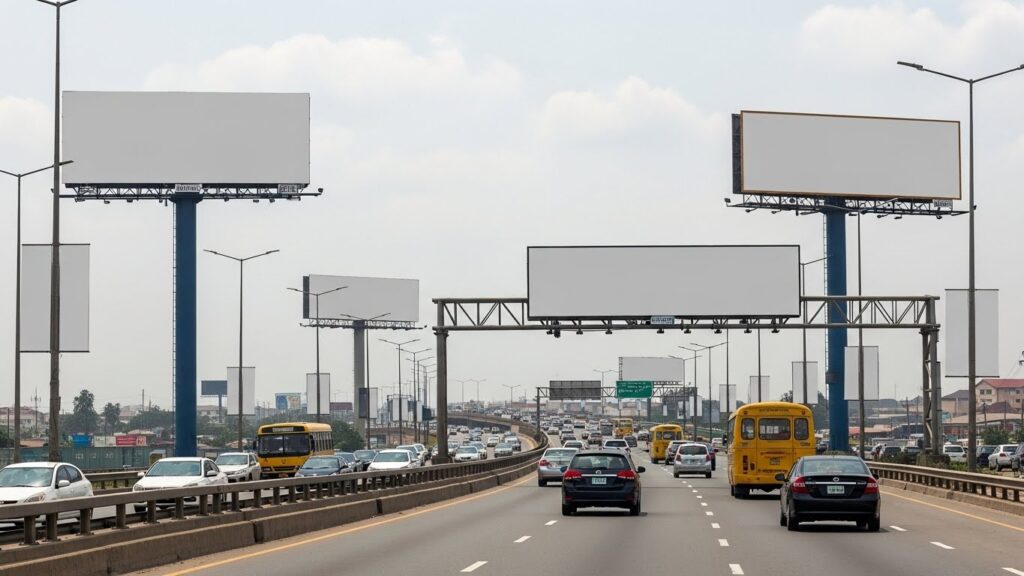
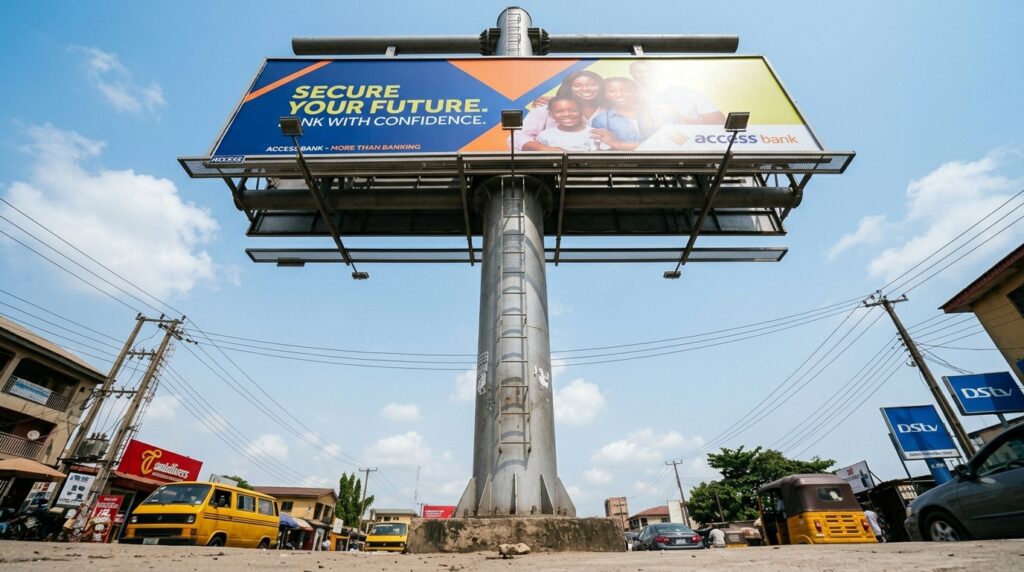
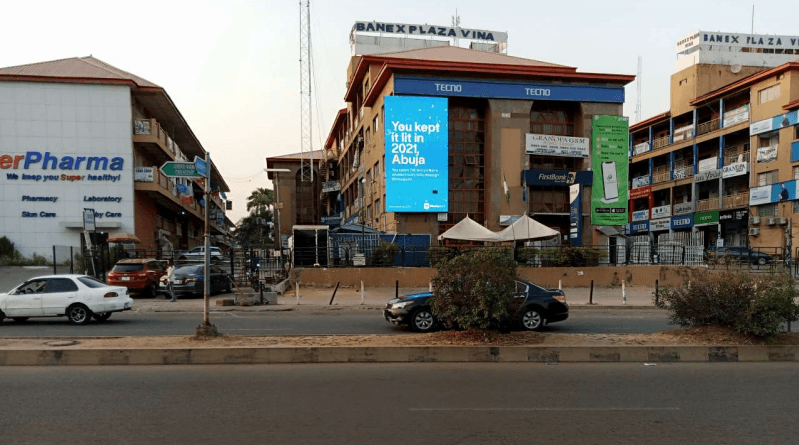
Not a digital screen on a website, nor an animated ad on YouTube. An actual, physical billboard. Standing on a pole. On a real Nigerian road, in your city.
You have not. Because it is impossible. And that impossibility is exactly why billboard advertising still builds trust that no online ad can match.
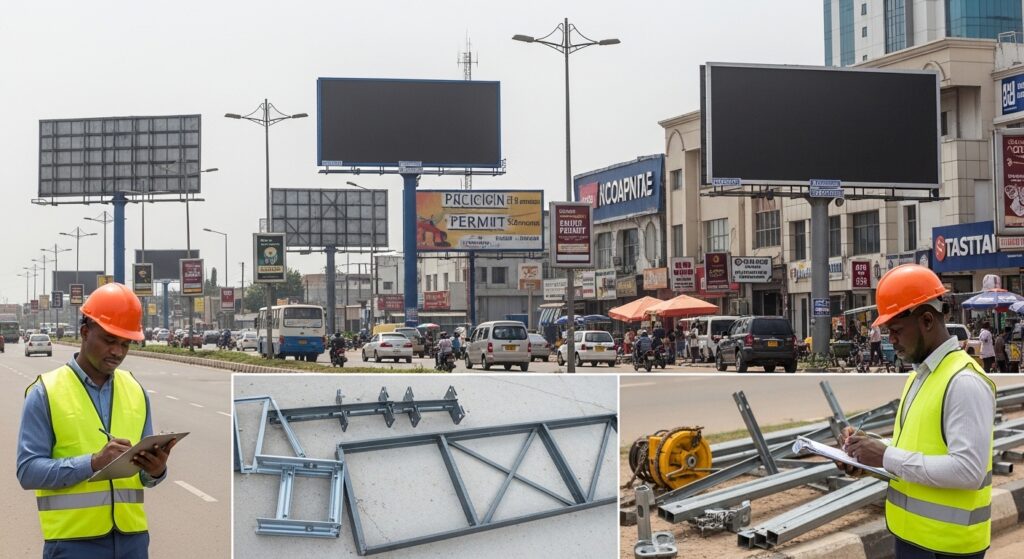
To put up a billboard in Nigeria, a brand needs real money for the site rental. Real money for printing and installation. ARCON approval from the Advertising Regulatory Council of Nigeria for the creative. State-level permits from agencies like LASAA in Lagos or the FCTA in Abuja. A vendor relationship that requires a real business to exist.
No scammer goes through all of that. No AI tool can generate a physical structure on a Lagos road. The billboard is, by its very nature, a proof of legitimacy that no digital ad can replicate.
Read more: How Outdoor Advertising Builds Trust for New Brands in Nigeria
Why Your Brain Already Trusts Billboards More Than Ads
Here is something interesting: you did not need to be told that billboards are more trustworthy. Your brain already knows.
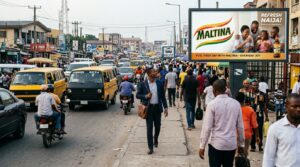
When you see an Instagram ad from a brand you have never heard of, you feel a small instinctive hesitation. Something says: verify this first. But when you see the same brand on a large billboard on your daily commute, something shifts. The hesitation reduces. The brand feels more real.
This is not irrational. It is exactly the right response. The physical world operates by different rules than the online world. Things in the physical world cost money, take effort, require permissions, and cannot disappear overnight. Your brain knows this and uses physical presence as a shortcut for legitimacy assessment.
Research Confirms What You Already Feel
Nielsen’s global consumer trust research places outdoor advertising at 57% consumer trust. For context, social media ads rank significantly lower. Online pop-up ads are the least trusted advertising format tested, across every demographic, every year.
The five most trusted advertising channels in every major trust study are consistently traditional formats, including outdoor. This is not a coincidence. It reflects the same instinct you already have: physical things are harder to fake than digital things, and trust follows the difficulty of faking.
The Mere Exposure Effect: Why Seeing a Billboard Every Day Changes How You Feel About a Brand
There is a psychological phenomenon called the mere exposure effect. It describes something that has been consistently proven in research: the more you see something, the more you tend to like and trust it, even when you are not consciously paying attention.
This is why brands run billboards on your commute route, not just in high-traffic areas generally. They want to be in your visual environment every day. Not to interrupt you, but to become familiar. And familiarity, over time, becomes trust.
Digital ads struggle to create this effect because most people have learned to filter them out unconsciously. But a billboard on your daily route cannot be filtered. By the time you are ready to buy, the brand already feels known.
How Nigerians Use Billboards to Verify Brands
You may not have thought about it this way before, but you have almost certainly done this.
You see an unfamiliar brand online. You feel uncertain. Later, you pass a billboard for the same brand on your commute. Something clicks. You search for the brand name, visit the website, and you patronise them.
The billboard did not convince you in one moment. It confirmed what the online ad could not: that the company is real enough to put its name on a public road.
This Is Also How Smart Nigerian Buyers Verify Brands
Experienced Nigerian consumers increasingly use physical visibility as a verification tool for brands they encounter online. If a brand has a billboard in a credible location, that outdoor advertising presence is taken as a signal that the company has real infrastructure, real investment, and real accountability.
A brand that only exists on Instagram can disappear tomorrow. A brand with a billboard on the Lekki Expressway has made a commitment that is much harder to walk away from. Nigerian consumers understand this intuitively, even when they cannot articulate it.
Read more: Billboard Advertising vs. Social Media Advertising in Nigeria: Which One Should You Choose?
What to Look for When a Brand Has Billboard Advertising in Nigeria
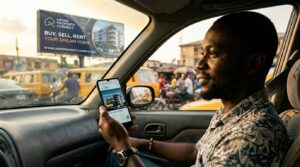
Not all outdoor advertising is created equal. Here are the things that tell you a brand’s billboard presence is genuine and not just a one-off attempt to appear credible.
Location Says a Lot
A billboard on a prime road, such as the Lekki-Epe Expressway, Airport Road in Abuja, or Aba Road in Port Harcourt, costs real money. A brand willing to pay for a prime location is a brand that believes it will still be in business long enough to get a return on that investment.
Secondary road placements are also legitimate, but a brand running campaigns on multiple high-traffic routes across multiple cities is demonstrating scale and commitment that only real businesses can sustain.
Duration Matters
A billboard that goes up for one month and disappears could be a one-time credibility attempt. A brand with consistent outdoor advertising presence across multiple months or years, the kind you see on the same road every day of your commute, is demonstrating the kind of sustained investment that scam operations cannot maintain.
Creative Quality and Message Consistency
Legitimate brands invest in quality billboard creative. Their outdoor advertising looks consistent with their website, social media, and other brand touchpoints. If you see a billboard and then visit the brand’s Instagram, and it all matches, that consistency is a real signal. Fraudulent operations rarely have the discipline or investment to maintain that kind of brand coherence.
Does This Mean You Should Not Trust Anything Online?
No. And this is an important point to make clearly.
Not everything online is fake. Not every Instagram brand is a scammer. Digital advertising, done properly, by legitimate Nigerian businesses with real products and real customer service, is still a valid and useful channel.
The point is not that online is bad and offline is good. The point is that in 2026, the online environment has become so saturated with AI-generated content and sophisticated fraud that Nigerian consumers need additional verification signals before they can feel confident spending their money.
Billboard advertising is one of the strongest of those signals. It does not replace your online research. It supplements it, and in many cases, it is the final piece of information your brain needs to move from consideration to purchase.
Read more: 9 Billboard Advertising Examples in Nigeria
Frequently Asked Questions
How can I tell if a Nigerian brand is legitimate before buying online?
Beyond reading reviews and checking social media, look for physical presence signals. Does the brand have an outdoor advertising presence? A verifiable physical address? A registered business name you can look up? These offline verification signals are harder to fake than any digital credential and are increasingly important tools for Nigerian consumers navigating a market full of AI-generated content.
Are brands that advertise on billboards always trustworthy?
Billboard advertising is a strong trust signal but not a guarantee. A brand that has invested in outdoor advertising has cleared a higher bar than one that only runs social media ads, because of the cost, permits, and physical logistics involved.
Why do Nigerian consumers distrust online ads so much?
The combination of a history of internet fraud, the rise of fake product sellers on social media, and now the explosion of AI-generated advertising content has created a genuinely rational scepticism among Nigerian consumers.
Does seeing a billboard actually make me more likely to trust a brand?
Yes, and the research is consistent on this. Nielsen’s data places outdoor advertising at 57% consumer trust globally.
Conclusion
The Nigerian online space in 2026 is noisy, crowded, and increasingly difficult to navigate as a consumer. AI tools have given everyone, including fraudsters, the ability to look professional. Trust, in that environment, has become genuinely hard to find.
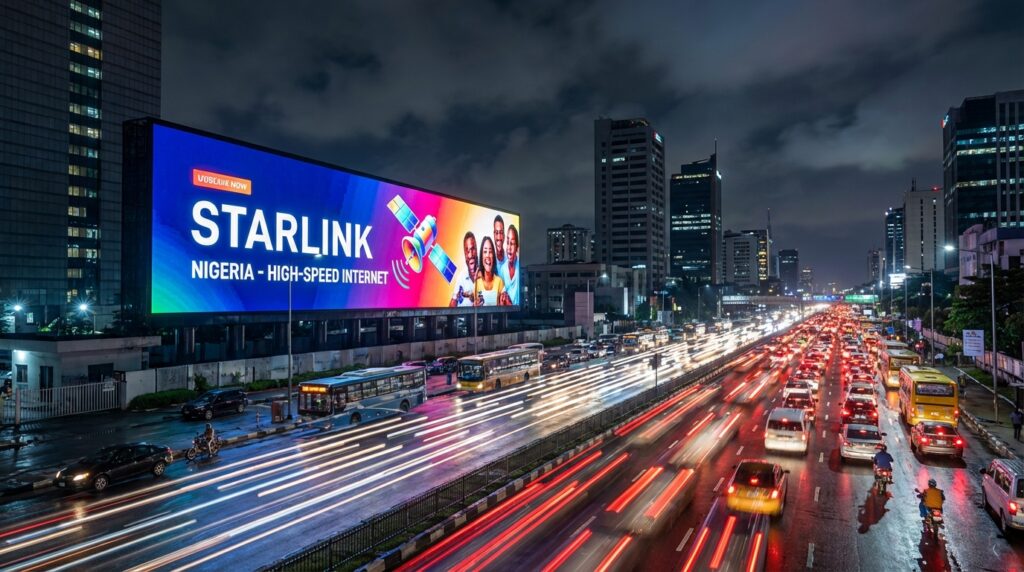
But it has not disappeared. You can still find it. Look up from your phone the next time you are stuck in traffic. The brand on that billboard has done something that no AI tool can do for a fake company: it has shown up in the real world, with real money, on a real road, in your real city.
That is still what trust looks like. And it always will be.