
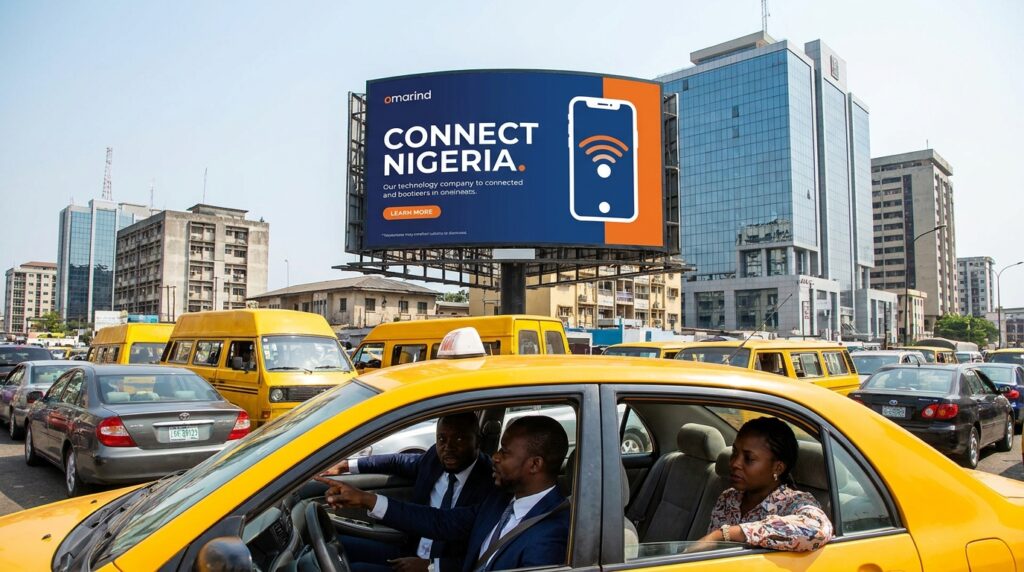
Outdoor advertising is often described as the world’s oldest media format. But in 2026, it is also one of the fastest-growing. The numbers behind out-of-home (OOH) advertising tell a compelling story, one that Nigerian brands, marketers, and business owners should pay close attention to before deciding where to invest their next advertising budget.
This article pulls together the most relevant outdoor advertising statistics for 2026, covering global growth, Nigerian market trends, audience behaviour, and the increasingly powerful relationship between billboards and digital media.
The Global OOH Market Is on a Strong Growth Trajectory

The global out-of-home advertising industry has been growing consistently, and 2026 is no exception. According to the Outdoor Advertising Association of America (OAAA), the global OOH market surpassed $40 billion in annual revenue in 2025 and continues to grow, driven by the expansion of digital OOH (DOOH) screens, stronger advertiser demand, and more sophisticated audience measurement.
Key global figures worth knowing:
- OOH is one of the only traditional advertising categories that has grown uninterrupted over the past decade.
- Digital OOH now accounts for 30 to 40 percent of total OOH revenue in mature markets like the US, UK, and Australia.
- The largest OOH markets globally are the United States, China, the United Kingdom, and Germany.
For Nigeria, where digital billboard infrastructure is still expanding and physical OOH inventory is extensive, these global trends are a direct preview of where the local market is heading. The growth is not a future possibility; it is already happening.
Billboard Advertising Delivers Exceptional Audience Recall
One of the most compelling statistics for any brand evaluating outdoor advertising is recall. Unlike digital ads that can be skipped, blocked, or scrolled past in under a second, a well-placed billboard stays in front of its audience for extended periods every day.
Research from Nielsen consistently shows that more than 60 percent of people who have seen an OOH advertisement in the past month took some form of follow-up action.
These actions include searching online for the brand, visiting a store, or telling someone else about the product.
Additional recall findings that matter for Nigerian advertisers:
- Billboard advertising generates an average of $5.97 in sales for every $1 spent, according to Nielsen ROI data.
- OOH produces the highest reach per naira of any single medium when measured over a full campaign period.
- Repeated daily exposure builds brand familiarity significantly faster than episodic digital impressions.
These dynamics apply as powerfully in Lagos and Abuja as they do in New York or London. The underlying mechanics of outdoor advertising, which are sustained visibility, location relevance, and the inability to skip or block a well-placed board, are universal.
Outdoor Advertising Drives Online Search Activity
One of the most important and underappreciated findings in OOH research is the direct connection between billboard exposure and Google search behaviour. A joint study by the OAAA and Google found that 46 percent of people who saw an out-of-home advertisement searched online for the brand within 24 hours.
For Nigerian brands running SEO campaigns alongside outdoor advertising, this creates a measurable multiplier effect. The billboard generates search intent; a strong organic search presence captures it. This is why we discuss the topic in detail in our article on how billboard advertising boosts Google search traffic. The short version: your billboard and your website are not separate investments. They are two parts of the same commercial journey.
Nigerians Spend More Time Outdoors Than Most Urban Populations
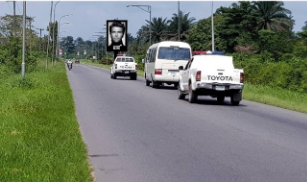
The effectiveness of outdoor advertising in Nigeria is partly a function of how much time Nigerians spend outside and in transit. Urban commute times in Lagos are among the longest in the world, with the average commuter spending two to four hours daily in traffic according to various urban mobility studies.
This extended daily exposure window has significant implications for outdoor advertising effectiveness:
- A billboard on a major Lagos commuter route can reach the same individual 40 to 60 times over a single month of daily commuting.
- Commuters in traffic have their phones in hand, meaning the gap between seeing a billboard and searching for the brand online is close to zero.
- Repeated daily exposure builds frequency that most digital formats struggle to match at comparable cost.
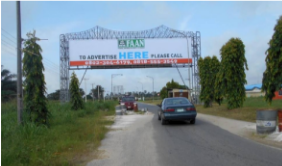
This is the fundamental reason that billboard advertising in Nigeria, particularly on high-volume routes in Lagos, Abuja, and Port Harcourt, consistently delivers strong brand recall results. You can explore available locations across Nigeria on the Ox Billboards billboard listings page.
The Nigerian OOH Market: What We Know in 2026
ARCON and Market Regulation
The Advertising Regulatory Council of Nigeria (ARCON) oversees the advertising industry in Nigeria, including outdoor advertising standards and licensing. The formalisation of the industry under ARCON has added credibility to OOH as a medium and encouraged more investment from tier-one brands.
Digital Billboard Expansion
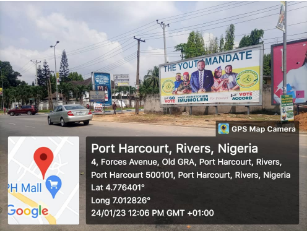
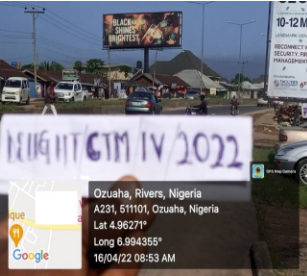
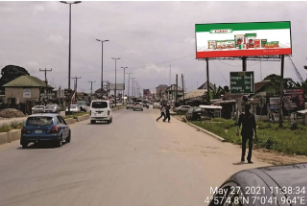
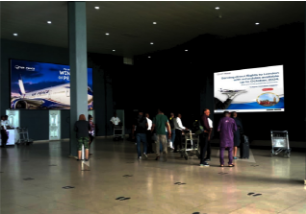
Digital OOH infrastructure in Nigeria is growing steadily. It now operate in key Lagos, Abuja, and Port Harcourt locations, offering advertisers the flexibility of dynamic creative, daypart targeting, and shorter minimum booking periods than traditional static boards.
This expansion mirrors the global DOOH growth trend and positions Nigeria for a significant increase in premium OOH inventory over the next three to five years. For brands planning long-term outdoor advertising strategies, understanding this trajectory is worth building into your planning now.
OOH and Mobile: The Partnership Reshaping Outdoor Advertising

One of the defining statistics of outdoor advertising in 2026 is the strengthening relationship between OOH and mobile behaviour.
Research from Clear Channel Outdoors shows that OOH campaigns paired with mobile retargeting deliver significantly higher conversion rates than OOH alone. When a consumer sees your billboard and later encounters a follow-up digital ad on their phone, the combined effect is greater than the sum of its parts.
For Nigerian brands with both outdoor and digital budgets, this integrated approach is arguably the highest-return combination available in the current market:
- The billboard builds brand familiarity and generates search intent.
- The Google Search ad captures branded queries that the billboard triggers.
- The social media retargeting ad reconnects with people who visited your website but did not convert.
You do not need a large budget to apply this strategy. A single well-chosen billboard, combined with a modest branded Google Ads campaign and consistent social media presence, creates a media ecosystem that works together.
Read our guide on how Nigerian SMEs can afford billboard advertising for a practical breakdown of how to structure this kind of campaign on a controlled budget.
What the Statistics Mean for Your Next Campaign
The data consistently point in one direction: outdoor advertising is not a legacy medium in slow decline. It is a growing, data-supported channel that delivers measurable results in brand awareness, recall, search activity, and ultimately sales.
For Nigerian brands, the combination of high daily traffic volumes, extended commute times, expanding digital OOH infrastructure, and a growing smartphone-connected population means that billboards will remain one of the most effective ways to build a brand at scale in this market.
If you are ready to explore outdoor advertising options in Nigeria, contact Ox Billboards to discuss locations, formats, and campaign planning tailored to your specific audience and objectives.