
Billboards are everywhere in Nigeria.
You see it on highways, at busy junctions, above bridges along commercial corridors,, on your way to work, on your way home.
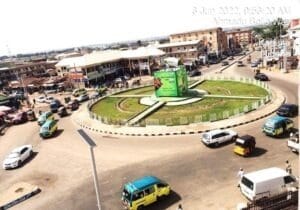
But seeing billboards is not the same as understanding them.
Most advertisers think billboard advertising is simple. Rent a board. Mount a design. Wait for results.
It isn’t.
In reality, it is a structured system, and like every structured system, it rewards those who understand it and punishes those who don’t.
Before running billboard advertising in Nigeria, you must understand the ecosystem.
Nigeria is not a single advertising market.
Each state has its own regulatory structure.
Traffic behaviour differs by city.
Pricing varies by corridor.
Approval processes are layered.
Inventory ownership is fragmented.
Yet many brands jump straight to booking locations without understanding the system.
That is where expensive mistakes begin. That is also where this book begins.
This is not a general overview.
By the time you finish this guide, you will know:
Whether you are a brand manager running your first outdoor campaign, a business owner trying to understand the market, or a marketing professional looking to sharpen your OOH strategy, this guide was written for you.
The boards are waiting. The question is whether you’re ready to use them strategically.
Let’s begin.
Most people think they understand billboard advertising.
They see large boards along highways.
They assume it’s just about size and visibility.
It isn’t.
Billboard advertising is about controlled visibility at scale.
It is the strategic placement of large-format messages along high-traffic routes to influence commuters repeatedly over time.
That’s the simple definition.
But in Nigeria, the mechanics go deeper.
Billboard advertising is a form of outdoor advertising where brands rent physical display structures positioned along busy roads to communicate a message to the public.
That’s the surface explanation.
Underneath that surface are three core elements:
Without those three working together, a billboard becomes an expensive decoration.
Nigeria is a high-movement society.
People commute long distances daily.
Traffic congestion is common.
Commercial corridors are dense.
Urban expansion continues across major cities.
In cities like Lagos, commuters often spend hours on the road each week.
Unlike digital ads that can be skipped or blocked, billboards exist in physical space. They cannot be turned off.
When positioned correctly, they become part of daily routine visibility.
Repetition builds familiarity.
Familiarity builds trust.
Trust influences decisions.
That is why billboard advertising still delivers results in Nigeria.
Not all traffic is equal.
A road with 100,000 fast-moving vehicles may generate less effective exposure than a road with 40,000 vehicles stuck in slow traffic.
What matters is not just traffic volume.
It is dwell time.
Dwell time means how long vehicles remain within viewing distance of the board.
In Nigerian cities:
Drivers rarely stare at billboards.
They glance. That glance usually lasts 2–5 seconds. Which means your message must be readable instantly.
Visibility is mechanical. It follows traffic behaviour.
Understanding that changes how you choose locations.
Human memory responds to frequency.
Seeing a message once rarely creates action. Seeing it repeatedly over days builds recognition.
This is why billboard campaigns typically run for weeks or months, not days.
When a commuter passes the same board every morning and evening, the message becomes familiar.
Familiar brands feel safer.
Safer brands feel credible.
Credible brands convert better.
Repetition is not accidental in billboard advertising. It is strategic.
Let’s clear a few misunderstandings:
“Billboards are only for big brands.”
Not true. Many SMEs use corridor-based strategies effectively.
“Digital marketing replaced billboards.”
Not true. They serve different purposes. Billboard builds presence. Digital builds interaction.
“The biggest board is always the best.”
Not true. Visibility angle and traffic behaviour matter more than size.
“Once the board is up, the job is done.”
Not true. Monitoring, lighting, and maintenance affect performance.
“Premium roads always give the highest ROI.”
Not always. Sometimes, hidden corridors perform better due to lower competition.
Believing these myths leads to poor decisions.
Answer these quickly:
If you answered “yes” to most of these, billboard advertising may be a strong fit.
If not, you may need a different channel or a different objective.
Not all billboards are created equal. Before you start spending money, you need to understand what types of billboard structures exist in Nigeria, how they work, where they shine, and where they fall short.
Choosing the wrong format for your campaign can cost you time, money, and results, so let’s break this down properly.
Nigeria has a rich and growing out-of-home (OOH) advertising landscape. From classic static boards along the Lagos-Ibadan expressway to bright LED screens lighting up Victoria Island at night, there’s a format for every budget and every campaign objective.
Here are the main ones you need to know.
A static billboard is the classic, traditional type of fixed printed panel, usually mounted on a metal frame or concrete structure. The artwork is printed on vinyl or banner material and physically attached to the board.
It doesn’t move, doesn’t light up (unless a separate spotlight is added), and doesn’t change. What you print is what people see, every day, for the entire duration of your campaign.
Static billboards work extremely well in high-traffic, slow-moving corridors where people have enough time to read your message. Think of major roads with consistent gridlock, the kind of traffic Lagos is famous for.
Routes like Apapa-Oshodi Expressway, Ikorodu Road, and the Third Mainland Bridge access points are ideal environments for static boards.
They also perform well in commercial and retail zones where your target audience regularly frequents markets, shopping areas, and key intersections in densely populated areas.
Static billboards are the most affordable format in Nigeria. Depending on the location, size, and city, you’re looking at roughly:
Note: These are general estimates. Actual pricing varies based on the size of the board, the media owner, and current market demand.
LED digital billboards are electronic display boards made up of thousands of tiny LED lights. They can display bright, moving visuals, from static images to video content, and can rotate multiple adverts in a loop.
You’ve seen these lighting up Allen Avenue in Ikeja, or the big screens around Eko Atlantic and Ozumba Mbadiwe in Victoria Island. They’re impossible to miss.
LED boards perform best in high-visibility, premium locations, especially those that are active at night. They’re ideal for brand launches, high-end product campaigns, and corporate visibility plays. Because they cycle through multiple brands, they’re also used in locations where a brand can’t afford exclusive placement but still wants premium visibility.
Great locations for LED boards in Nigeria include high-footfall commercial districts, major roundabouts, airport approach roads, and nightlife corridors.
LED boards are significantly more expensive than static ones, both in placement cost and content production:
Note: You may also be sharing the screen with other brands, which can reduce cost but also reduce exclusive airtime
Here’s a simple way to think about it: LED is better when your objective is impact and visibility over a short, intense period, like a product launch, a seasonal promotion, or an event. Static is better when your goal is sustained presence over a longer period at a lower cost.
If you’re launching a new product and you want Lagos to notice you within two weeks, go LED in a prime location. If you’re a business that wants consistent brand awareness over three to six months, a well-placed static board on a high-traffic route will give you more bang for your budget.
And if your budget allows, combine both, LED for the launch spike, static for the sustain period.
A gantry is a large overhead structure that spans across a road, similar to a pedestrian bridge but built primarily for advertising. Billboard panels are attached to the sides or face of the structure, visible to motorists from both directions.
Bridge panels work similarly; these are advertising boards mounted on existing overhead bridges or flyovers.
You’ll find these structures prominently on major expressways and highway entry/exit points in Lagos, Abuja, and Port Harcourt.
Gantries are particularly powerful on expressways and fast-moving highways where roadside billboards might be missed. Because they span the width of the road, they’re directly in the driver’s line of sight.
They’re excellent for brand awareness campaigns targeting commuters, truck drivers, and motorists on long-distance routes.
They also perform well at entry and exit points of major cities, where people are paying close attention to their surroundings.
A unipole (sometimes called a monopole) is a tall, single-column structure with a large billboard panel at the top. Think of the towering structures you see rising above rooftops along major highways; those are unipoles. They can be anywhere from 10 to 30+ metres tall, giving them exceptional visibility from long distances.
Unipoles are built for dominance. They’re perfect for locations where you need to be seen from a great distance, along highways, at major road intersections, and in open commercial zones without tall buildings obstructing the view. They’re a popular choice for banks, telecom companies, and FMCG brands running national campaigns.
Rooftop billboards are exactly what they sound like: billboard structures placed on top of buildings, elevated above street level. Wall drapes (also called building wraps or wall scapes) are large printed banners draped over the façade of a building, sometimes covering entire walls or multiple floors.
You’ll see wall drapes commonly on high-rise buildings in commercial districts; they’re hard to miss and create a dramatic visual statement.
Rooftop boards work well in dense urban areas where eye-level boards face competition from buildings, trees, and other clutter. Being elevated above the noise gives them a clear line of sight. Wall drapes are especially effective in busy commercial districts where building surfaces are premium advertising real estate.
Lagos Island, Ikeja CBD, Surulere, and Abuja’s Central Business District (CBD) are prime territories for both formats.
Lamp post advertising involves placing small advertising panels on street lamp posts along major roads and shopping corridors. These panels are usually double-sided and positioned at eye level or slightly above. They’re commonly used in retail districts, market areas, and event activation zones.
While lamp post advertising isn’t the primary focus of this guide, it’s worth knowing it exists and when it’s useful.
It works best as a supplementary campaign tool; you wouldn’t build a brand awareness campaign on lamp posts alone, but they can reinforce a broader billboard campaign and extend reach along a specific corridor.
They’re relatively affordable and can be deployed in high volumes to create saturation in a specific area, useful for retail promotions, elections, and local events.
Before choosing your format, answer these questions to guide your decision:
Question | Your Answer | What It Suggests |
What is your primary campaign goal? | Brand awareness / Launch / Retail | Awareness → LED or Unipole; Retail → Static; Launch → LED |
What is your total OOH budget? | ₦500K / ₦2M / ₦10M+ | Under ₦1M → Static; ₦2M–₦5M → Mix; ₦5M+ → LED + Static |
How long is your campaign? | 2 weeks / 1 month / 3–6 months | Short → LED impact; Long → Static sustain |
Where is your target audience? | Highway / Urban / Commercial district | Highway → Unipole/Gantry; Urban → Static/LED; CBD → Rooftop |
Is night-time visibility important? | Yes / No | Yes → LED or illuminated static; No → Standard static |
Do you want exclusive presence? | Yes / No | Yes → Buy out static; No → LED shared screen is fine |
Is your message simple (5–7 words)? | Yes / No | Yes → Any format; No → Reconsider your creative first |
One of the most confusing things for first-time billboard advertisers in Nigeria is figuring out who actually controls what.
You want to book a billboard you’ve seen on the Lekki-Epe Expressway, but who do you call? The government? A media company? A third-party agent?
And why does the same type of board cost three different prices depending on who you ask?
To navigate this landscape confidently, you need to understand the different players involved.
The Nigerian billboard industry isn’t a simple buyer-seller transaction. It’s a layered ecosystem with multiple stakeholders, and knowing who each one is will save you from confusion, overpaying, and getting into trouble.
Media owners are the companies or individuals who actually own the physical billboard structures.
They’ve invested in building or acquiring the structures, secured the land rights (usually through long-term lease agreements with landowners or government), and obtained the necessary structural permits. They are the primary source of billboard inventory in Nigeria.
Large media owners in Nigeria include companies like the Outdoor Advertising Association of Nigeria (OAAN) members. They’re firms that manage multiple structures across various locations.
Some media owners operate nationally, with inventory in Lagos, Abuja, Port Harcourt, and other cities. Others are local operators with five to twenty boards in a specific state or city.
When you book directly with a media owner, you’re going straight to the source. This is often the cleanest transaction; you see the available inventory, negotiate pricing, and sign directly with the owner. However, it requires that you know who owns the specific boards you’re interested in, which isn’t always obvious.
Advertising agencies, particularly those with an outdoor media planning department, act as intermediaries between brands and media owners.
A full-service agency will help you plan your OOH campaign, recommend locations based on your target audience, negotiate rates with media owners on your behalf, manage creative production, and oversee installation and monitoring.
Agencies are useful when you’re running a complex, multi-location campaign and don’t have the internal capacity to manage all moving parts. However, they charge service fees or earn commissions from media owners (typically 10–15% of the campaign value), which gets factored into your total cost.
The quality of agencies varies widely. Some have deep market relationships and genuine expertise; others are simply adding a markup without adding proportional value. Do your due diligence before appointing an agency.
Intermediaries, often called brokers or outdoor traders, sit between agencies and media owners, or sometimes between brands and media owners directly.
They don’t own the structures themselves but have commercial arrangements with media owners to sell their inventory, often buying space in bulk at a discount and reselling it at a profit.
This is where the market gets complicated. An intermediary might sell you a billboard at a price that’s been marked up two or three times from what the media owner actually charges. In a market with limited transparency, it’s difficult to know what the original price was.
That said, some intermediaries genuinely add value; they have established relationships, can bundle multiple locations, and simplify the procurement process. The key is knowing whether the markup is proportional to the value being added.
State regulatory bodies are government agencies that control outdoor advertising within their jurisdiction. They’re not selling you advertising space; they’re the ones issuing permits, setting standards, and enforcing compliance. You need their approval before any structure can legally display your advertisement.
The most prominent of these is LASAA (Lagos State Signage and Advertisement Agency) in Lagos. Other states have their own equivalents, which I’ll cover in detail in Chapter 12. These regulators work alongside the national body, ARCON, and both have different but overlapping roles.
Here’s the critical thing to understand: failing to deal with regulators properly can result in your advertisement being removed, your brand being fined, or the media owner losing their permit. Regulatory compliance isn’t optional.
If you’ve tried booking outdoor advertising in Nigeria before and felt confused by the lack of clear pricing, inconsistent availability information, or conflicting advice from different sources, you’re not imagining things.
The Nigerian OOH market is genuinely fragmented, and here’s why:
Two brands could be running the same type of billboard in the same general area and paying completely different rates. This happens because:
Here are practical steps to protect yourself:
The fragmentation of Nigeria’s OOH market is a genuine problem, but it’s one that structured platforms are beginning to solve.
Rather than calling five different people, getting five different prices, and having no way to verify which is accurate, a structured inventory platform brings verified, updated billboard availability into one place.
This matters for three reasons: it saves time, it reduces the chance of paying a premium for information that could have been obtained cheaper elsewhere, and it gives you confidence that the inventory you’re booking is legitimate and compliant.
I’ll revisit this concept in Chapter 16, where I talk about how Oxbillboards serves this function for brands running campaigns across Nigeria.
A billboard is only as good as the number of people who actually see it, and how well they see it. You can book the most expensive billboard and still get poor results if the visibility is poor, the angle is wrong, or your message gets lost in the clutter.
This chapter teaches you how to think about traffic, visibility, and performance like an outdoor advertising professional.
In outdoor advertising, two metrics define how valuable a location is: traffic volume and dwell time.
Traffic volume refers to the number of vehicles or pedestrians that pass a billboard location within a given time period, usually measured per day.
High-traffic locations like the Lagos-Ibadan Expressway or Ozumba Mbadiwe Avenue on Victoria Island record tens of thousands of vehicle movements daily.
Dwell time refers to how long a person is exposed to your billboard, essentially, how long they spend in view of it. A driver moving at 100km/h on an open highway has very low dwell time, maybe two to four seconds.
A driver stuck in gridlock on Eko Bridge has a significantly longer dwell time, potentially five to fifteen minutes.
Here’s the counterintuitive truth: in Nigeria, congestion is often your friend. A road with heavy, slow-moving traffic can actually deliver more ad exposure per person than a free-flowing expressway.
This is one reason why Lagos, despite its notorious traffic, is one of the most valuable OOH markets in Africa.
When traffic is moving slowly, drivers and passengers have more time to notice, read, and absorb your message. A person stuck in traffic at a red light or in a long tailback isn’t scrolling through their phone as consistently; they’re looking around.
Your billboard, well-positioned in that environment, competes with very little else for their attention.
This is why media owners can legitimately charge a premium for boards on notoriously congested routes.
The traffic jam is increasing the value of the impression. When evaluating a location, don’t just ask ‘how many cars pass here?’ ask ‘how fast are those cars moving?’
Even in a high-traffic location, a billboard with a bad visibility angle will underperform. The angle at which a motorist approaches a billboard determines how long it’s in their line of sight and how easily they can read it.
The ideal scenario is a billboard that faces oncoming traffic directly, what’s called a ‘head-on’ position. This gives the driver the maximum time to view the board as they approach. Boards positioned at a sharp angle to traffic get much less viewing time and are harder to read quickly.
Also consider obstructions. A board that’s technically in a good location but partially hidden by a tree, building, overhead bridge, or another billboard is compromised.
When evaluating a location, physically stand or drive in the position of an approaching motorist and assess what you actually see.
Your billboard needs to be readable from the appropriate distance. The further away a driver can read your board, the more time they have to absorb your message. This depends on two things: the size of your text and the simplicity of your design.
A general rule of thumb used in outdoor advertising is the 1/10 ratio: for every 1 inch of letter height on your board, it can be read at approximately 10 feet. So a headline with 30-inch letters is readable at roughly 300 feet.
For highway boards where cars are moving fast, you want text large enough to be read from at least 150–300 metres away.
I’ll cover design rules in detail in Chapter 13, but the principle connects directly to location: a board in a fast-moving environment demands simpler, larger copy than a board in a slow-traffic zone.
In advertising, ‘Reach’ refers to the number of real individuals exposed to your message. ‘Frequency’ refers to how many times each person is exposed to it. Both matter, but they serve different purposes.
A single billboard in one location delivers high frequency to the same commuters who pass that route daily, which is powerful for reinforcing brand recall. But it has limited reach; it only catches the people on that specific route.
To increase reach, you need multiple locations, different corridors, and different audiences. This is one reason why serious campaigns typically book multiple boards rather than a single premium location.
When planning your campaign, ask yourself: do I need to reach more people (reach play) or do I need the same people to see me more often (frequency play)? Your answer shapes your location strategy.
Cost-per-impression (CPI) is a way of measuring how efficiently your outdoor spend is working. It answers the question: ‘For every naira I spend, how many times is my message seen?’
Here’s how to calculate it simply:
CPI = Total Campaign Cost ÷ Estimated Total Impressions
For example, if you spend ₦2,000,000 on a billboard for one month, and that board is estimated to deliver 500,000 impressions in that period, your CPI is ₦4 per impression.
Compare that with a ₦500,000 board in a lower-traffic location that delivers 80,000 impressions, that’s ₦6.25 per impression. The more expensive board is actually more efficient.
CPI isn’t the only metric that matters; location quality, audience relevance, and visibility still play a role. But it’s a useful tool for comparing options and justifying your spend.
Use this worksheet to objectively score a billboard location before you commit to booking it.
Evaluation Criteria | Score (1–5) | Notes |
Daily traffic volume (estimated) |
| 1 = very low, 5 = very high |
Average traffic speed (slower = better) |
| 1 = fast-moving highway, 5 = heavy congestion |
Visibility angle (head-on = best) |
| 1 = sharp angle, 5 = direct head-on |
Obstructions (trees, bridges, other boards) |
| 1 = heavily obstructed, 5 = completely clear |
Distance readability |
| 1 = poor, 5 = readable from 200m+ |
Relevance to the target audience |
| 1 = wrong audience, 5 = perfect match |
Competitive clutter (nearby boards) |
| 1 = very cluttered, 5 = isolated/dominant |
Night-time visibility (lighting) |
| 1 = dark/unlit, 5 = well-lit or LED |
TOTAL SCORE (out of 40) |
|
|
Scoring guide:
30–40 = excellent location;
20–29 = good location, worth considering;
10–19 = borderline, negotiate hard on price;
Below 10 = avoid unless the budget is very tight.
Before you book a single billboard, before you design anything, before you call a media owner, you need to be crystal clear on what you’re trying to achieve.
This sounds obvious, but you’d be surprised how many brands skip this step and end up with a beautiful billboard in the wrong location, for the wrong duration, delivering the wrong message to the wrong audience.
Your campaign objective determines everything: the format you choose, the locations you target, the creative direction you take, and how you measure success. Let me walk you through the most common objectives for outdoor advertising in Nigeria.
Brand awareness campaigns are about getting your name, logo, and identity in front of as many relevant people as possible. You’re not asking people to do something specific; you’re building recognition.
This is especially important for new brands, businesses entering a new market, or established brands going through a rebrand.
For awareness campaigns, you want high-reach locations, prime corridors, key intersections, and boards that serve high daily traffic volumes. The goal is repetition: the more often your target audience sees your brand name, the more familiar and trusted it becomes.
Best formats: Static boards (for sustained exposure) and LED screens (for high-impact, premium visibility). Multiple locations beat a single expensive one when reach is the goal.
Product launches are about creating buzz, excitement, and rapid awareness of something new. Unlike general brand awareness campaigns, a launch campaign needs to communicate specific information, a new product name, a key benefit, and a call to action.
Speed matters here; you want people talking about it fast.
For launch campaigns, you want high-impact formats in premium, high-visibility locations. LED billboards are particularly effective because their brightness and motion attract attention. Concentrated placements in key commercial zones can generate the feeling of being everywhere at once.
Best formats: LED digital billboards in prime locations, wall drapes for dramatic impact, complemented by static boards on high-traffic routes. Short duration (two to four weeks) with maximum concentration.
Retail activation campaigns are about driving foot traffic or sales at a specific physical location: a store, a restaurant, a market stall, or a showroom. The billboard works as a directional and motivational tool: ‘we’re nearby, come in.’
For retail campaigns, proximity matters. Your billboard should be positioned on routes that lead directly to your location, ideally within two to three kilometres. Route-based advertising that guides potential customers towards your store is the core strategy.
Best formats: Static boards along feeder roads and approach routes. Lamp post advertising for proximity marketing within a neighbourhood.
Corporate positioning campaigns aren’t about selling a product; they’re about shaping how a company is perceived. Banks, telecoms companies, oil and gas firms, and large corporations use outdoor advertising to communicate their values, achievements, or corporate identity to the public, investors, and business partners.
For positioning campaigns, the choice of location is itself a statement. A billboard on Victoria Island, Lagos, or Wuse 2, Abuja, says something about your company. Premium formats in premium locations are the norm.
Best formats: Unipoles and premium LED boards in business districts. Wall drapes on high-rise buildings in key commercial areas.
Political advertising is one of the biggest drivers of outdoor advertising spend in Nigeria, particularly in the months leading up to elections. Political campaigns use billboards to establish name recognition, communicate campaign themes, and signal presence and strength in a constituency.
Political billboard advertising in Nigeria is subject to ARCON regulations and must comply with content guidelines around political advertising. LASAA (Lagos State Signage and Advertisement Agency) and other state regulators also have specific rules about political advertising during election periods, including time restrictions and zoning limitations.
Best formats: Static billboards across wide geographic coverage. High-density placement across a constituency or state, rather than premium single locations.
Campaign Objective | Recommended Format | Location Strategy |
Brand Awareness | Static (multiple) + LED | Wide reach across high-traffic corridors |
Product Launch | LED + Wall Drape | Premium locations, concentrated in commercial zones |
Retail Activation | Static | Proximity to the store on approach routes |
Corporate Positioning | Unipole + Premium LED | Business districts, premium corridors |
Political Campaign | Static (high volume) | Wide coverage across the target constituency |
Budgeting for billboard advertising in Nigeria can feel like navigating a maze. Prices aren’t publicly listed, they vary widely depending on who you ask, and there are costs beyond just the media space that catch many advertisers off guard.
This chapter breaks it all down so you can plan your investment with confidence.
Nigeria’s OOH market operates across three broad pricing tiers based on location:
These are the highest-traffic, most visible locations in major commercial cities. Victoria Island and Lekki in Lagos, Wuse 2 and Maitama in Abuja, and GRA zones in Port Harcourt. Expect to pay a significant premium for these positions.
These are good-quality locations with solid traffic but slightly less prestige or slightly less central positioning. Ikeja, Surulere, and Yaba in Lagos fall into this category. Good balance of reach and cost.
Residential areas, market roads, and neighbourhood corridors. Lower traffic volumes but also significantly lower costs. Good for retail activation or localised brand awareness.
As a general principle, LED billboards cost three to five times more than equivalent static boards in the same location. But the comparison isn’t straightforward; with a static board, you get exclusive possession of the entire face for the duration.
With a shared LED screen, you’re buying airtime in a rotation, meaning your ad shows for a portion of every hour.
When comparing LED to static, always clarify: how many brands share the screen, how many times per hour your ad plays, and how long each display lasts. This gives you a true comparison of cost-per-impression.
The media placement fee is just one part of your billboard advertising cost. Here’s what most first-timers forget to budget for:
If your campaign performs well and you want to extend its run, the media owner may charge an extension fee or simply renew at a new rate if their pricing has changed. It’s worth clarifying the extension terms before you sign the initial contract, so you’re not caught off guard.
Similarly, LASAA and other regulatory bodies typically require permit renewal for extended campaigns. Build this into your planning timeline.
Lagos is the most expensive and most complex OOH market in Nigeria.
Here’s an example budget for a mid-scale brand awareness campaign in Lagos running for one month:
Budget Item | Estimated Cost | Notes |
Media placement – 2 static boards (mid-tier) | ₦2,400,000 | ₦1.2M each |
Vinyl printing – 2 boards | ₦320,000 | ₦160K each, standard size |
Installation – 2 boards | ₦120,000 | ₦60K each |
ARCON creative approval | ₦75,000 | Per creative submitted |
Lighting (if required) | ₦80,000 | One board requiring spotlights |
Agency/management fee (10%) | ₦279,500 | On media spend only |
Contingency (5%) | ₦173,725 | Recommended buffer |
TOTAL ESTIMATED BUDGET | ₦3,448,225 |
|
Location is the single most important decision you’ll make in your billboard campaign. The right location can make a modest budget punch well above its weight. The wrong location, even with a beautiful, creative, and generous budget, will deliver disappointing results. Let me break down how to think about location strategically.
Not all boards advertised as ‘prime’ are actually prime. In the Nigerian OOH market, the word ‘prime’ is sometimes used loosely. A genuine prime location has all of the following characteristics:
A ‘hidden’ location, by contrast, might have a large, impressive-looking structure, but it’s positioned behind a bend, behind trees, or in an area where traffic moves too fast for anyone to properly read it.
Always visit a location physically or request detailed photographs and a site video before committing.
Every major Nigerian city has its own internal geography, premium zones, mid-tier corridors, and secondary routes.
Understanding how each city is structured helps you make smarter location decisions regardless of where your campaign runs.
In Abuja, the premium zone is the Central Business District and the Maitama/Wuse 2 corridor, where government institutions, embassies, and corporate headquarters concentrate.
Garki and the airport road represent solid mid-tier options, while the city’s satellite districts, Lugbe, Lokogoma, and Kubwa, offer lower-cost reach into Abuja’s rapidly growing residential population.
In Lagos, the city divides broadly into the Island and the Mainland. Lagos Island, covering Victoria Island, Ikoyi, and Lekki, is the premium commercial corridor, hosting corporate headquarters, financial institutions, embassies, and high-net-worth residential zones.
The Mainland, Ikeja, Surulere, Yaba, Mushin, Ikorodu, covers a far larger geographic area with a more diverse, mass-market audience and significantly better cost efficiency per impression.
In Port Harcourt, Trans-Amadi Industrial Layout is the corporate and industrial premium zone, while Rumuola Road and Stadium Road serve as the main consumer corridors.
The Port Harcourt-Aba Expressway is the key inter-city route for brands with a broader South-South and South-East reach objective.
In Ibadan, Ring Road and Challenge are the city’s primary commercial corridors, while Dugbe serves as the traditional market and mass-consumer hub. The city as a whole offers excellent cost efficiency, strong audience volumes at prices well below Lagos and Abuja.
In Kano, Murtala Muhammad Way and the Kano-Kaduna Road are the key corridors for brand visibility, while Kantin Kwari and Sabon Gari reach the city’s dense commercial and market audience. Kano offers some of the most cost-effective OOH inventory of any major Nigerian city.
The principle is the same across all five cities: understand the internal geography before you choose a location. Premium zones signal prestige and reach high-value audiences. Mid-tier and secondary corridors offer volume and efficiency. The right choice depends on your objective and your audience, not on what sounds impressive.
Across every cities Nigerian, billboard locations fall into one of two broad categories: high-traffic corridors and feeder roads.
High-traffic corridors are the main arteries, the major roads and expressways that carry the bulk of daily vehicle movement.
In Abuja, these include Constitution Avenue and Airport Road. In Lagos, Ozumba Mbadiwe, the Lekki-Epe Expressway, and the Lagos-Ibadan Expressway.
In Port Harcourt, Rumuola Road and the Port Harcourt-Aba Expressway. In Kano, Murtala Muhammad Way and the Kano-Kaduna Road.
These are high-reach environments appropriate for brand awareness and visibility-focused campaigns.
Feeder roads are the smaller routes that connect residential areas and neighbourhoods to the main arteries. They carry a more localised audience, people who live or work in that specific area.
These boards are excellent for retail activation, neighbourhood-based businesses, and campaigns targeting specific residential or commercial communities in any city.
Feeder road boards can be four to ten times cheaper than prime corridor boards in the same city. For the right objective, they represent outstanding value.
A high-ROI board combines good traffic volume, adequate dwell time, clear visibility, audience relevance, and a reasonable price relative to the impressions it delivers.
These boards exist at every price point, and in every city in Nigeria, there are high-ROI boards in secondary locations and poor-ROI boards in prime locations when the price is inflated.
The only way to identify them reliably is to evaluate locations systematically, using the Location Evaluation Worksheet from Chapter 4, rather than relying on gut feeling or media owner recommendations alone.
Here’s a simple comparison example to illustrate the principle:
Option A: Static board on a prime corridor in Victoria Island, Lagos.
Monthly cost: ₦3,000,000.
Estimated monthly impressions: 1,200,000.
Cost per impression: ₦2.50
Option B: Static board on a prime corridor in Ring Road, Ibadan.
Monthly cost: ₦600,000.
Estimated monthly impressions: 600,000.
Cost per impression: ₦1.00
Option ‘A’ reaches a wealthier, more commercially concentrated Lagos audience. Option ‘B’ reaches a large South-West audience at a fraction of the cost per impression.
Neither is objectively better; the right answer depends entirely on who your target audience is and where they are. But running the numbers makes the decision strategic rather than instinctive.
This same comparison can be run between any two locations in any city in Nigeria. The model is always the same: cost divided by impressions, evaluated against audience relevance.
Regulatory compliance is not an optional extra in Nigerian outdoor advertising; it’s the foundation of a legitimate campaign. Ignoring or cutting corners on regulatory requirements can result in your advertisement being forcibly removed, your brand receiving negative publicity, financial penalties, and the media owner losing their operating licence.
There are two distinct layers of regulation you need to understand: national content regulation (handled by ARCON) and structural/location regulation (handled by state agencies like LASAA in Lagos). I’ll break each one down clearly.
ARCON, the Advertising Regulatory Council of Nigeria, is the federal government body responsible for regulating advertising content across all media in Nigeria. This includes print, television, radio, digital, and out-of-home advertising. ARCON is established under the Advertising Regulatory Council of Nigeria Act, and its authority covers the entire country.
ARCON’s primary role in outdoor advertising is content regulation. Before any advertisement can be legally displayed on a billboard in Nigeria, the creative content must be reviewed and approved by ARCON.
ARCON checks that the advertisement:
To obtain ARCON approval for your billboard creative, you (or your agency) submit the artwork through ARCON’s official channels. The process typically involves:
Plan for ARCON approval to take two to three weeks from submission to certificate receipt. If your creative is clean, well-documented, and clearly compliant, the process can be faster.
Factor this into your campaign launch timeline, submit your creative for ARCON approval before finalising your media booking, so approval doesn’t delay your go-live date.
While ARCON handles what your billboard says, LASAA, the Lagos State Signage and Advertisement Agency, handles where your billboard lives. LASAA is Lagos State’s dedicated regulatory body for all outdoor advertising structures and signage within Lagos State. If you’re advertising in Lagos, LASAA approval is non-negotiable.
Every legitimate billboard structure in Lagos should hold a valid LASAA permit. LASAA categorises structures by type (static, LED, unipole, gantry, rooftop, etc.) and location (prime, mid-tier, secondary). Each category attracts different permit fees.
As an advertiser, you are not usually the one directly applying for the LASAA structural permit; that is the responsibility of the media owner who built and registered the structure.
However, you should always confirm with the media owner that their permit is current and valid before booking. An expired or revoked permit means your advertisement is technically illegal and can be removed at any time.
LASAA’s fee structure is applied to media owners as annual permit fees, which vary by structure type, size, and location.
These costs are typically factored into the media owner’s pricing, so as an advertiser, you’re indirectly paying them through your media rental cost.
However, some media owners may list a LASAA ‘levy’ as a separate line item in their billing. Always clarify what is included in the quoted price.
LASAA has the authority to remove advertisements and structures that are non-compliant. This includes structures without valid permits, advertisements that have not received ARCON approval, and structures that violate Lagos State’s road reservation and setback rules.
LASAA enforcement teams actively patrol key corridors and can act swiftly, removing illegal advertisements without notice.
If you book a billboard from an operator who doesn’t have a valid LASAA permit, or if your advertisement hasn’t been submitted for ARCON approval, you face the very real risk of having your board taken down.
Not only do you lose the visibility you paid for, but you also waste the cost of printing, installation, and the media fee. In competitive commercial environments, your brand being associated with a removed advertisement can also attract unwanted attention.
LASAA permits are renewed annually. Media owners with properly maintained structures renew their permits regularly.
As an advertiser, confirm that the media owner’s permit covers the full duration of your campaign. If your campaign runs across a permit renewal period, ensure the media owner is committed to renewing on time.
Here is the step-by-step regulatory approval flow for a Lagos billboard campaign:
Before You Go Live — Regulatory Compliance Checklist |
• ARCON creative vetting application submitted |
• ARCON approval certificate received |
• Media owner’s LASAA permit confirmed as current |
• LASAA permit covers the full duration of your campaign |
• Media booking agreement signed and dated |
• Campaign artwork matches the approved ARCON submission |
• All permits and documents kept on file for the campaign duration |
• Extension/renewal plan confirmed if campaign may be extended |
While Lagos gets the most attention in Nigerian OOH advertising, there are four other major cities worth understanding if you’re planning national or multi-city campaigns: Abuja, Ibadan, Port Harcourt, and Kano.
Each has its own regulatory environment, market dynamics, and pricing landscape.
Outdoor advertising in Abuja is regulated by the Abuja Metropolitan Management Council (AMMC), specifically its signage and advertisement control unit, as well as the Federal Capital Territory Administration (FCTA). Some functions are also managed through the Abuja Environmental Protection Board (AEPB).
The FCTA regulatory system oversees the placement, size, lighting, and content of all outdoor advertisements within the FCT.
Abuja has strict zoning rules that reflect its status as a planned city; advertising structures must comply with urban planning guidelines that define where billboards can and cannot be placed.
Applications for billboard permits in Abuja are submitted to the AMMC or the relevant FCT body, along with structural drawings, location plans, and evidence of land use approval.
Processing times can vary, and applicants are advised to work through registered practitioners or established media owners who are familiar with the system.
Outdoor advertising in Ibadan falls under the authority of the Oyo State Signage and Advertisement Agency (OYSAA), which was established to mirror the function of LASAA in Lagos.
OYSAA regulates the registration, placement, and renewal of outdoor advertising structures across Oyo State, with Ibadan being the primary commercial centre of focus.
Media owners register their structures with OYSAA and obtain annual permits. Advertisers working with compliant media owners can proceed once ARCON creative approval is obtained.
The process is broadly similar to Lagos but generally less bureaucratically intense.
Outdoor advertising in Port Harcourt and Rivers State is regulated by the Rivers State Signage and Advertisement Agency (RSSAA) or, in some contexts, the Rivers State Urban Development Board.
The Rivers State regulatory body manages billboard permits, structural standards, and advertising compliance across the state. Port Harcourt’s status as the commercial hub of the Niger Delta makes it a priority zone for enforcement.
As with other states, the process involves media owners registering structures with the state agency and maintaining current permits. ARCON creative approval is required nationally. Advertisers should confirm permit status with media owners before booking.
Outdoor advertising in Kano is regulated by the Kano State Signage and Advertisement Agency or equivalent authority, under the Kano State government.
The Kano State Urban Planning and Development Authority (KNUPDA) may also have overlapping jurisdiction for structural approvals.
The state regulatory body manages outdoor advertising permits across Kano State, including the metropolitan area and key commercial zones.
The general approval process follows the national framework, ARCON for content, state body for structural permits.
Advertisers note that content requirements may be interpreted with cultural and religious sensitivities specific to Northern Nigeria in mind. Content that might be accepted in Lagos may face scrutiny in Kano.
Factor | Lagos | Abuja | Ibadan | Port Harcourt | Kano |
Regulatory Body | LASAA | AMMC/FCTA | OYSAA | RSSAA | Kano State Agency |
Pricing Level | Highest | High | Low | Mid | Low |
Market Size | Largest | Large | Medium | Medium | Large |
Enforcement | Strict | Moderate | Moderate | Moderate | Moderate |
Key Audience | All segments | Government/corporate | Mass-market SW | Oil/gas/corporate | Mass-market North |
Important note: Regulatory requirements, fees, and enforcement practices evolve regularly. Always confirm the latest requirements directly with the relevant state authority or through a registered practitioner before launching a campaign in any city.
Billboard advertising costs in Nigeria vary significantly depending on the city, the corridor, the format, and who you’re booking through. There is no single national price list; the market is location-driven, and understanding the pricing logic across different tiers will help you plan more accurately and negotiate more confidently.
Across Nigeria’s major cities, billboard locations generally fall into three pricing tiers:
Route Category | Example Locations | Static (Monthly) | LED (Monthly) |
Prime | VI/Ikoyi (Lagos), Maitama/Wuse 2 (Abuja), Trans-Amadi (PH) | ₦1.5M – ₦4M+ | ₦3M – ₦8M+ |
Mid-Tier | Ikeja/Surulere (Lagos), Garki (Abuja), Rumuola (PH), Ring Road (Ibadan) | ₦600K – ₦1.5M | ₦1.5M – ₦3M |
Secondary | Feeder roads and local markets across all cities | ₦150K – ₦600K | ₦400K – ₦1.2M |
These figures are indicative estimates. Actual pricing varies by city, specific corridor, board size, and current market demand. Lagos prime locations sit at the higher end of the prime range; cities like Ibadan and Kano tend to sit at the lower end across all tiers.
Whether you’re in Lagos, Abuja, or Port Harcourt, the factors that push billboard prices up are consistent:
Overpayment in the Nigerian OOH market happens in every city, not just Lagos. It usually comes from one of these sources:
Let’s put everything together with a real-world campaign scenario. Meet Adaeze, the marketing manager for a mid-sized fintech company launching a new mobile savings product targeted at young professionals aged 25-40.
Here’s how she runs her outdoor campaign from start to finish.
Adaeze’s goal is brand awareness and app downloads for the new savings product. She chose Lagos as her location and wants Lagos’s young working population to know the product exists and feel confident enough to try it. This is primarily a brand awareness campaign with a secondary direct response element (the app download CTA).
The marketing team has approved ₦6,000,000 for outdoor advertising over six weeks. Adaeze allocates:
Based on her target audience profile, Adaeze focuses on Lekki (Lekki-Epe Expressway and Phase 1) and Ikeja (Obafemi Awolowo Way and environs). Both corridors have high concentrations of young professionals and are commercially active.
She identifies four boards: two static on the Lekki-Epe Expressway (mid-tier pricing) and one LED board in Ikeja for impact.
Four weeks before the planned launch date, Adaeze’s agency submits the billboard creative to ARCON. The creative shows a clean lifestyle image of a young professional with the product tagline, the app download CTA, and the brand logo. No baseless claims. ARCON approval comes back in twelve working days.
Adaeze’s agency confirms with each media owner that their LASAA permits are current.
Two of the three boards are fully compliant. The third (one of the Lekki boards) has a permit that expires two weeks into the campaign. She flags this, and the media owner confirms they will renew before the campaign launches.
With ARCON approval confirmed, the vinyl printing is ordered. Installation is completed on the agreed date, one day before the campaign officially starts. Adaeze’s agency sends a proof-of-posting report with geo-tagged photographs of all three boards within 48 hours of installation.
Over the six-week campaign period, Adaeze’s agency conducts two rounds of monitoring visits, at week two and week five, to check for any damage, fading, or obstruction issues.
One board shows minor peeling at the corner in week two; this is flagged, and the media owner sends a maintenance team within three days to fix it.
At the end of the campaign, Adaeze’s team reviews performance:
CPI across the campaign: ₦6,000,000 ÷ 2,800,000 = ₦2.14 per impression, well within the benchmark for the category.
Adaeze’s campaign wasn’t perfect; she’d have preferred one more board on the mainland for reach, but it was well-planned, fully compliant, and delivered measurable results. This is what a structured approach produces.
Nigeria is one of the most dynamic outdoor advertising markets in Africa. With a population of over 200 million people, multiple commercial megacities, and traffic that moves at its own pace, it offers unmatched reach for brands willing to navigate it strategically.
But Nigeria is not one market. It is several markets operating simultaneously, each with its own corridors, audiences, pricing dynamics, and advertising culture.
Understanding the key zones across the country’s major cities is what separates a targeted campaign from just a guess.
Here is a city-by-city, corridor-by-corridor breakdown of Nigeria’s most important outdoor advertising zones.
Lagos remains Nigeria’s most active and most competitive OOH market. With over 20 million people and some of the highest commercial density on the continent, it offers the widest range of formats, corridors, and audience profiles of any Nigerian city.
Victoria Island is Lagos’s premier commercial address. Home to major bank headquarters, multinational offices, top-tier hotels, and upscale restaurants, VI is the undisputed premium OOH zone in Nigeria.
The audience here is primarily corporate executives, professionals, expatriates, and high-net-worth individuals. Advertising in VI sends a clear signal: your brand belongs in a premium company.
Typical board types: LED digital billboards, unipoles, large static boards, and wall drapes on commercial buildings.
Best for: Corporate positioning, financial services, luxury goods, premium lifestyle brands, international brand launches.
Adjacent to Victoria Island, Ikoyi is primarily a high-end residential and diplomatic zone. Its advertising corridors, particularly Kingsway Road, Gerrard Road, and the approach to Falomo, reach an affluent residential audience. Traffic volumes are lower than VI, but the audience quality is exceptionally high.
Advertising in Ikoyi is a targeted play. It is not the place for mass-market campaigns, but for luxury real estate, private banking, premium healthcare, and exclusive lifestyle brands; it is a powerful environment.
Best for: High-net-worth targeting, luxury brands, premium services.
The Lekki Peninsula has become one of Lagos’s most exciting advertising markets. Stretching from Lekki Phase 1 through Chevron, Jakande, Abraham Adesanya, and beyond into Ajah, the Lekki corridor has seen explosive residential and commercial development over the past decade.
The Lekki-Epe Expressway is a high-traffic corridor with moderate to heavy congestion during peak hours, giving billboards along this route excellent dwell time. The audience primarily consists of younger, commercially active individuals, including middle-class professionals, entrepreneurs, and young families residing and working along this corridor.
Best for: Real estate, automotive, tech brands, FMCG, banking, lifestyle.
Ikeja is Lagos’s administrative capital and one of its most commercially active mainland zones. Home to Murtala Muhammed International Airport, Computer Village, the Lagos State Government Secretariat, and major retail centres, Ikeja attracts enormous daily foot traffic and vehicle movement.
Key corridors include Obafemi Awolowo Way, Mobolaji Bank Anthony Way, and the Ikeja CBD. The audience is diverse, including government workers, tech traders, airport users, middle-class consumers, and business travellers.
Best for: Electronics brands, travel and airline advertising, government and institutional campaigns, retail, telecom.
Abuja is Nigeria’s Federal Capital Territory and its second most important OOH market. As a planned city, its advertising environment is more structured and less cluttered than Lagos, which means well-placed boards stand out more clearly.
The Abuja CBD is the political and corporate nerve centre of Nigeria. Ministries, embassies, financial institutions, and national headquarters line its key corridors.
Advertising here reaches government officials, senior civil servants, corporate executives, and diplomats.
Key corridors: Constitution Avenue, Herbert Macaulay Way, and Shehu Shagari Way.
Best for: Corporate positioning, government-facing brands, financial services, telecoms, and institutional campaigns.
Wuse 2 is Abuja’s most commercially active retail and business district. Maitama is its most exclusive residential and diplomatic zone. Together, they form the premium advertising corridor of Abuja, comparable in audience quality to Victoria Island in Lagos, though at a lower price point.
Best for: Luxury brands, premium financial services, real estate, lifestyle, and high-net-worth targeting.
Garki is one of Abuja’s oldest and most established commercial zones, with consistent traffic and a broad, working professional audience. Area 1 connects key residential and commercial clusters, making it a solid mid-tier advertising environment.
Best for: FMCG, banking, telecom, retail, and government campaigns.
The Nnamdi Azikiwe International Airport corridor is one of Abuja’s highest-visibility routes. It reaches business travellers, government officials, and frequent flyers, a consistently upscale, mobile audience.
Best for: Aviation, hospitality, financial services, automotive, and premium consumer brands.
Ibadan is the largest city in West Africa by geographic area and the commercial capital of the South-West beyond Lagos. It is an underrated OOH market, with a high population, relatively low advertising competition, and cost-effective inventory make it a strong option for brands targeting the South-West.
Ring Road is Ibadan’s most commercially active corridor, passing through the city’s central business and retail zone. Challenge is one of the busiest intersections in the city, with high traffic volumes and strong dwell time during peak hours.
Best for: FMCG, banking, telecom, retail, and mass-market consumer brands.
The corridor running through Mokola towards the University of Ibadan connects residential, institutional, and commercial zones. It reaches a diverse audience, including students, academics, healthcare workers (proximity to UCH), and middle-class residents.
Best for: Education, healthcare, FMCG, and financial services.
Dugbe
Dugbe is Ibadan’s traditional commercial and market hub. Advertising here reaches traders, market-oriented consumers, and the city’s dense working-class population.
Best for: Fast-moving consumer goods, microfinance, market-facing brands.
Port Harcourt is the commercial capital of the Niger Delta and Nigeria’s oil and gas hub. Its OOH market is driven significantly by the corporate and industrial activity that surrounds the energy sector, making it a unique advertising environment compared to other Nigerian cities.
Trans-Amadi is Port Harcourt’s primary industrial and corporate zone, home to oil and gas companies, manufacturing firms, and logistics operations. Advertising here reaches a highly specific audience of industry professionals, engineers, and corporate decision-makers.
Best for: Industrial brands, B2B services, energy sector advertising, and corporate positioning.
These are Port Harcourt’s most commercially active consumer corridors, carrying high traffic volumes through retail, entertainment, and residential zones. The audience here is diverse and commercially active.
Best for: FMCG, banking, telecom, entertainment, and retail.
A major inter-city corridor connecting Port Harcourt to Aba and the broader South-East. High-speed traffic with good unipole and gantry opportunities. Reaches a large commuter and logistics audience.
Best for: Automotive, logistics, financial services, telecom, and inter-city brands.
Kano is the commercial capital of Northern Nigeria and one of the country’s most populous cities. Its OOH market is large, cost-effective, and heavily oriented towards mass-market consumer brands targeting the North.
Kano’s most prominent commercial corridor runs through the city centre and connects key business and retail zones. High daily traffic and strong brand visibility for boards along this route.
Best for: FMCG, telecom, banking, and mass-market consumer brands.
A major inter-city expressway connecting Kano to Kaduna and the broader North-West. Strong unipole and gantry opportunities with high-speed traffic and long dwell time for overhead structures.
Best for: Automotive, logistics, telecoms, financial services, and regional brand campaigns.
These are Kano’s most active commercial and market zones, with enormous daily foot traffic and vehicle movement. Advertising here reaches traders, market consumers, and the city’s dense commercial population.
Best for: FMCG, microfinance, fast-moving retail brands, and agricultural products.
Advertising in Kano and the broader Northern Nigeria market requires cultural sensitivity. Content standards differ from Southern Nigeria; modest imagery, appropriate language, and awareness of religious and cultural norms are essential.
Creative that works in Lagos may not be appropriate in Kano. Always adapt your creative for the market you are entering.
Beyond the established zones, several corridors across Nigeria are gaining in advertising value and deserve attention from forward-thinking brands:
The brands that identify these corridors early, before pricing catches up with their growth, will secure valuable positions at a fraction of the future cost.
Here’s the truth about billboard design: you have three seconds, maybe less, to communicate your message before a driver moves past your board.
Everything about how you design your billboard needs to be built around this reality.
Many beautiful billboard designs fail as advertising because they’re designed to be admired, not consumed at speed.
Let’s go through the key design principles that make billboards actually work in Nigeria’s environment.
Your headline text needs to be large enough to be read from a significant distance while moving. As a practical guide:
The choice of font is also important. Select plain, simple sans-serif typefaces; consider bold variants of Helvetica, Arial, or comparable fonts. Although they may seem lovely in a brochure, decorative, script, or thin-stroke fonts are almost tough to read rapidly from a moving car.
Avoid ALL CAPS for long phrases; it’s harder to read than mixed case. Use ALL CAPS only for short, punchy words or the brand name where instant recognition is the goal.
Your billboard is not a brochure. It cannot carry detailed information. The golden rule of outdoor advertising is: one message, one board.
What does that mean in practice? Your billboard should communicate one and only one key idea. Not three features of your product. Not your full company story. Not a list of reasons to call you. One idea.
Here’s the simple test: can you read and understand the billboard’s core message in three seconds? If not, simplify.
A strong billboard typically has:
Everything else is noise that dilutes your message.
High contrast is non-negotiable for outdoor advertising. Your text must stand out sharply from your background, not just look good in Photoshop, but be clearly legible in real-world conditions that include direct sunlight, glare, shadows, and the fast visual processing of a moving driver.
The highest-contrast combinations: black text on white/yellow background; white text on dark blue/green/red background; yellow text on black background. These combinations are used consistently by the world’s best outdoor advertisers for a reason: they work.
Avoid light grey on white, dark blue on black, red on green, and any combination that reduces contrast. Also, be cautious with gradients; they can look stunning in design files but reduce legibility significantly on large-format prints in direct sunlight.
A significant portion of the Nigerian working population commutes during early morning darkness and evening hours. If your billboard isn’t visible at night, you’re losing a substantial portion of its daily audience.
For static boards, ensure your media owner has adequate external lighting (spotlights) directed at the face of the board. Inspect the board at night before your campaign goes live to verify this.
For LED boards, this is less of a concern; their brightness is their advantage. However, ensure the screen’s brightness setting is appropriate; screens set too bright at night can actually create eye strain and cause drivers to look away.
When designing for night visibility, also consider how your colours behave under artificial light. Dark backgrounds with high-contrast light text tend to perform well under spotlight conditions.
In Nigeria’s peak traffic conditions, drivers are often stationary or moving very slowly. This is actually a design opportunity; you have more than three seconds. But you need to exploit it correctly.
In heavy Lagos traffic, people are also often on their phones, talking to passengers, or distracted.
Your billboard needs to be impactful enough to pull their attention away from these competing distractions. Bold, bright, high-contrast visuals with a surprising or emotionally resonant image tend to perform better than purely informational boards.
Think about what makes someone look up from their phone in traffic. That’s your design brief.
Billboard Design Checklist — Before You Send to Print |
• Headline is 7 words or fewer |
• Headline font is bold and sans-serif |
• Minimum 12-inch letter height (for urban boards) |
• Background-to-text contrast is high (test in B&W first) |
• Brand logo is clearly visible and correctly positioned |
• Only ONE key message is communicated |
• Call-to-action (if any) is simple: one URL or phone number |
• Design tested at thumbnail size; still readable? |
• Night visibility confirmed (lighting or LED) |
• Artwork supplied at correct resolution for print size (usually 300 DPI at 1:10 scale) |
• ARCON creative approval obtained before printing |
Paying for a billboard placement is only the beginning of the process. What happens between payment and your campaign actually running, and then throughout the campaign period, determines whether you actually get the value you paid for.
This chapter walks you through the post-payment process step by step.
Once your creative is approved by ARCON and your booking is confirmed, your artwork goes to a large-format print vendor. Billboard printing in Nigeria is predominantly done on high-quality PVC vinyl material.
The quality of the printing vendor matters; a poor-quality print will look washed out and unprofessional once mounted on the structure.
Always request a proof print or colour test before full production runs, especially for large orders. For wall drapes, the material specification is typically heavier-duty vinyl with reinforced edges and grommets for secure mounting.
For standard static boards, standard banner material is usually sufficient, though upgraded materials are advisable for campaigns running through the rainy season.
Production timeline: standard vinyl printing for a single board typically takes three to five working days. Factor this into your campaign launch timeline.
Installation is handled by the media owner’s installation team, either their in-house crew or contracted riggers. The process involves removing any previous artwork from the board, attaching the new vinyl securely to the structure, and ensuring it’s properly tensioned to prevent wind-related damage.
For high-mounted boards, unipoles, rooftops, and gantries, installation requires specialised equipment and often happens overnight to avoid daytime traffic disruption.
Never attempt to influence the timing of installation in a way that compromises safety or quality; proper mounting matters for the durability of your campaign.
As the advertiser, you should confirm a specific installation date with the media owner and follow up to confirm completion. Do not assume installation has happened; verify it.
If your campaign runs on a static board and relies on external spotlights for night-time visibility, verify that the lighting is functional from day one.
It’s surprisingly common for lights to be non-functional or incorrectly positioned, illuminating the frame rather than the face of the board, or only covering part of the creative.
Do a physical nighttime inspection of your board within the first three days of the campaign. If lighting is inadequate, raise it immediately with the media owner in writing so it can be corrected promptly.
Proof of posting (POP) is the documentation that confirms your advertisement has been physically installed as agreed. Any legitimate media owner or agency should provide this as a matter of course.
A proper proof-of-posting package includes:
Review your proof-of-posting documentation carefully. Confirm that the artwork is correct, fully mounted, and undamaged. If anything is wrong, raise it immediately, within the first 48 hours of the campaign start date.
Outdoor advertising structures are exposed to rain, sun, wind, and the occasional act of vandalism. Over the course of a campaign, vinyl can peel at the edges, fading can occur, and in rare cases, lighting can fail, or structures can be affected by weather events.
A monitoring schedule should be agreed with your agency or media owner for campaigns running longer than four weeks. At a minimum, a mid-campaign inspection visit should be conducted, with photographic evidence provided to the advertiser.
For campaigns running through Nigeria’s rainy season (April-July in the South, July-September in the North), factor in a higher likelihood of maintenance needs.
Here’s a scenario that happens more often than it should:
An advertiser pays for a two-month billboard campaign, the board is installed on day one, the artwork starts peeling at week four, and nobody tells the advertiser. The media owner hopes the damage goes unnoticed; the advertiser assumes everything is fine because they received proof-of-posting at the start.
For the second month of the campaign, the board is partially illegible, but the advertiser has paid in full. Active monitoring prevents this.
Regular check-ins and mid-campaign inspections give you the leverage to demand maintenance or compensation when things go wrong.
Treat monitoring as an investment in the ROI of your campaign, not an afterthought.
Unlike digital advertising, where every click can be tracked, outdoor advertising works with estimates and proxies.
This doesn’t mean it can’t be measured; it just means you need to be methodical and honest about what the numbers represent.
Here’s how to approach OOH measurement in a Nigerian context.
An impression in outdoor advertising is one instance of one person being exposed to your billboard. Since you can’t count individual eyeballs, impressions are estimated using traffic count data, usually provided by traffic studies, state transport data, or the media owner’s own research.
A common formula for estimating monthly impressions from a single board is:
Monthly Impressions = Average Daily Traffic × Occupancy Rate × Days in Campaign × Visibility Adjustment
This is an estimate, not a precise measurement. Use it for comparison and planning, not as a guaranteed outcome.
More sophisticated OOH measurement uses traffic-based modelling, combining vehicle counts with demographic data about who uses particular roads to build an audience profile for each location.
Some research firms and platforms are beginning to offer this type of analysis in Nigeria, though it’s less developed than in more mature OOH markets.
For most Nigerian advertisers, the practical approach is to use general demographic knowledge of corridors, ‘Lekki-Epe Expressway reaches young professionals aged 25-40’, and combine this with traffic volume estimates to build a reasonable picture of campaign reach.
One of the simplest ways to determine whether your outdoor campaign contributed to business outcomes is to look at sales or enquiry data before, during, and after the campaign period.
This isn’t a perfect attribution model; many other factors affect sales, but meaningful uplifts during campaign periods, particularly in the geographic area where the boards are located, are a reasonable indicator of effectiveness.
Be cautious about over-attributing sales changes to any single channel. Billboard advertising typically works as part of a broader marketing mix; it builds awareness and credibility that makes other channels (digital, word-of-mouth, in-store) more effective.
One powerful way to both improve campaign effectiveness and improve measurability is to combine outdoor advertising with digital retargeting. This is one of the smartest moves a Nigerian advertiser can make right now, and very few brands in the market are doing it consistently.
Here is how it works in plain terms.
When your billboard goes live in a specific location, let’s say, along the Lekki-Epe Expressway in Lagos, or Murtala Muhammad Way in Kano, you already know the geographic area that the billboard covers. You know roughly which roads feed into it, which neighbourhoods surround it, and which type of audience passes through it daily.
Digital retargeting uses that geographic knowledge to extend your campaign to your audience’s phones and screens.
Using mobile advertising platforms, you can target digital ads specifically to people whose mobile devices have been detected within the geographic radius of your billboard during your campaign period.
This means the same person who sees your billboard on their morning commute can see your brand again on Instagram, YouTube, or a news website later that evening.
The reason this combination is so powerful is rooted in how human memory works. A single exposure to your brand, even a well-placed, well-designed billboard, rarely produces immediate action.
But when that same person sees your brand again on their phone a few hours later, the recognition triggered by the billboard makes the digital ad feel familiar rather than intrusive.
For businesses in Nigeria, this approach is practical. Mobile internet penetration continues to grow rapidly across Lagos, Abuja, Port Harcourt, Kano, and Ibadan.
The audience that sees your billboard in the morning is almost certainly on their smartphone by the afternoon. Platforms like Meta (Facebook and Instagram), Google Display Network, and YouTube all allow geographic targeting precise enough to align with your billboard’s catchment area.
At the end of your campaign period, you face one of three decisions:
Forewarned is forearmed. Before I move into national campaign strategy, let’s spend time on the mistakes that cost Nigerian advertisers significant money and brand equity every year.
Most of these are avoidable with the right knowledge and process.
This is the most common regulatory shortcut, and one of the most expensive.
Advertisers who skip ARCON content vetting and proceed directly to installation are running an illegal campaign. ARCON has enforcement powers and works with state agencies.
If your advertisement is found to be operating without ARCON approval, the consequences can include the campaign being forcibly removed, fines for the advertiser, and ARCON action against the media owner, which may affect your relationship with them for future campaigns.
No time pressure or budget constraint is worth skipping ARCON approval. Build the two-to-three-week approval window into your campaign timeline from the start.
Booking a billboard without verifying that the media owner’s permit is current is a significant risk, and this applies in every state across Nigeria, not just Lagos.
Every state has its own outdoor advertising regulatory body. Lagos has LASAA. Abuja operates under the AMMC and FCTA. Rivers State has RSSAA. Oyo State has OYSAA. Kano has its own state signage authority.
Each of these bodies issues structural permits to media owners, and each has the authority to remove advertisements from structures that are operating on expired or revoked permits.
Before signing any booking agreement in any state in Nigeria, always ask the media owner to provide written confirmation that their structure’s permit is current and covers the full duration of your campaign.
Not every billboard structure you see on Nigerian roads is a legally registered structure. Some structures are erected without proper permits and operate in a grey area until enforcement catches up with them.
Advertising on an illegal structure is a risk; your campaign can be removed at any time, potentially embarrassing your brand publicly.
How do you spot potentially illegal structures? Warning signs include: no visible permit reference number on the structure, very low pricing that seems too good to be true, a media owner who is evasive about permit documentation, and structures in locations that clearly violate road reservation setback rules.
Booking a board without physically verifying its visibility from the approach direction is a mistake that leads to poor performance and wasted spend. Always conduct a physical site visit or request video evidence taken from the driver’s perspective as they approach the board.
In every city in Nigeria, there are junctions and corridors with so many advertising boards that they practically blend into the background.
Before booking a board in what seems like a desirable location, assess the competitive advertising environment. If there are ten other boards within visible range, you’ll need a more compelling creative to stand out, and even then, your share of attention is dramatically reduced.
A great location with poor creative is worse than a mediocre location with great creative.
All the principles in Chapter 13 apply; if your billboard is too busy, too small in text, too low in contrast, or too complicated in message, it will fail regardless of where it’s placed.
Creative quality is not optional; it’s as important as location in determining campaign ROI.
Never send a design to print without running it past the design checklist in Chapter 13 and physically checking a scaled-down version of how it will look from a vehicle.
Not all billboard booking agreements are created equal. Common contract traps to watch out for:
Have any contract reviewed carefully before signing. If you’re working with an agency, they should be advising you on these terms. If they’re not, that’s a red flag about the quality of representation you’re receiving.
Running a multi-city billboard campaign in Nigeria means dealing with different regulatory bodies in each state, managing billboard inventory across markets that all work differently, and keeping your brand looking consistent no matter where it appears.
Getting all of this right comes down to how well the campaign is planned and whether the agency you are working with has the right systems in place to handle it.
This is also where platforms like Oxbillboards become genuinely transformative. But let me start with the strategic fundamentals.
The one constant in a national outdoor campaign is ARCON; your creative approval from ARCON is valid nationally, so you only need one ARCON clearance per creative across all markets.
However, each state has its own structural regulatory body, and each body has its own process, timeline, and fee structure. A campaign running simultaneously in Lagos, Abuja, Ibadan, Port Harcourt, and Kano is dealing with five different regulatory environments for structural permits.
Best practice: Start by identifying all the state regulatory bodies you’ll need to engage, understand their specific permit requirements, and build a compliance calendar that accounts for different processing timelines.
Delegating state-level compliance to a reliable in-market partner (an agency or a media owner with strong local regulatory relationships) is often more effective than trying to manage it centrally.
How should you split your national outdoor budget across cities?
There’s no universal formula, but a sensible starting framework considers three factors:
One of the most common headaches in multi-city OOH campaigns is launch date misalignment. Board ‘A’ goes live in Lagos on the planned date; Board ‘B’ in Abuja goes live three days later; Board ‘C’ in Kano takes another week.
This creates an uneven campaign rollout that undermines the intended national impact.
To synchronise timelines: book all locations simultaneously rather than sequentially; communicate the launch date clearly to all media owners in writing; build a shared campaign calendar that tracks installation confirmation from each market; and build a two-to-three-day buffer into your announced launch date to accommodate minor delays.
In a multi-city campaign, the risk of booking non-compliant or misrepresented inventory is multiplied. You can physically visit boards in your preferred city; visiting every board in a five-city campaign is operationally challenging.
This is where digital proof-of-posting and remote verification become essential.
Require geo-tagged proof-of-posting from every market. Use mapping tools to verify that the board’s reported location matches the GPS coordinates in the photograph. If you’re using an agency, make it contractually clear that verified proof-of-posting is a condition of payment.
Managing a multi-city OOH campaign through centralised planning, with a single strategy, a single briefing process, a unified creative approach, and consolidated reporting, produces significantly better outcomes than managing each city independently through separate local agencies.
Centralised planning ensures brand consistency, allows for budget reallocation between markets based on performance, simplifies regulatory coordination, and creates a single accountability point for campaign delivery.
The challenge is finding a partner with genuine multi-city capability and verified inventory across all your target markets.
This is where Oxbillboards enters the picture, and it’s worth understanding exactly what it offers and why it matters for national campaigns.
Oxbillboards is a structured OOH advertising platform built specifically for the Nigerian market.
Rather than calling multiple media owners across five cities, negotiating separately in each market, and trying to piece together a coherent campaign from fragmented sources, Oxbillboards provides a centralised platform where verified billboard inventory across Nigeria’s major cities is aggregated in one place.
Here’s what that means in practice for a brand running a national campaign:
For brands and agencies that are serious about outdoor advertising as a strategic channel in Nigeria, working through a platform like Oxbillboards is not just a convenience; it’s a structural advantage. It transforms a fragmented, opaque market into something manageable, transparent, and accountable.
We’ve covered a lot of ground in this guide. Before you close it and move into planning mode, let’s consolidate the essential principles that should guide every outdoor advertising decision you make in Nigeria.
Every decision, from format to location to creative to duration, flows from your campaign objective. Define it with precision before you do anything else. A vague objective produces vague results.
ARCON approval for your creative and a valid structural permit from the state regulatory authority (LASAA and equivalents) are baseline requirements for a legal, sustainable campaign.
There are no legitimate shortcuts. Build compliance into your timeline from the very beginning.
Don’t book a location you haven’t seen. Physical site visits or verified photographic evidence from the driver’s perspective are essential. Use the scoring system to evaluate locations objectively rather than emotionally.
Nigeria’s OOH market is characterised by fragmented ownership, opaque pricing, and inconsistent compliance. The antidote is structure: systematic evaluation, documented processes, verified platforms, and written agreements. Structure reduces risk and improves outcomes.
The three-second rule is real. Simple, bold, high-contrast design with a single clear message will always outperform complex, detailed artwork that requires more than a glance to understand. Design for the driver, not the designer.
OOH advertising is measurable, not perfectly, but sufficiently. Use impression estimates, CPI comparisons, sales correlation analysis, and brand recall studies to evaluate your campaigns. Monitor your boards throughout the campaign period. Demand proof-of-posting and mid-campaign checks. Accountability produces better results.
The single biggest difference between brands that consistently get great results from outdoor advertising in Nigeria and those that are perpetually disappointed is this: the successful ones use a structured approach.
They define objectives, evaluate locations systematically, ensure regulatory compliance, brief creatives correctly, monitor actively, and measure outcomes.
The disappointed ones go by gut feel, relationships, and habit. They book what they’ve always booked, in the way they’ve always booked it, without questioning whether it’s actually working.
Structure beats guesswork, every single time. This guide has given you the structure.
Now it’s your job to use it.
The brands that dominate the Nigerian outdoor landscape, the major banks, the telecom giants, the FMCG leaders, didn’t get there through a single campaign. They got there through years of consistent, strategic outdoor presence.
Every campaign builds on the last. Every impression reinforces the brand’s place in the consumer’s mental landscape.
If you’re a growing brand, think of outdoor advertising as an infrastructure investment.
The returns compound over time. Consistency in premium locations builds category authority. And category authority is one of the most durable competitive advantages a Nigerian brand can build.
The Nigerian outdoor advertising market is full of opportunity, and it’s also full of noise, complexity, and the kind of fragmentation that catches out the unprepared. But armed with the knowledge in this guide, you’re no longer unprepared.
You understand the formats, the market structure, regulatory landscape, location evaluation framework, creative principles, and the measurement approach. You know what can go wrong and how to prevent it. And you know that for national campaigns, platforms like Oxbillboards exist to simplify the process and reduce the risk.
Now go plan your campaign, with structure, with strategy, and with the confidence of someone who understands how this market actually works.
Good luck. The boards are waiting.
This section compiles all the tools and templates from throughout this guide in one convenient reference.
Use these to plan, evaluate, and execute your billboard campaigns with confidence.
Campaign Planning Checklist: Before You Launch |
• Campaign objective clearly defined (awareness / launch / retail / positioning / political) |
• Target audience identified and geographically profiled |
• Budget set with all cost components included (media, production, permits, agency) |
• Format selected based on objective and budget |
• Location shortlist developed using the Location Evaluation Worksheet |
• Physical site visits conducted or video evidence reviewed |
• Media owner permit status verified (LASAA or state equivalent) |
• ARCON creative submission made (allow 2–3 weeks) |
• ARCON approval certificate received |
• Media booking agreement signed with all key terms confirmed |
• Production vendor briefed with correct artwork specifications |
• Installation date confirmed in writing with media owner |
• Proof-of-posting requirement stated in the contract |
• Monitoring schedule agreed (for campaigns over 4 weeks) |
• Campaign start and end dates confirmed across all markets |
Budget Line Item | Estimated Cost | Actual Cost | Notes |
Media placement fees | ₦ ___ | ₦ ___ |
|
Vinyl printing/production | ₦ ___ | ₦ ___ |
|
Installation costs | ₦ ___ | ₦ ___ |
|
ARCON vetting fee | ₦ ___ | ₦ ___ |
|
State permit fees (LASAA/equiv.) | ₦ ___ | ₦ ___ |
|
Lighting costs (if applicable) | ₦ ___ | ₦ ___ |
|
Agency/management fees | ₦ ___ | ₦ ___ |
|
Monitoring visits | ₦ ___ | ₦ ___ |
|
Contingency (5–10%) | ₦ ___ | ₦ ___ |
|
TOTAL | ₦ ___ | ₦ ___ |
|
Criteria | Board 1 | Board 2 | Board 3 |
Daily traffic volume (1–5) | ___ | ___ | ___ |
Traffic speed — slower=better (1–5) | ___ | ___ | ___ |
Visibility angle (1–5) | ___ | ___ | ___ |
Obstructions (1–5) | ___ | ___ | ___ |
Distance readability (1–5) | ___ | ___ | ___ |
Audience relevance (1–5) | ___ | ___ | ___ |
Competitive clutter (1–5) | ___ | ___ | ___ |
Night visibility (1–5) | ___ | ___ | ___ |
TOTAL SCORE (out of 40) | ___ | ___ | ___ |
Regulatory Compliance Checklist |
• ARCON creative submission made with all required documents |
• ARCON vetting fee paid and receipt retained |
• ARCON approval certificate received and filed |
• Creative on boards matches the approved ARCON submission exactly |
• Media owner’s state permit confirmed as current |
• Permit covers the full campaign duration (including any planned extensions) |
• For multi-city campaigns: permit status confirmed in each state |
• Proof of permit documents kept on file for campaign duration |
• Campaign content does not include prohibited categories without required disclaimers |
• Renewal plan in place if campaign extends beyond permit expiry |
Creative Submission for ARCON — Document Checklist |
• Completed ARCON application form |
• High-resolution artwork file (correct format as specified by ARCON) |
• Campaign brief: media type, location description, planned duration |
• CAC business registration certificate |
• Evidence of ARCON vetting fee payment |
• Supporting documentation for any product claims (if applicable) |
• Proof of right to use any talent, imagery, or intellectual property featured |
Task | Lagos | Abuja | Ibadan | PH | Kano |
ARCON approval submitted | ___ | ___ | ___ | ___ | ___ |
ARCON approval received | ___ | ___ | ___ | ___ | ___ |
Media owner identified | ___ | ___ | ___ | ___ | ___ |
Permit status verified | ___ | ___ | ___ | ___ | ___ |
Booking agreement signed | ___ | ___ | ___ | ___ | ___ |
Production order placed | ___ | ___ | ___ | ___ | ___ |
Installation date confirmed | ___ | ___ | ___ | ___ | ___ |
Proof-of-posting received | ___ | ___ | ___ | ___ | ___ |
Mid-campaign check done | ___ | ___ | ___ | ___ | ___ |
Campaign end/renewal decision | ___ | ___ | ___ | ___ | ___ |