


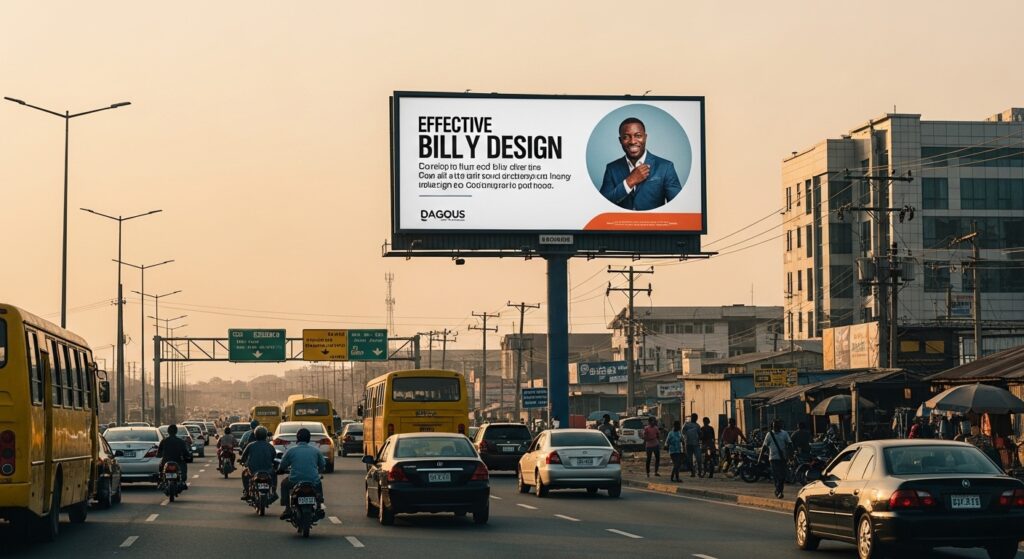
Billboard advertising in Nigeria rewards clarity, speed, and cultural awareness. Drivers face dense traffic, unpredictable road conditions, and visual clutter from competing signage. A strong billboard design cuts through that noise within seconds and leaves a memorable imprint.
This guide explains the exact elements that make a billboard effective in Nigerian cities such as Lagos, Abuja, and Port Harcourt. Each section answers a practical design question and provides principles you can apply immediately.
Why Billboard Design Matters More in Nigeria
Outdoor advertising in Nigeria operates in a high-exposure, high-distraction environment. Long commute times increase visibility, yet heavy visual competition reduces attention. Design quality determines whether viewers process the message or ignore it.
Poor design wastes expensive placement costs. Strong design multiplies the impact of the same location and rental period. That leverage makes design the single most controllable performance factor in billboard campaigns.
What Is the Core Purpose of a Billboard Ad?
A billboard should deliver one clear message to a moving audience within three seconds.
Viewers rarely stop to study outdoor ads. They glance, interpret, and move on. The design must guide the eye instantly toward the primary idea. Brand recall improves when the billboard communicates a single promise rather than multiple selling points.
Every design decision should support that fast comprehension. If an element does not strengthen the main message, remove it.
How Important Is Message Simplicity?
Simplicity drives recognition and recall.
A billboard should contain one headline, one visual focus, and one brand marker. Extra information slows reading speed and reduces memory retention. Nigerian roads often feature dense signage clusters, which makes simplicity even more valuable.
Short headlines outperform long sentences because they match real viewing conditions. Aim for six to eight words maximum. Choose plain language that commuters grasp instantly.
Why the Three-Second Rule Shapes Billboard Design
The three-second rule reflects how long most people view a roadside ad.
Traffic movement, viewing angle, and competing stimuli limit attention span. A successful billboard communicates its core idea within that window. Designers must prioritize readability, scale, and contrast.
Test your design by glancing at it briefly from a distance. If the message feels unclear, simplify the layout or enlarge key elements.
What Role Does Typography Play in Billboard Effectiveness?
Typography determines whether people can read your message at speed.
Sans-serif fonts usually perform best because they remain legible at long distances. Thick strokes maintain clarity under harsh sunlight or night illumination. Decorative fonts reduce readability and should rarely appear in headlines.
Text size matters more than style. Letters must remain readable from hundreds of meters away. Large spacing between characters improves clarity and prevents visual crowding.
How Should You Choose Colors for Nigerian Outdoor Conditions?
Color contrast ensures visibility under intense sunlight and varied weather.
Nigeria’s climate produces strong brightness levels, which can wash out weak color combinations. High contrast pairs, such as dark text on light backgrounds or bold brand colors against neutral fields, maintain legibility.
Avoid overly complex gradients or muted palettes that fade in daylight. Choose colors that remain consistent across print materials, LED screens, and mobile photography.
Color should also align with brand identity. Consistent color use strengthens recognition across multiple billboard placements.
Why Visual Hierarchy Determines Whether People Notice Your Ad
Visual hierarchy guides viewers toward the most important element first.
A strong hierarchy places the main message at the largest scale, followed by supporting elements such as product imagery or call-to-action text. Brand logos usually appear last but remain clearly visible.
Without hierarchy, viewers struggle to decide where to look. That confusion reduces comprehension and recall. Designers should ensure the eye moves naturally from headline to image to brand.
How Powerful Imagery Improves Billboard Performance
Images communicate faster than text.
A single bold visual often conveys meaning instantly, especially for food brands, telecom services, fintech apps, and retail promotions. Clear subject framing works better than complex scenes with multiple focal points.
Use real photography whenever possible. Authentic Nigerian settings and relatable people increase emotional connection. Avoid generic stock visuals that lack cultural relevance.
Images must remain simple enough to recognize at a glance. Fine detail disappears at a distance.
Why Location Should Influence Design Choices
Billboard placement changes how viewers experience the ad.
High-speed expressways require larger text and minimal detail. Urban traffic zones allow slightly more information because vehicles move slowly. Pedestrian-heavy areas benefit from stronger brand storytelling and clearer product visuals.
Designers should adapt layout, text size, and visual complexity based on placement type. A one-size approach reduces performance.
Local regulations from Lagos State Signage and Advertisement Agency also influence dimensions, lighting rules, and structural constraints. Design planning should account for those requirements early.
How Brand Visibility Affects Campaign Success
Brand recognition should occur instantly.
Many billboards fail because the logo appears too small or blends into the background. Viewers remember the message but forget the advertiser. That weakens ROI.
Place the logo in a consistent, high-visibility position. Ensure sufficient contrast between the logo and background. Maintain brand colors accurately to reinforce familiarity across multiple locations.
A viewer should identify the brand within one second.
Should Billboard Ads Include Calls to Action?
Calls to action work best when they remain short and actionable.
Phone numbers, URLs, and QR codes should appear only when they support campaign goals. Too many instructions overwhelm viewers. One simple action performs better than several choices.
Use large, readable formats for any contact detail. Short URLs or memorable brand names improve response rates. If using QR codes, ensure they remain large enough to scan safely at traffic stops.
Why Cultural Context Matters in Nigerian Billboard Design
Design that reflects local culture resonates more strongly with audiences.
Language choice influences comprehension. English works for nationwide campaigns, while local phrases can strengthen regional engagement. Designers should understand audience demographics before finalizing copy.
Visual cues also carry cultural meaning. Fashion styles, facial expressions, and everyday scenarios affect relatability. Authentic representation increases trust and emotional response.
Avoid imagery or wording that may conflict with local norms or values. Cultural sensitivity protects brand reputation.
How Layout Balance Prevents Visual Overload
Balanced layouts create visual comfort and faster understanding.
White space allows key elements to stand out. Crowded designs force viewers to process too much information at once. Strategic spacing improves clarity and makes headlines easier to read.
Align elements consistently. Uneven positioning distracts the eye and reduces professionalism. Strong alignment improves both aesthetics and readability.
A clean layout often outperforms a decorative one.
What Makes a Billboard Memorable?
Memorability comes from clarity, emotion, and distinctiveness.
A unique visual idea or clever headline can anchor the message in memory. Humor, surprise, or strong emotional appeal increases retention. Simplicity ensures that the idea stays clear.
Consistency across multiple boards strengthens memorability further. Repeated exposure to the same design reinforces recall and brand association.
Designers should aim for one defining element that viewers remember long after passing the billboard.
How Lighting and Materials Affect Design Results
Outdoor visibility changes throughout the day.
Design must remain readable in direct sunlight, evening shadows, and artificial illumination. High contrast colors and bold shapes maintain consistency across lighting conditions.
Material choice also matters. Printed flex banners may display colors differently from LED screens. Designers should test artwork formats for each medium to avoid distortion.
Weather resistance protects image quality. Durable materials ensure the design remains sharp for the entire campaign duration.
Why Testing Improves Billboard Design Outcomes
Testing reveals whether a design works under real conditions.
Preview artwork at actual scale or simulate distance viewing. Check readability from multiple angles. Gather quick feedback from people unfamiliar with the campaign.
Minor adjustments in font size, spacing, or color contrast can significantly improve performance. Testing reduces the risk of deploying ineffective artwork in expensive premium locations.
Strong campaigns treat testing as a standard design step, not an optional extra.
Common Billboard Design Mistakes in Nigeria
Too much text ranks as the most frequent error.
Small logos reduce brand recall. Weak color contrast harms readability. Overly complex imagery confuses viewers. Poor adaptation to location conditions limits visibility.
Another common mistake involves copying digital ad layouts directly onto billboards. Online designs often include details unsuitable for fast roadside viewing. Outdoor creative requires its own dedicated approach.
Avoid these mistakes to protect campaign investment.
A Practical Checklist for Designing a High-Performing Billboard
Use this checklist before approving any billboard artwork:
-
One clear message only
-
The headline is readable from a long distance
-
Strong color contrast for daylight visibility
-
Single dominant image or visual focus
-
The brand logo is instantly identifiable
-
Layout remains uncluttered
-
Design suits the placement environment
-
Contact details are short and readable
If any item fails, refine the design before production.
Final Thoughts
A good billboard ad design in Nigeria delivers a clear message, strong visual focus, and instant brand recognition. It respects viewing conditions, cultural context, and placement realities. Every design element should support fast comprehension and lasting recall.
Outdoor media offers a massive reach across Nigerian cities. Design quality determines whether that reach translates into awareness, trust, and customer action. Brands that invest in strategic, disciplined billboard design consistently outperform those that rely on decorative visuals or crowded messaging.