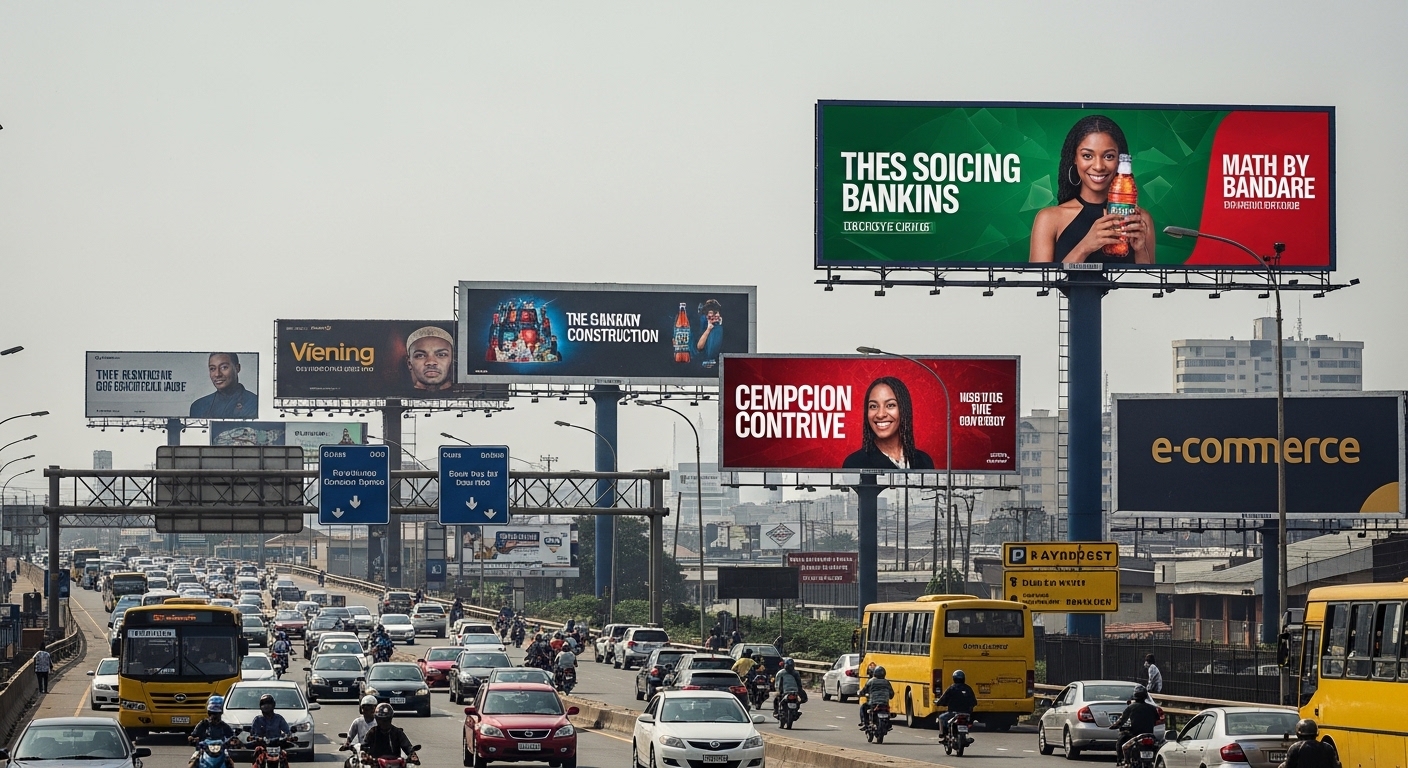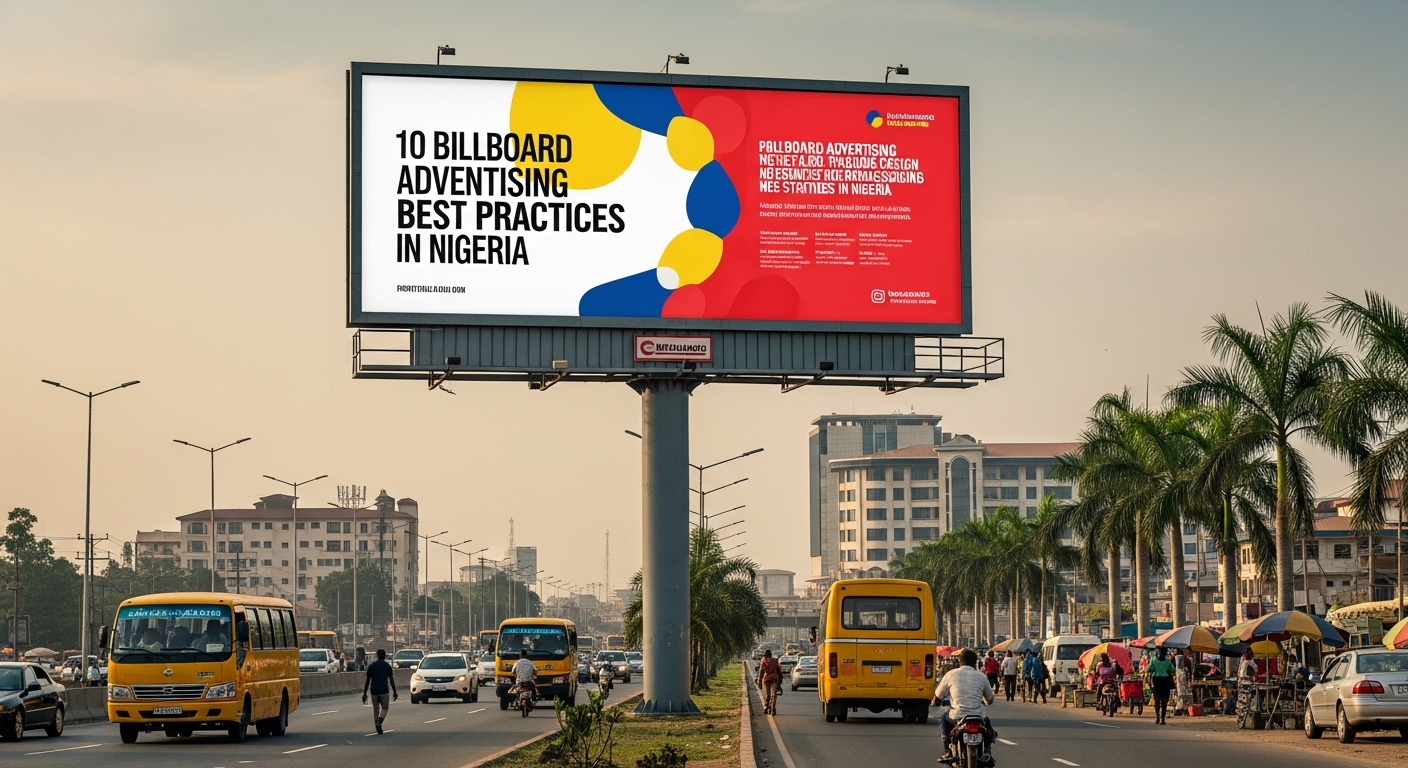

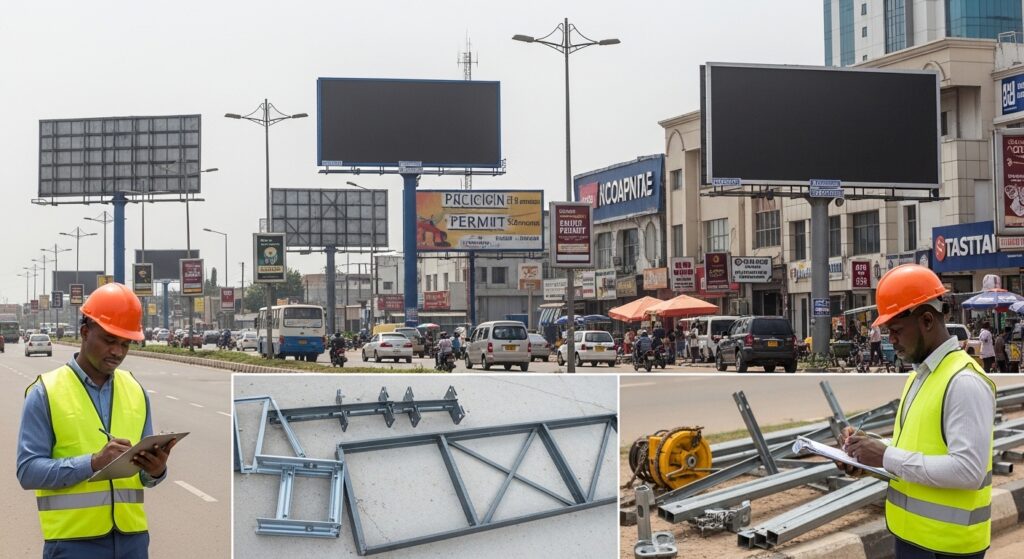
Outdoor advertising in Lagos operates under strict regulatory control. Every billboard, street pole, wall sign, canopy sign, or branded structure must comply with state and federal oversight frameworks. The two most relevant bodies in this system are LASAA and ARCON.
LASAA controls outdoor signage and advertising permits in Lagos State. ARCON regulates architectural professional practice across Nigeria, which becomes relevant when structures, mounting systems, or built advertising installations require registered architectural supervision.
Understanding how these bodies operate, how permits are structured, and how fees are categorized is essential for agencies, advertisers, property owners, and signage contractors.
This guide explains the regulatory structure, permit classifications, zoning logic, and fee layers using the Lagos signage framework.
What LASAA Controls in Outdoor Advertising
LASAA is the statutory authority responsible for managing all forms of outdoor signage and advertising structures within Lagos State. No legal billboard installation or commercial signage can operate without LASAA approval.
Core Areas of Oversight
LASAA regulates:
-
Billboard permits
-
Street pole advertising
-
Wall branding
-
Canopy signs
-
Rooftop signage
-
LED display structures
-
Building wraps
-
Temporary campaign signage
-
Branding on structures facing public roads
The agency enforces standards covering:
-
Location suitability
-
Structural safety
-
Visual impact
-
Traffic safety
-
Urban aesthetics
-
Zoning compliance
Approval is site-specific. A permit issued for one location cannot be transferred to another.
LASAA Zoning System: How Locations Affect Fees
Permit rates are not flat. LASAA applies a zoning classification model that reflects commercial visibility, traffic exposure, and urban importance.
Four Main Zone Types
1. Normal Zones
Residential or low commercial density areas. Lower traffic. Lower exposure. Lower permit rates.
2. Restrictive Zones
Areas with controlled advertising density due to environmental or planning limitations.
3. High Street Zones
Major commercial corridors with significant vehicular and pedestrian traffic. Premium visibility.
4. Special Zones
Strategic urban centers and high-value commercial districts. These command the highest regulatory rates.
Zone classification directly influences:
-
Permit fee level
-
Administrative charges
-
Renewal costs
-
Approval scrutiny
A street pole in a Special Zone may cost multiple times more than the same structure in a Normal Zone.
LASAA Permit Categories by Sign Type
LASAA groups signage into structural and format-based categories. Each category carries its own pricing model and administrative structure.
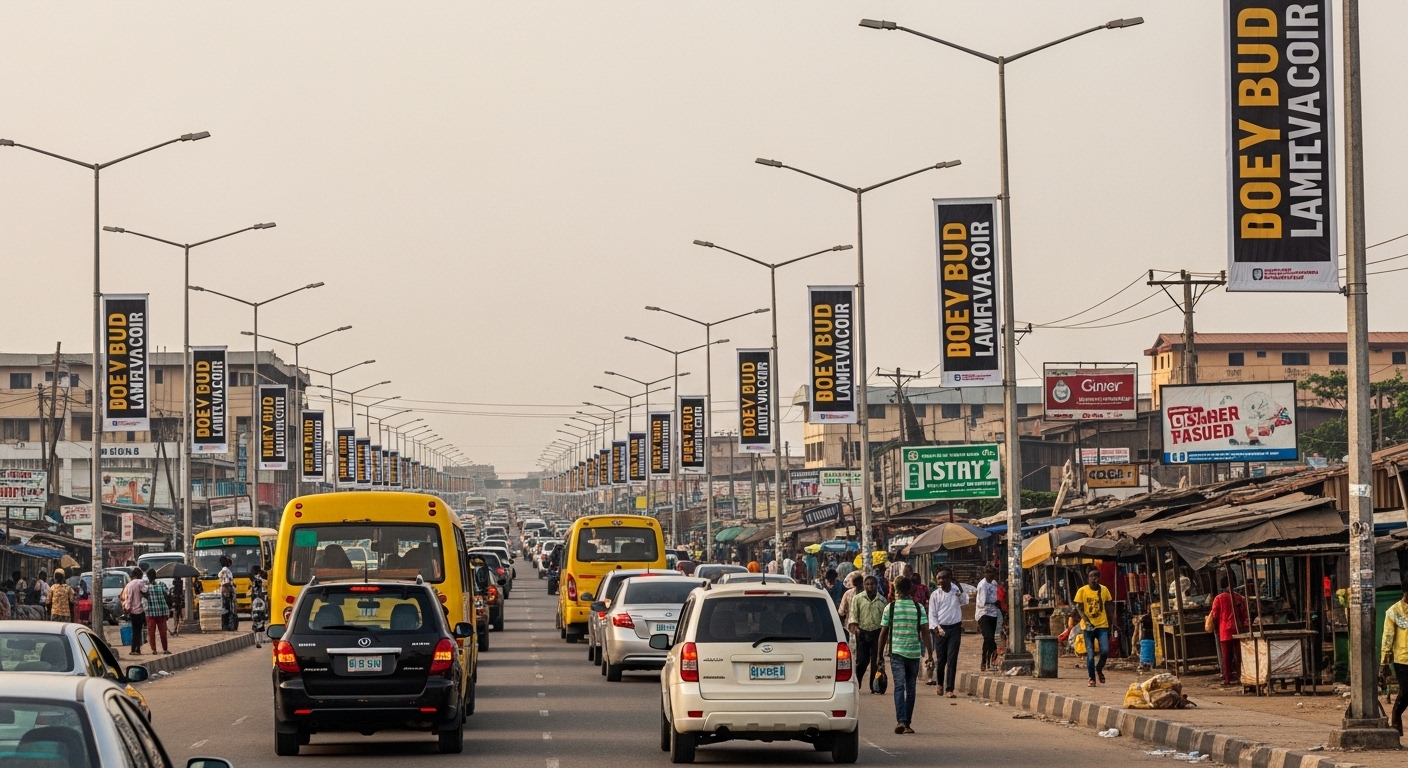
Street Lamp Pole Advertising
These are branded panels mounted on street light poles along major roads.
Short-Term Rates (Monthly):
-
₦12,000 to ₦27,200 per pole
Long-Term Rates (6 Months or More):
-
₦30,000 to ₦120,000 per pole
Rates vary by:
-
Zone
-
Road classification
-
Traffic exposure
-
Illumination type
Backlit units often fall at the upper end due to visibility.
LED Street Lamp Poles
Digital versions of pole-mounted advertising that use LED screens.
Short-Term Monthly Rates:
-
₦18,000 to ₦40,800 per pole
6-Month and Above Rates:
-
₦45,000 to ₦180,000 per pole
Digital poles attract higher regulatory rates because of:
-
Increased brightness
-
Greater visual dominance
-
Nighttime visibility
-
Technology classification
First Party Signs (Wall and Canopy Signs)
These signs promote the business operating within a property.
Basic Shopfront Signs:
-
Start from ₦20,000 per annum
Fees increase based on:
-
Size
-
Illumination
-
Projection distance
-
Building frontage exposure
Specialized structures such as pylons, architectural projections, or oversized branding are assessed separately.
Administrative Fees Under LASAA
Permit fees are only one part of the regulatory cost. Administrative charges apply depending on the structure type and approval duration.
Typical Administrative Fee Range
-
₦48,000 to ₦360,000
This may cover:
-
Site inspection
-
Structural review
-
Documentation processing
-
Approval issuance
-
Compliance monitoring
Administrative charges scale upward for larger formats, longer durations, or high-impact structures.
How Billboard Size Influences Permit Fees
LASAA fee structures correlate strongly with physical dimensions.
Larger signs:
-
Have a greater urban impact
-
Require a stronger structural review
-
Affect skyline visibility
-
Demand stricter safety standards
As size increases, fees rise because the sign occupies more visual and structural space in the public environment.
Size influences:
-
Permit cost
-
Engineering approval
-
Structural certification requirements
-
Installation monitoring
Duration and Permit Pricing
Short-term advertising attracts monthly rates. Long-term permits may be calculated over six months or annually.
Longer durations can offer:
-
Lower monthly equivalent rates
-
Greater administrative stability
-
Fewer re-application cycles
Campaign advertisers often pay higher monthly equivalents than permanent installations.
Compliance Requirements for LASAA Approval
Permit issuance requires proper documentation and structural accountability.
Common requirements include:
-
Location details
-
Structure type
-
Dimensions
-
Installation plan
-
Ownership consent
-
Structural integrity assurance
Failure to comply can result in:
-
Removal notices
-
Penalties
-
Permit revocation
ARCON and Its Role in Advertising Structures
ARCON does not regulate advertising placement. It regulates architectural practice in Nigeria.
Its relevance arises when billboard structures involve built elements requiring professional design oversight.
ARCON Firm Registration
Any architectural firm involved in structural advertising design must be registered.
Registration Fee:
-
₦20,000
Core Requirements
-
At least one registered architect
-
Active professional status
-
Financial compliance
ARCON oversight ensures that built advertising structures meet professional design standards.
Why ARCON Matters for Large Advertising Structures
Large billboard frameworks may involve:
-
Steel structures
-
Rooftop supports
-
Building modifications
-
Load-bearing integrations
Architectural involvement may be required for structural safety compliance.
Combined Regulatory Path: LASAA and ARCON
For complex installations:
-
Architectural design oversight may fall under ARCON
-
Signage permit approval falls under LASAA
Both operate independently but intersect when structures impact building systems.
Common Cost Drivers in LASAA Permits
Permit costs vary based on:
-
Zone category
-
Sign type
-
Size
-
Illumination
-
Duration
-
Urban exposure
A small wall sign in a Normal Zone is at the lower end. A digital pole network in a Special Zone is at the upper end.
Strategic Implications for Advertisers
Understanding regulatory structure helps in:
-
Budget planning
-
Site selection
-
Format decision
-
Campaign duration strategy
Permit costs influence overall OOH media efficiency.
Regulatory Stability and Updates
Fees are subject to revision by regulatory authorities. Agencies must verify current rates before campaign planning.
Key Takeaways
-
LASAA governs outdoor signage permits in Lagos
-
Fees are zoned and size-based
-
Street poles, LED poles, and first-party signs have separate pricing tiers
-
Administrative fees apply in addition to permit rates
-
ARCON regulates architectural practice, relevant for structural advertising systems
-
Compliance ensures uninterrupted campaign execution