


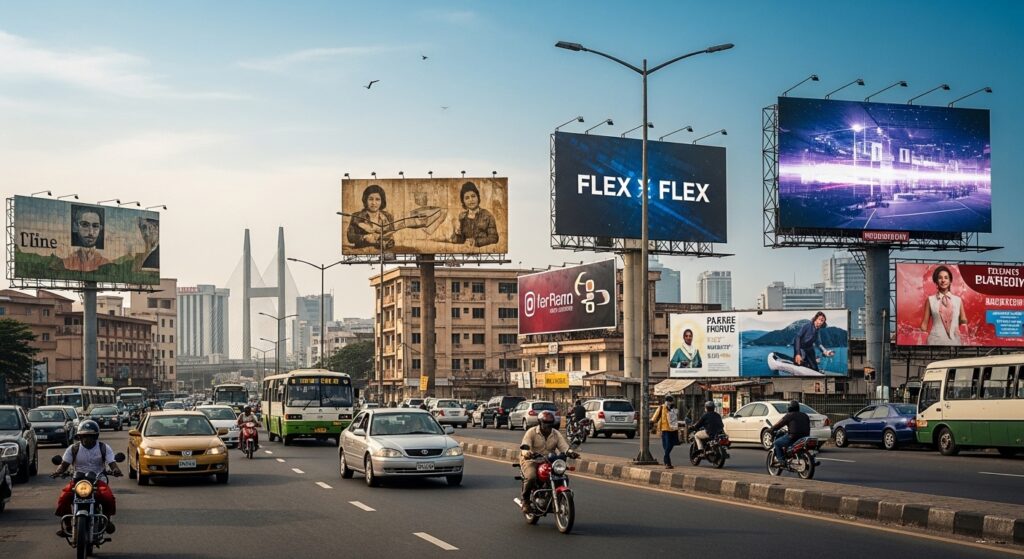
Billboard advertising in Nigeria has a rich history, reflecting the country’s urbanization, commercial growth, and digital transformation. From simple hand-painted signs to massive digital LED installations, outdoor advertising in Nigeria has evolved into a sophisticated, high-impact medium. This article explores the evolution of billboard advertising, its historical context, technological advances, and the rise of digital out-of-home (DOOH) advertising.
Early Beginnings of Outdoor Advertising in Nigeria
Billboard advertising in Nigeria traces its roots to the 1960s and 1970s. During this period, outdoor advertising was primarily hand-painted signs on building walls and wooden boards along busy roads. Major urban centers like Lagos, Ibadan, and Port Harcourt began experimenting with basic visual messaging to promote products, services, and political campaigns.
-
Hand-Painted Signs: Local artists painted advertisements for consumer goods, soft drinks, and cinemas directly onto walls or simple hoardings. These signs were inexpensive but limited in reach and durability.
-
Emergence of Printed Billboards: By the 1980s, advances in printing technology introduced flex banners and vinyl billboards, allowing advertisers to produce larger, more visually striking campaigns. Lagos became the hub of this development due to its growing economy and urban population.
During this early phase, outdoor advertising was primarily a local affair. Companies relied on creative design to stand out in crowded markets, and visibility depended on selecting busy streets and intersections.
Expansion in the 1990s and 2000s
The 1990s marked a turning point for billboard advertising in Nigeria. The rise of commercial activity, increased urban mobility, and more sophisticated marketing strategies expanded the sector significantly.
-
Corporate Adoption: Multinational brands began investing in outdoor advertising, recognizing the medium’s ability to build brand awareness in high-traffic areas. Companies like Coca-Cola, Guinness, and MTN heavily utilize roadside billboards to reach urban consumers.
-
Infrastructure Growth: Hoardings, gantries, and unipoles became more prevalent. Large-scale structures along expressways in Lagos, Abuja, and Port Harcourt transformed the cityscape, offering high-impact placement opportunities.
-
Regulatory Framework: Agencies such as LASAA (Lagos State Signage and Advertisement Agency) began regulating billboard placements, permit approvals, and safety standards. This professionalization allowed for more structured growth of the industry.
By the early 2000s, billboard advertising had established itself as a key marketing channel, capable of reaching millions of urban commuters daily.
The Digital Transformation Era
The 2010s ushered in a new era of digital out-of-home (DOOH) advertising. Digital billboards and LED screens began replacing static printed boards in prime locations.
Advantages of Digital Billboards
-
Dynamic Content: Digital screens allowed brands to rotate multiple messages throughout the day, targeting audiences at specific times.
-
Real-Time Updates: Promotions could be adjusted instantly, enabling advertisers to respond to trends or sales events.
-
Higher Visibility: LED billboards were brighter, more eye-catching, and could operate 24/7, even in low-light conditions.
Adoption in Nigerian Cities
Lagos, Abuja, and Port Harcourt quickly became the focal points of digital adoption. Key high-traffic areas like the Third Mainland Bridge, Lekki-Epe Expressway, and Victoria Island witnessed a surge in digital billboards.
-
Cost Considerations: While digital screens are more expensive to rent (up to ₦10 million monthly in Lagos), their flexibility and high-impact reach often justify the investment.
-
Integration with Analytics: Modern DOOH solutions include audience measurement, allowing brands to track impressions, dwell time, and engagement metrics. This data-driven approach has increased ROI transparency.
Impact on the Advertising Industry
Billboard advertising has remained one of the most effective media channels in Nigeria. Studies indicate that over 70% of urban Nigerians notice billboards weekly, with many making purchasing decisions influenced by outdoor campaigns.
-
Brand Visibility: Large-format billboards confer a sense of authority and credibility, particularly for premium brands.
-
Urban Culture: High dwell time in Lagos traffic jams increases exposure, giving brands multiple opportunities to reinforce messaging.
-
Complementary Digital Marketing: Many campaigns now link offline visibility with digital engagement, using QR codes, hashtags, or app downloads to track direct responses.
The shift to digital has allowed the industry to evolve from a simple visibility tool to a fully measurable marketing channel.
Regulatory Evolution
As billboard advertising matured, regulations evolved to ensure safety and visual harmony in urban areas.
-
LASAA: Oversees permit approvals, fee structures, and zoning for billboard placement in Lagos. Fees vary depending on location, type, and size of the billboard.
-
ARCON: Governs the professional standards of architectural practices in billboard construction, ensuring structural safety and compliance.
These regulations have professionalized the industry and protected both advertisers and the public.
Challenges and Opportunities
Despite growth, billboard advertising in Nigeria faces several challenges:
-
Visual Clutter: Over-saturation of billboards in some areas reduces individual effectiveness.
-
Maintenance Issues: Weather, vandalism, and poor upkeep can degrade visual quality and impact.
-
High Costs: Prime locations are expensive, which can limit access for smaller businesses.
However, opportunities continue to expand:
-
Digital Integration: The combination of digital screens and mobile tracking offers precise ROI measurement.
-
Creative Innovation: Interactive billboards, 3D designs, and high-quality LED displays allow for greater brand engagement.
-
Regional Expansion: Secondary cities like Ibadan, Kaduna, and Enugu are adopting billboard advertising, providing untapped markets.
The Future of Billboard Advertising in Nigeria
The future points toward a digital-first outdoor advertising ecosystem. Key trends include:
-
Data-Driven Campaigns: Advertisers increasingly rely on GPS data, traffic analytics, and audience measurement tools to optimize placement and messaging.
-
Sustainability Considerations: Eco-friendly materials and energy-efficient LED screens are becoming priorities.
-
Integration with Smart Cities: Digital billboards may evolve into interactive, real-time communication platforms for urban residents.
Billboards will continue to play a critical role in Nigeria’s marketing landscape, offering high visibility, credibility, and measurable impact.
Conclusion
The history of billboard advertising in Nigeria illustrates a remarkable journey from simple hand-painted signs to sophisticated digital installations. Growth has been driven by urbanization, increased brand investment, and technological advancements. Digital out-of-home advertising has transformed billboards into a measurable, high-impact marketing tool capable of driving brand awareness, engagement, and conversion. With proper strategic placement, creative execution, and regulatory compliance, billboards remain one of the most effective channels in Nigeria’s advertising ecosystem.