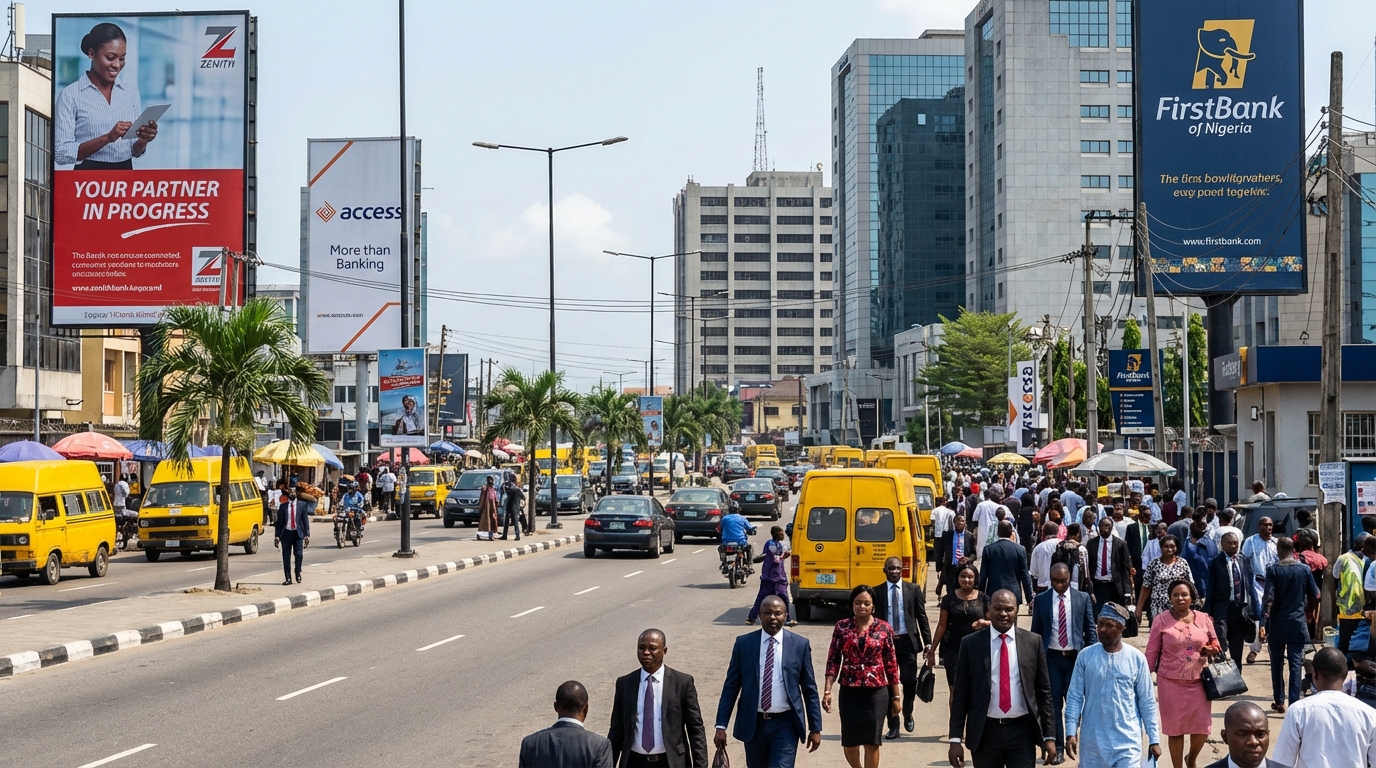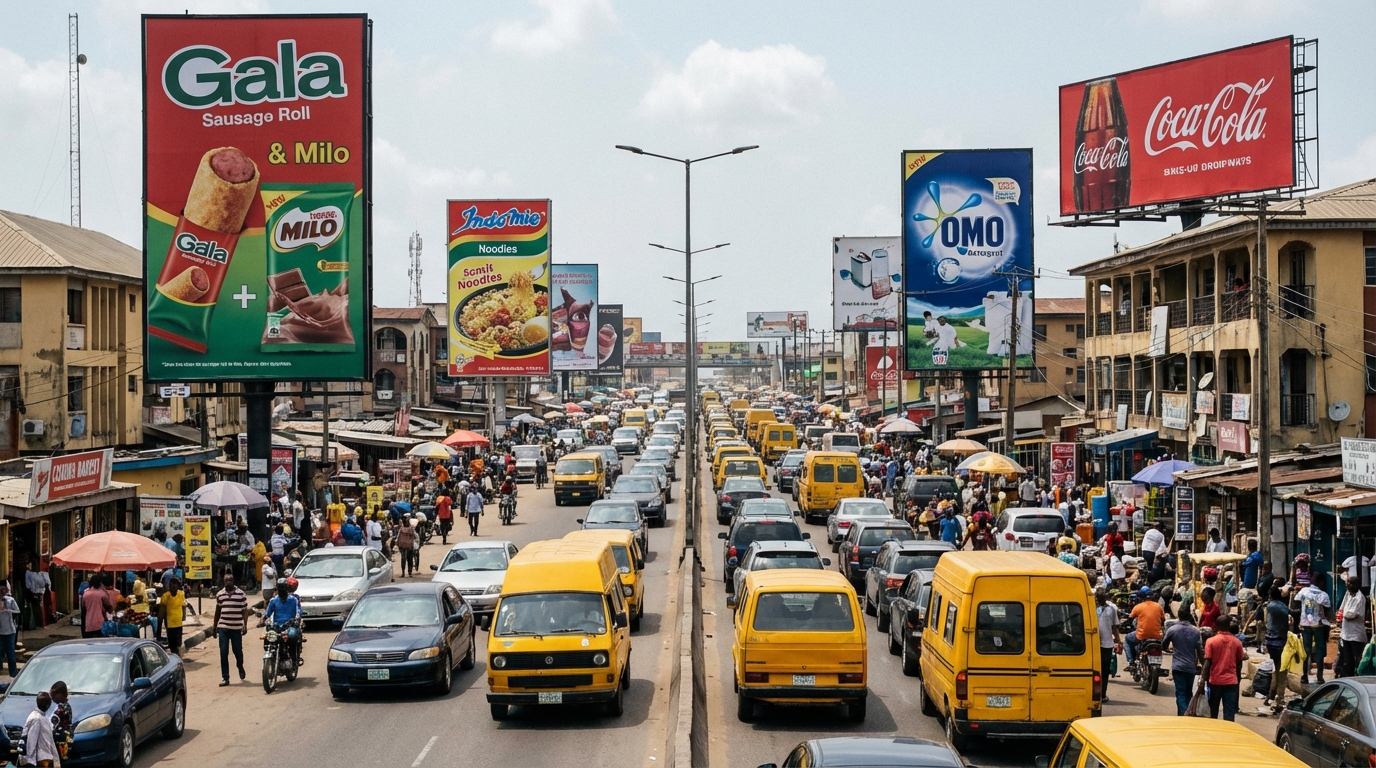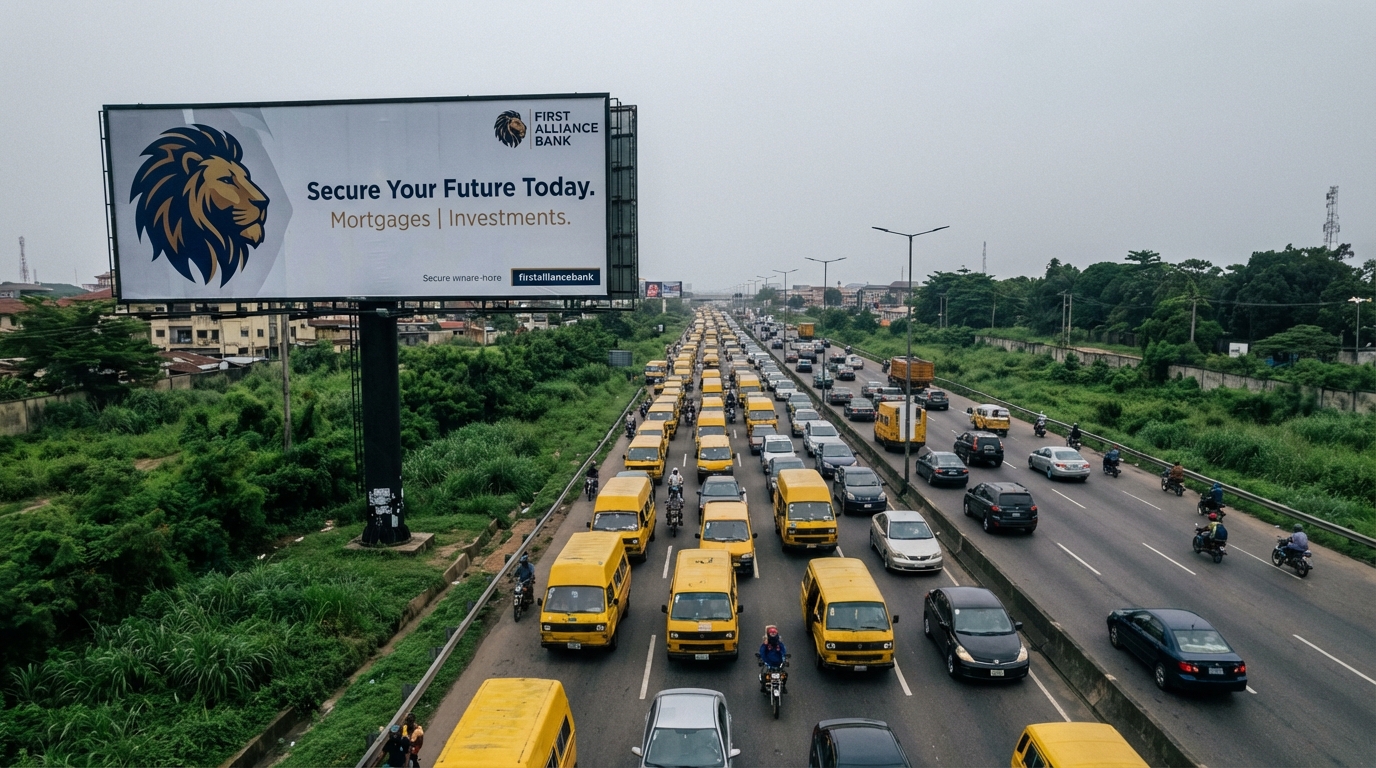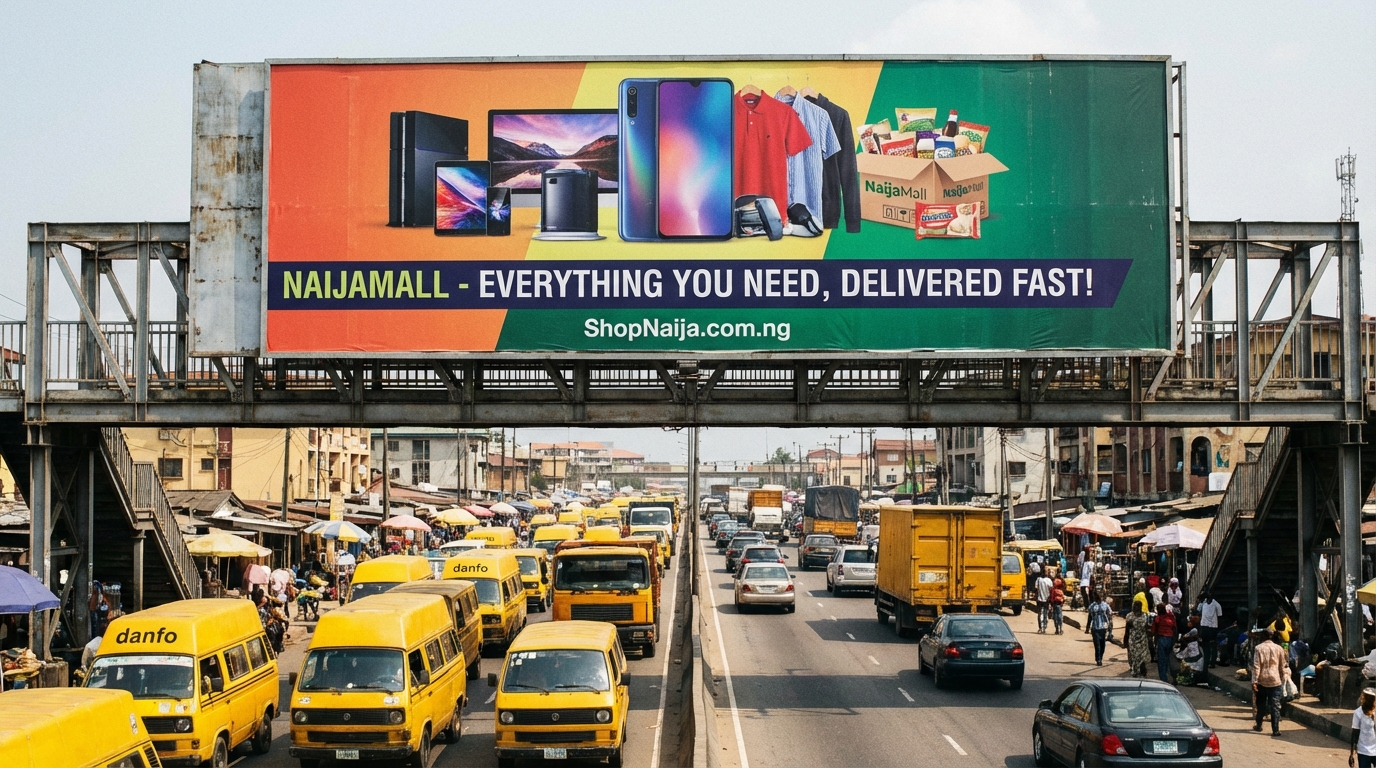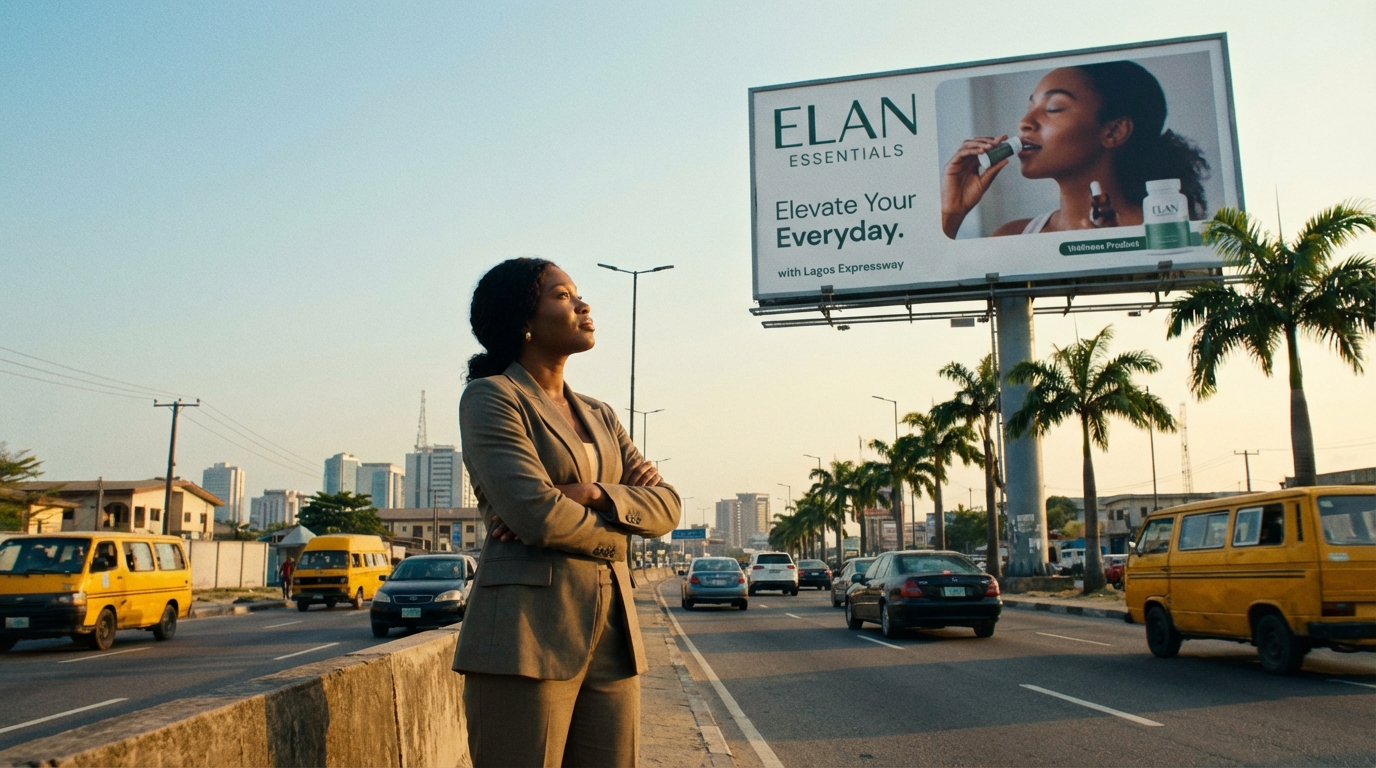

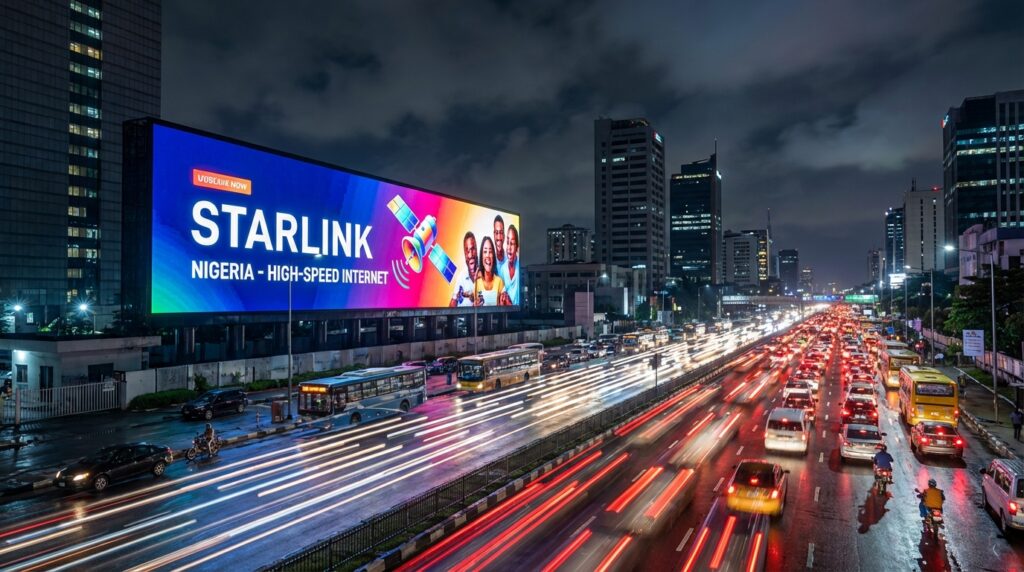
If you drive through Lagos, Abuja, or Port Harcourt regularly, you have already seen Digital Out-of-Home advertising in action.
Those bright LED screens on major roads that cycle through multiple brand messages, the large digital displays at shopping malls, and the screens at airport terminals showing rotating adverts. All of these are DOOH.
But what exactly is DOOH advertising? How is it different from a regular billboard? How does it work in Nigeria specifically? And is it the right option for your brand?
This article answers all of those questions in plain, straightforward language. By the time you finish reading, you will know exactly what DOOH advertising in Nigeria involves, what it costs, what its advantages are, and how to decide whether it belongs in your next campaign.
What Is DOOH Advertising?
DOOH stands for Digital Out-of-Home advertising. In simple terms, it refers to any advertising that appears on a digital screen placed in a public space outside of someone’s home.
This includes large LED billboard screens on highways and major roads, digital screens in shopping malls and airports, digital displays at bus stops, petrol stations, and markets, and screens inside lifts, gyms, and office buildings.
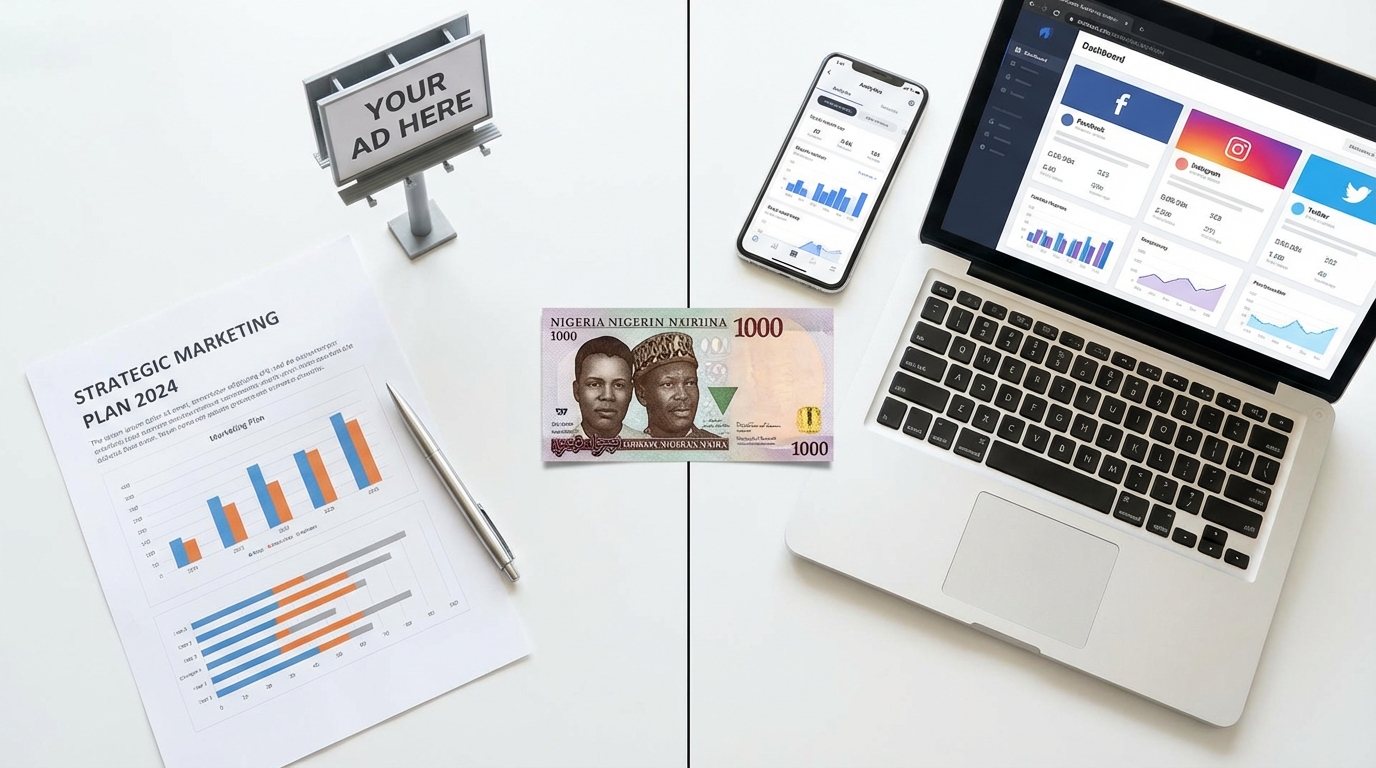
The key difference between DOOH and traditional (static) billboard advertising is that DOOH uses digital screens instead of printed vinyl banners.
This means the content on the screen can change. Different brands can share one screen, each getting a time slot in a rotation. The same screen can show one advert in the morning and a completely different one in the evening.
How Is DOOH Different From a Static Billboard?
Both static billboards and DOOH screens are forms of outdoor advertising. But they work differently, and each has its own strengths.
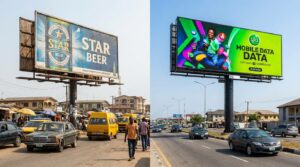
Static Billboard
- Uses a printed vinyl banner attached to a billboard structure.
- Your advert occupies the full billboard 24 hours a day for the full campaign duration.
- Once printed and installed, the design cannot change without a new print.
- Lower cost for long-term, single-advertiser campaigns.
- Very visible and consistent. People passing the same route every day will see the same message repeatedly.
DOOH Screen
- Uses a digital LED screen that displays content electronically.
- Your advert plays as part of a rotation, usually sharing the screen with three to six other brands.
- The content can be updated remotely at any time, without printing or installation.
- You can run different versions of your advert at different times of day.
- Generally more expensive per screen than static, but more flexible.
- Very attention-grabbing due to motion, brightness, and high resolution.
Neither option is universally better. The right choice depends on your campaign goal, your budget, and how long you want to run.
How Does DOOH Advertising Work in Nigeria?
In Nigeria, DOOH advertising is bought through outdoor advertising agencies that own or manage digital screens across cities. Here is how the process typically works:
Step 1: You choose your screens and location
You work with an outdoor advertising agency to identify the DOOH screens that match your target audience and campaign goals. The agency will show you available screens, their locations, daily traffic estimates, and the cost per time slot.
Step 2: You book your time slots
On a DOOH screen, multiple brands share the airtime. A typical rotation cycle on a Nigerian DOOH screen might be 10 to 15 seconds per brand, with each brand appearing multiple times every hour. You book a specific number of slots per day or per week for the duration of your campaign.
Step 3: You submit your creative artwork
Unlike a static billboard, where you provide print-ready artwork in a specific size, DOOH screens require a digital file, usually a video (MP4) or a still image in a specific resolution. Most agencies accept both video and static image formats. If you want to run a video ad, the motion and sound will grab significantly more attention than a still image.
Step 4: Your advert goes live
The agency uploads your content to the screen management system, and your advert starts running on schedule. Good agencies will send you a confirmation once your content is live, along with a screenshot or video as proof of display.
Step 5: You monitor and report
For the duration of your campaign, a professional agency should be able to tell you how many times your advert played, at what times, and on which screens. This is one of the advantages of digital over static. The data is available.
How Much Does DOOH Advertising Cost in Nigeria?

The cost of DOOH advertising in Nigeria depends on three main things: the location of the screen, the number of slots you book per day, and how long the campaign runs.
As a general guide for 2026:
- Digital LED billboards in prime locations in Lagos (such as along the Lekki-Epe Expressway, Third Mainland Bridge approaches, or Ozumba Mbadiwe) typically cost between N1,000,000 and N2,500,000+ per month for a standard slot package.
- Digital screens in shopping malls tend to be priced lower, ranging from N300,000 to N800,000+ per month, depending on the mall and the number of screens.
- Digital screens at airports can range from N500,000 to N3,000,000 per month, depending on the terminal and location within the terminal.
- Digital screens in secondary cities like Abuja, Port Harcourt, and Kano are generally less expensive than Lagos rates, often 20 to 40 per cent lower.
It is important to note that these figures cover the media placement cost only. You may also need to budget for the design or production of your digital creative, particularly if you want a video ad rather than a still image.
What Are the Advantages of DOOH Advertising for Nigerian Brands?
1. Your content can change without reprinting
With a static billboard, changing your message means printing and installing a new vinyl banner, which costs money and takes time. With DOOH, you can update your creative in hours.
This is very useful for time-sensitive campaigns like a product launch countdown, a festive season promotion, or a campaign tied to a specific event.
2. You can run different messages at different times
A DOOH screen gives you the option to show one version of your advert during the morning commute and a completely different version in the evening. A bank might show a loan product message during working hours and a savings product message on weekend afternoons.
A food brand might show a breakfast product at 7am and a dinner product at 6pm. This level of flexibility is simply not possible with a static billboard.
3. The visual impact is very high
LED screens are bright, sharp, and eye-catching. In the busy visual environment of a Nigerian city, where static billboards can blend into the background over time, a moving digital display commands attention.
This is especially true at night, when a lit LED screen stands out even more clearly against a dark sky.
4. Lower entry cost compared to a full static billboard
Because DOOH screens are shared between multiple advertisers, the cost of a slot is lower than renting an entire static billboard exclusively. For brands that want presence in a premium location but cannot afford the full exclusive cost of a large static board, DOOH is a practical entry point.
5. You get better data on your campaign
A static billboard cannot tell you how many people saw it. DOOH platforms can provide data on the number of times your advert played, the times it ran, and, in some advanced cases, estimated audience reach based on traffic data. This makes it easier to justify the spend and plan future campaigns more effectively.
What Are the Limitations of DOOH Advertising in Nigeria?
DOOH advertising has real advantages, but it also has limitations that are worth understanding before you commit your budget.
Your advert shares the screen with other brands
On a shared DOOH screen, your advert is one of several rotating through the same space. If the rotation cycle is 60 seconds and five brands are sharing the screen, your advert appears for roughly 10 to 12 seconds per cycle.
This means you have less total visibility than a static billboard where you are the only advertiser on the structure for the full campaign period.
Power supply is a real challenge in many locations
Digital screens depend on electricity. In Nigeria, where power supply is unreliable in many areas, screens can go offline during power cuts. Serious DOOH operators use backup power systems such as generators or solar inverters to keep their screens running, but this is not universal.
Always ask your agency how the screen is powered and what happens during outages.
Regulations apply just like static billboards
DOOH screens are subject to the same regulatory requirements as static billboards in Nigeria. Your creative content needs ARCON vetting, and the screens must be properly licensed by the relevant state authority, such as LASAA in Lagos.
Do not assume that because the screen is digital, the regulatory requirements are simpler. They are not.
Video production adds to your budget
To get the most out of a DOOH screen, you ideally want a short video ad rather than a still image. Video is more attention-grabbing on a digital screen and makes better use of the format.
However, producing a quality 10 to 15-second video ad adds to your overall campaign budget, and this cost is separate from the media placement fee.
The State of DOOH Advertising in Nigeria Right Now
DOOH advertising in Nigeria is growing fast. The Nigerian OOH advertising market was estimated at USD 135.23 million in 2024 and is projected to reach over USD 309 million by 2030, according to Mordor Intelligence.
Within that market, DOOH is the fastest-growing segment, with a projected compound annual growth rate of 21.4 per cent between 2025 and 2030.
In 2024, static billboards still accounted for about 62 per cent of the Nigerian OOH market. But digital screens are converting quickly, especially in Lagos and Abuja, where major operators are replacing older static structures with LED screens on the most trafficked roads.
Programmatic DOOH, which allows advertisers to buy screen time automatically based on audience data and location targeting, is still in its early stages in Nigeria. In 2024, programmatic buying accounted for an estimated 19 per cent of digital OOH spending in the country.
This is a growing area, and brands that understand it early will have a competitive advantage.
The main barriers to faster DOOH growth in Nigeria remain power supply challenges and the higher upfront cost of digital screen infrastructure compared to static structures.
However, falling LED screen prices and the increasing adoption of solar power solutions are steadily reducing both of these barriers.
DOOH vs Static Billboard: Which One Should You Choose?
The answer depends entirely on your goals, your budget, and how long you want to run.
Choose a static billboard if:
- You want exclusive, around-the-clock visibility on a single location.
- Your campaign message will not change for at least one month.
- You are focused on building strong, repeated brand awareness in a specific area.
- Your budget is better suited to a lower monthly rate for a single dedicated structure.
Choose DOOH if:
- You want flexibility to update your message quickly without reprinting.
- You want to run different versions of your advert at different times of day.
- You want a high-impact visual display in a premium location at a shared cost.
- You are running a short campaign tied to a specific event, product launch, or promotion.
- You want better data and reporting on your campaign performance.
In many cases, the strongest campaigns combine both. A static billboard builds familiarity through repeated long-term exposure, while a DOOH screen in the same area adds dynamic, timely messaging that keeps the campaign fresh.
What to Look for When Booking a DOOH Campaign in Nigeria
If you decide to run a DOOH campaign, here are the key things to confirm with your agency before you book:
- Screen location and daily traffic: Ask for specific location data, not just a general area. Ask how many people pass the screen per day and what the audience demographic is.
- Screen size and resolution: The larger and higher-resolution the screen, the more visible and impactful your advert will be. Ask for the exact dimensions and pixel specifications.
- Rotation frequency: How many times per hour will your advert appear? How many other brands are sharing the screen? What is the length of your advert slot?
- Power backup: How is the screen powered? Is there a backup system for when mains electricity is unavailable?
- Creative specifications: What file formats, dimensions, and file sizes does the screen accept? Can you run a video, or only a still image?
- Proof of display: Will the agency confirm that your advert is running, such as screenshots, a video of the screen in use, or a playback report?
- Regulatory compliance: Is the screen properly licensed? Will the agency handle ARCON vetting for your creative?
DOOH Is Not the Future of Outdoor Advertising in Nigeria. It Is the Present
Digital Out-of-Home advertising is already here in Nigeria, already growing fast, and already being used by some of the country’s most active advertisers in banking, fintech, telecoms, and FMCG.
For brands that want flexibility, visual impact, and better campaign data without the full exclusive cost of a static billboard, DOOH is a compelling option. For brands that want maximum sustained visibility on a single location, a static board may still be the stronger choice.
And for brands that want both, running a combination of static and digital outdoor advertising in the same city gives you the best of what the Nigerian OOH market has to offer.
The important thing is to understand what you are buying, ask the right questions, and work with an agency that knows the Nigerian outdoor advertising landscape well enough to guide you towards the placements that will actually deliver results for your specific goals.
Want to Run a DOOH Campaign in Nigeria?
Oxbillboards gives you access to digital LED screens and verified static billboard locations across Lagos, Abuja, Port Harcourt, Kano, and other major cities in Nigeria.
Whether you want a dynamic DOOH campaign or a sustained static billboard presence, we help you find the right locations, handle the approvals, and monitor your campaign from start to finish.