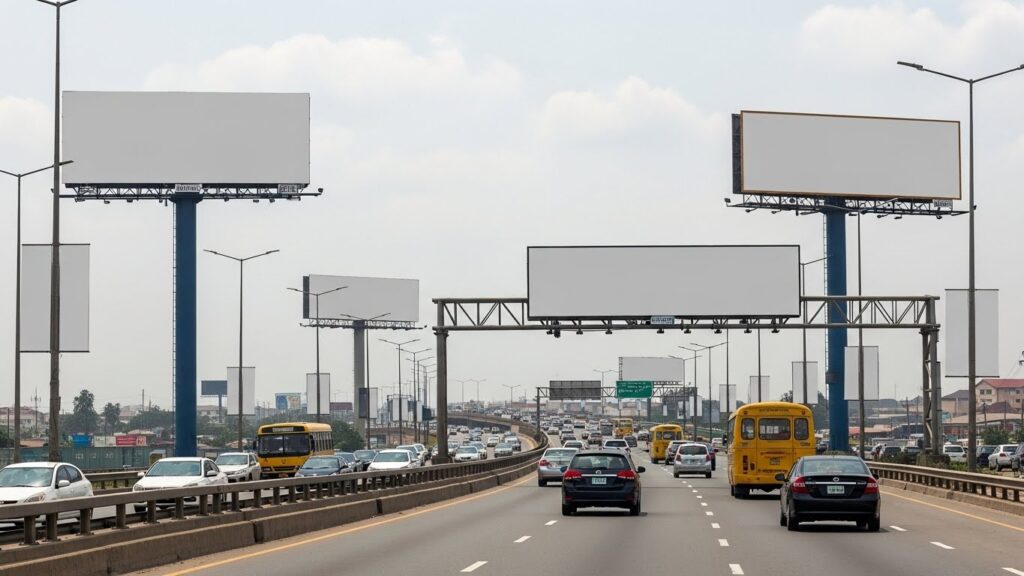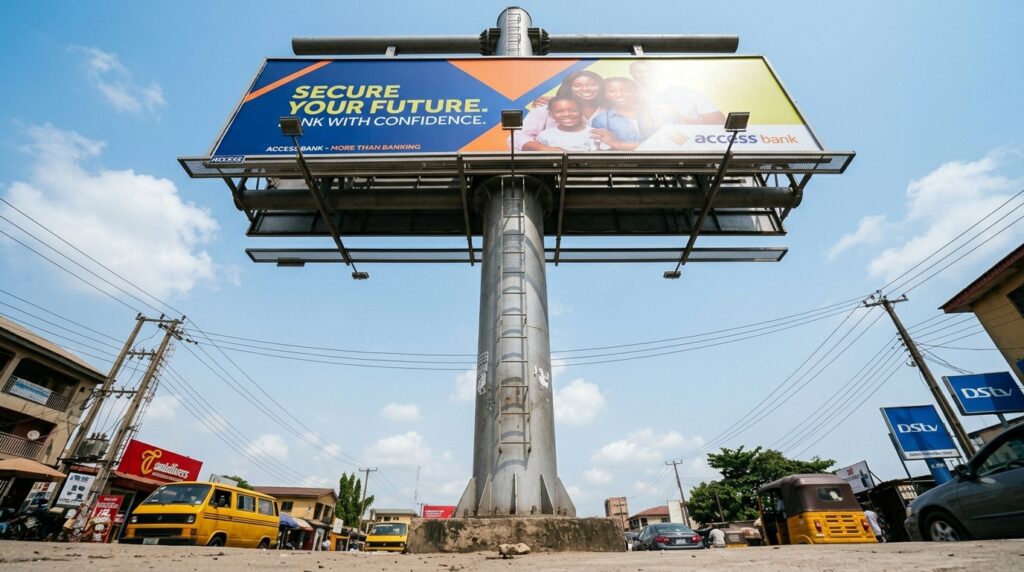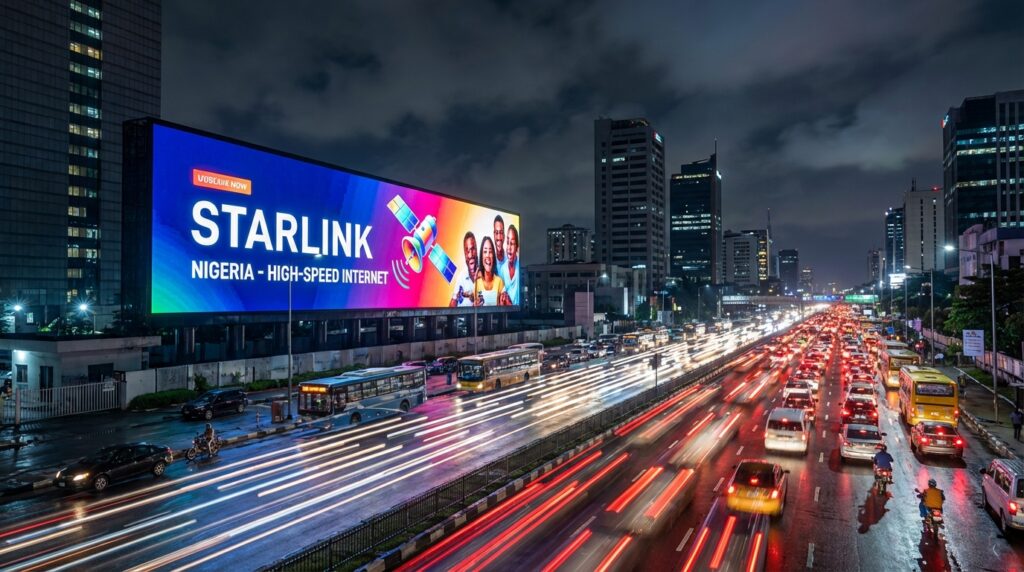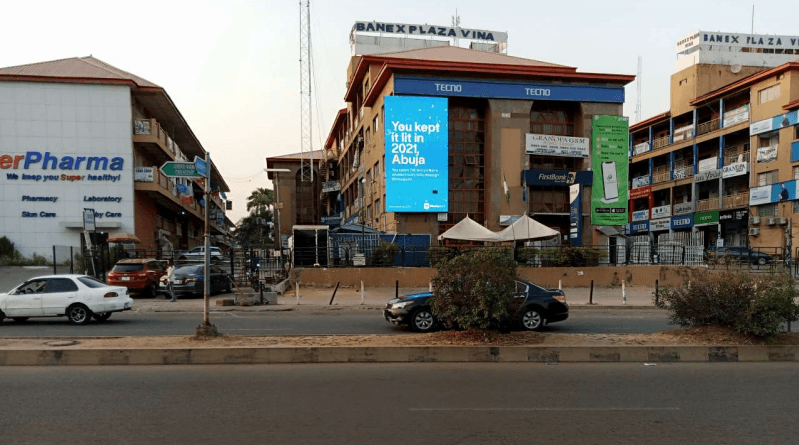

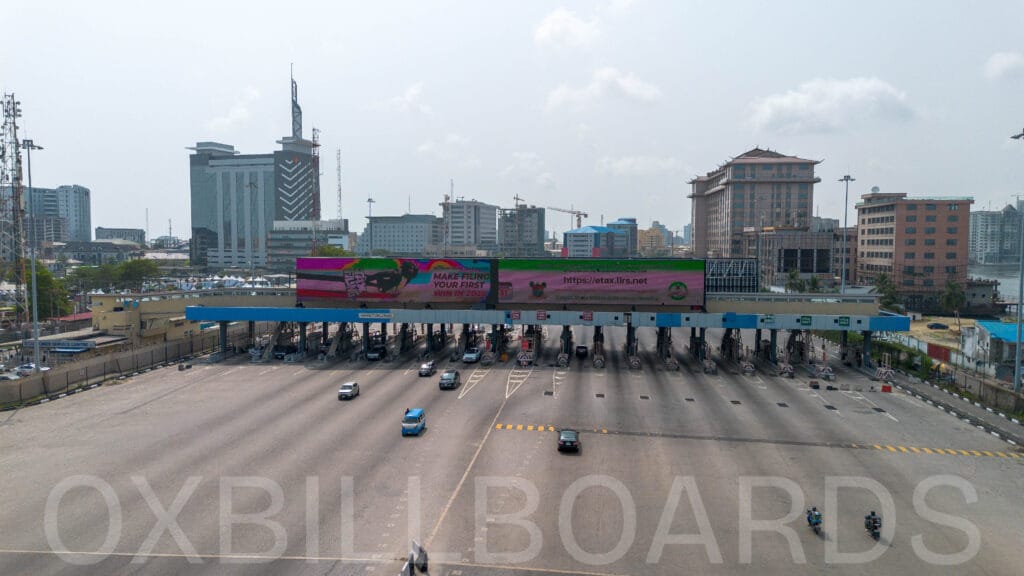
Two brands walk into the same OOH agency. They want the same thing: a 48-sheet billboard for four weeks, inside one city.
The first brand gets a quote for ₦400,000. The second brand, using the same format for the same duration, receives a quote of ₦1,800,000. There’s a ₦1,400,000 difference between the two of them.
Before the second brand cries extortion, there is no error on that invoice. No vendor bias. No bad negotiation. The only thing separating those two numbers is six kilometres of road and the density of people living, working, and moving through them.
In Nigeria’s outdoor advertising market, location is not just a preference. It is a pricing engine, and population density is what powers it.
I will break down exactly how population density drives outdoor advertising costs across Nigeria, and how you can use that understanding to make smarter, more accountable media decisions.
Why Billboard Prices Are Not the Same Everywhere in Nigeria
A billboard is not just a physical structure. It is access to an audience.
The more people who pass a location daily, and the more those people match the profile of your target customer, the more valuable that billboard face is. And the more valuable it is, the more a vendor can charge for it.
This is the core principle behind billboard pricing everywhere in the world, and Nigeria is no different. What makes Nigeria’s market unique is the scale of variation between locations.
The population density gap between a major Lagos junction and a secondary road in a mid-sized city can be enormous, and that gap translates directly into pricing.
A billboard on Adeola Odeku Street in Victoria Island, Lagos, passes in front of thousands of high-income professionals, business owners, and decision-makers every single day.
A billboard on a quieter road in Lokoja passes in front of a fraction of that number, with a different income and consumption profile. Both boards may be the same physical size. But they are selling access to completely different audiences, and that difference is fully reflected in their rates.
Understanding this logic does not just explain pricing. It gives you a framework to evaluate whether any given quote represents genuine value.
What Population Density Actually Means for Billboard Advertising

Population density, in the context of OOH advertising, refers to more than how many people live in a given area. It captures how many people move through a location on any given day, a concept known in the industry as traffic count or footfall.
A location can have moderate residential density but extremely high traffic count if it sits on a major arterial road, near a market, or at a transport interchange.
On the other hand, a heavily populated residential neighbourhood with no major road access may have high density but low billboard value, because people are not moving through it in observable, capturable volumes.
For billboard pricing purposes, what matters most is:
- How many people pass the board daily, vehicle and pedestrian counts
- How often the same people pass it; frequency of exposure
- Who those people are, their income level, purchasing behaviour, and decision-making authority
When vendors price billboard locations, they are essentially pricing access to these three variables. Population density is the upstream factor that drives all three.
The Key Factors That Drive Billboard Rates in Nigeria
Population density creates the conditions for high billboard value, but it works alongside several other variables that vendors and media buyers use to determine rates. Understanding each factor gives you the ability to interrogate a quote, not just accept it.
Daily Traffic Count and Road Visibility
Traffic count is the most direct measure of a billboard’s audience size. It refers to the number of vehicles or pedestrians that pass a given point on a road within 24 hours.
In Nigeria, the highest traffic count locations include:
- Major expressways: Lagos-Ibadan Expressway, Lekki-Epe Expressway, Abuja-Kaduna Highway
- Urban arterials: Ahmadu Bello Way (Abuja), Aba Road (Port Harcourt), Ring Road (Ibadan)
- Commercial corridors: Broad Street (Lagos Island), Ogui Road (Enugu), Zaria Road (Kano)
High traffic count alone does not guarantee billboard value. The board must also be visible, at the right angle, with sufficient dwell time for the message to register. A billboard obscured by trees, hidden behind a bend, or facing away from the primary traffic flow loses value regardless of how busy the road is.
Vendors who understand this will quote differently for a prime-facing board versus a secondary-angle board on the same road. Advertisers who do not understand it will pay prime rates for secondary visibility.
Audience Demographics and Purchasing Power
Not all traffic is equal. A road that carries 50,000 vehicles a day in a predominantly low-income area delivers a very different audience from a road that carries 30,000 vehicles a day through a high-income commercial district.
For most brands, the relevant metric is not raw traffic volume; it is the concentration of their target customer within that traffic.
This is why billboard rates in Victoria Island, Ikoyi, Maitama (Abuja), and GRA Port Harcourt are consistently among Nigeria’s highest. These areas combine significant traffic volume with exceptionally high purchasing power.
A financial services brand, a luxury goods retailer, or a premium automotive company will pay a significant premium to access that audience, and the premium is justified by the audience quality, not just the quantity.
Brands that fail to factor demographics into their location decisions often end up with high impressions but low-quality reach. Volume without relevance is waste.
Location Type: CBD, Residential, or Highway
The category of a location significantly influences its pricing structure. Nigerian OOH markets recognise several broad location types, each with distinct pricing logic:
| Location Type | Characteristics | Pricing Level |
| Central Business District (CBD) | High foot and vehicle traffic, professional audience, premium brands | Highest |
| Commercial arterial roads | Mixed audience, retail-adjacent, high volume | High |
| Major highways and expressways | Long dwell time, wide reach, intercity audiences | High–Medium |
| Residential neighbourhoods | Targeted local audience, lower volume | Medium–Low |
| Peri-urban and suburban routes | Lower density, growing areas, lower cost | Low |
| Secondary cities (state capitals) | Concentrated urban audience, lower competition | Medium |
Most premium billing in Nigeria’s OOH market comes from the first two categories, CBD and commercial arterial locations in Lagos and Abuja. Secondary cities offer significant value in the middle tiers, particularly for brands building a regional rather than purely Lagos-centric presence.
Billboard Format and Structure
Format affects rates independently of location. Even in the same area, different billboard structures command different prices:
- Unipoles: Tall, single-pole structures with wide road visibility typically command premiums over standard 48-sheet static boards.
- Gantries: Overhead road-spanning structures are among the most premium formats due to unavoidable visibility
- LED/digital boards: Priced higher than static due to flexibility and multi-advertiser rotation
- Rooftop billboards: Pricing varies widely based on building height, road prominence, and visibility angle
Understanding format pricing means you can make trade-off decisions: a well-positioned standard 48-sheet on a high-traffic road may outperform a more expensive unipole on a less active route.
Proximity to Commercial Hotspots
Billboards near markets, shopping centres, transport hubs, and business districts carry a location premium because they reach audiences at peak commercial intent, people who are already in consumption mode.
Key commercial proximity premiums in Nigeria:
- Near major markets: Computer Village (Ikeja), Balogun Market (Lagos Island), Wuse Market (Abuja).
- Near transport hubs: Murtala Muhammed International Airport road, Jibowu bus terminal axis.
- Near retail concentrations: The Palms, Ikeja City Mall, Jabi Lake Mall adjacencies.
- Near financial districts: Marina (Lagos), Central Business District (Abuja)
A billboard within 500 metres of a major commercial hub will typically carry a 20–40% premium over a comparable board in a purely residential zone, because the audience is actively engaged in spending behaviour.
How Billboard Rates Compare Across Nigerian Cities
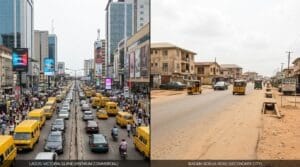
Population density and purchasing power vary significantly across Nigeria’s cities, and billboard rates reflect this directly.
| City / Area | Market Tier | Approx. Monthly Rate (48-Sheet Static) | Key Driver |
| Lagos – VI, Ikoyi, Lekki | Premium | ₦800,000 – ₦2,500,000+ | Highest density + purchasing power |
| Lagos – Ikeja, Surulere, Yaba | High | ₦500,000 – ₦1,200,000 | High commercial traffic |
| Abuja – CBD, Maitama, Wuse | High | ₦500,000 – ₦1,500,000 | Government + professional audience |
| Port Harcourt – GRA, Aba Road | Medium–High | ₦300,000 – ₦900,000 | Oil sector audience, commercial density |
| Ibadan – Ring Road, Challenge | Medium | ₦200,000 – ₦600,000 | Large population, growing commercial base |
| Kano – Fagge, Zoo Road | Medium | ₦180,000 – ₦500,000 | Dense trading population, Northern reach |
| Enugu – Ogui Road, Independence | Medium | ₦180,000 – ₦500,000 | State capital commercial activity |
| Kaduna, Benin, Owerri | Low–Medium | ₦100,000 – ₦400,000 | Regional reach, lower competition |
These are indicative ranges. Actual rates depend on specific board, vendor, format, and current availability.
The pricing gradient across these cities directly mirrors their population density, commercial activity, and audience purchasing power.
Lagos commands the highest rates because it combines the largest urban population in Africa with the highest concentration of high-income consumers and commercial activity in Nigeria.
Secondary cities offer genuine value, particularly for brands building national coverage beyond the Lagos bubble.
Understanding CPM: The Smarter Way to Compare Billboard Value
Most Nigerian advertisers evaluate billboard costs by the monthly rate alone. This is how overpaying happens.
The smarter metric is CPM (Cost Per Thousand Impressions). CPM tells you how much you are paying to reach 1,000 people, allowing you to compare the actual value of different locations regardless of their headline price.
How to calculate CPM for a billboard:
CPM = (Monthly Rate ÷ Monthly Impressions) × 1,000
Example:
- Billboard A: ₦400,000/month, 200,000 monthly impressions → CPM = ₦2.00
- Billboard B: ₦1,200,000/month, 900,000 monthly impressions → CPM = ₦1.33
In this example, Billboard ‘B’ is three times more expensive in absolute terms, but it delivers significantly better value per thousand people reached. A brand that chooses Billboard ‘A’ purely because it is cheaper is actually paying more per impression.
When evaluating any billboard quote, ask your vendor for the estimated daily traffic count. Use that number to calculate CPM. Then compare across options. This single habit will improve your OOH buying decisions more than almost anything else.
What Most Brands Get Wrong When Evaluating Billboard Costs
Several consistent mistakes lead Nigerian advertisers to either overpay for weak placements or dismiss genuinely strong locations as too expensive.
Comparing monthly rates without comparing impressions
A ₦1,500,000 billboard that reaches 800,000 people per month may be far better value than a ₦500,000 board that reaches 120,000. Rate without reach context is meaningless.
Treating all Lagos locations as equally premium
Lagos is not a uniform market. A billboard on a quiet residential street in Lekki Phase 2 is not equivalent to one on the Lekki-Epe Expressway, even if both carry “Lekki” in their location description. Always verify the specific road and position.
Ignoring secondary cities entirely
For brands with national ambitions, concentrating 100% of OOH spend in Lagos means missing millions of consumers in Kano, Ibadan, and Enugu, often at significantly lower CPM rates.
Accepting verbal traffic counts
Ask for documented or third-party verified traffic data where available. Vendors have an incentive to overstate audience numbers. Verified data protects your investment.
Not accounting for seasonal variation
Some Nigerian roads see significant traffic increases during festive periods, Eid, Christmas, and election seasons. These periods may justify premium pricing that would be unjustifiable at other times of the year.
How to Use Population Density Data in Your OOH Planning
You do not need to be a data scientist to apply population density thinking to your billboard planning. Here is a practical framework:
- Define your priority audience: Who are you trying to reach? Where do they live, work, and commute?
- Map their movement patterns: Which roads do they use daily? Which commercial areas do they frequent?
- Identify high-density intersections of your audience and road traffic: These are your highest-value billboard locations
- Request traffic counts for shortlisted locations: Use these to calculate CPM and compare value
- Cross-reference with demographic data: Purchasing power matters as much as volume
- Build a city-by-city plan for national campaigns: Match budget allocation to the density and value tier of each market
Platforms that aggregate verified billboard inventory with location data make this process faster, giving you a structured view of what is available, where, and at what price, without making dozens of uncoordinated calls to individual vendors.
This is precisely the infrastructure gap that Oxbillboards was built to fill.
Frequently Asked Questions
Why are billboard rates so much higher in Lagos than in other Nigerian cities?
Lagos combines Nigeria’s highest urban population density with its highest concentration of purchasing power and commercial activity.
Is a cheaper billboard always a worse value?
Not at all. A lower-priced board in a well-chosen secondary city location can deliver a lower CPM, meaning better value per impression than an expensive Lagos board with moderate traffic.
What is a fair CPM for billboard advertising in Nigeria?
CPM benchmarks vary by city and format, but a general range for well-placed static billboards in Nigerian cities is ₦1.00 – ₦5.00 per thousand impressions.
Do billboard vendors in Nigeria provide verified traffic data?
Some do, some don’t. Larger professional vendors and structured OOH platforms are more likely to provide documented traffic counts.
Can population density data help me plan a national OOH campaign?
Yes. Understanding density tiers across Nigerian cities allows you to allocate budget proportionally to audience size and value, rather than defaulting to Lagos-only spending.
Conclusion
Billboard rates in Nigeria are not random. They are a direct reflection of population density, traffic volume, audience demographics, and commercial proximity.
Once you understand the logic behind the pricing, you stop seeing a vendor’s quote as a take-it-or-leave-it number and start seeing it as a data point you can evaluate, interrogate, and compare.
The brands getting the most from their outdoor advertising budgets in Nigeria are not necessarily the ones spending the most. They are the ones who understand what they are buying, why it costs what it costs, and how to measure whether it is worth it.
Use CPM as your compass. Map your audience before you choose your locations. Expand beyond Lagos when the numbers support it. And always verify before you commit.
Smarter OOH planning starts with better data. Oxbillboards gives Nigerian brands and media buyers the location intelligence, verified inventory, and pricing transparency to make every outdoor naira count.