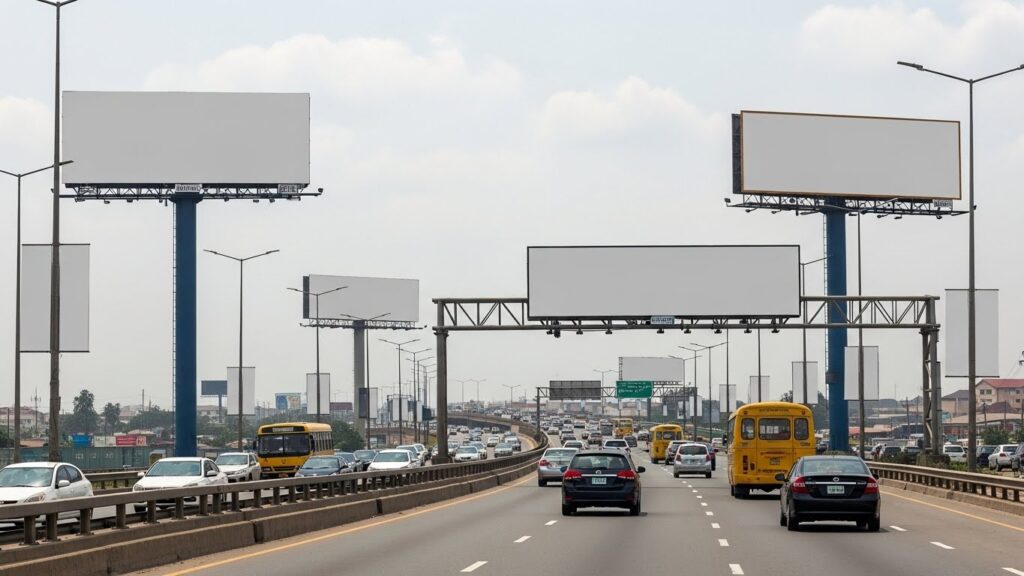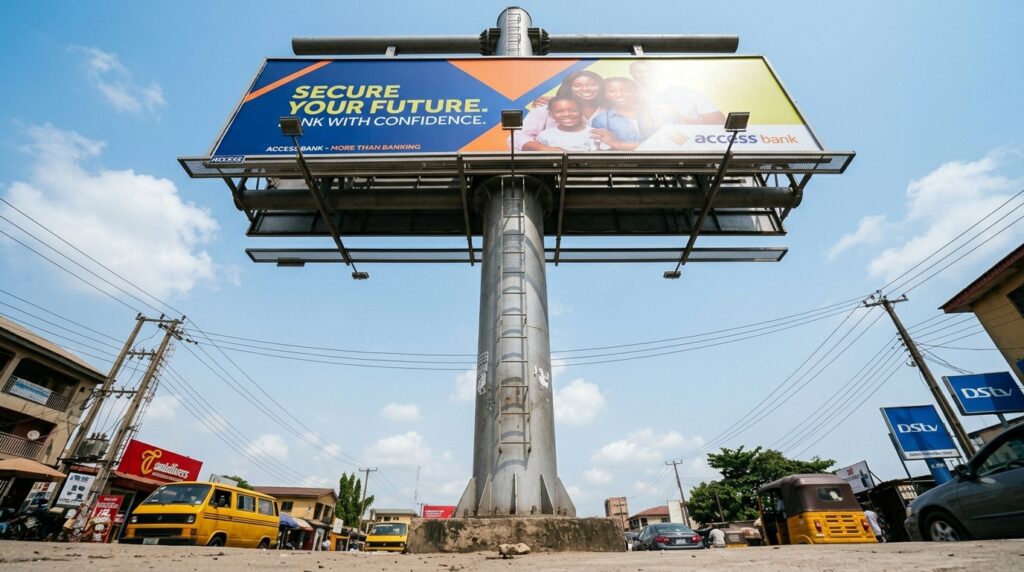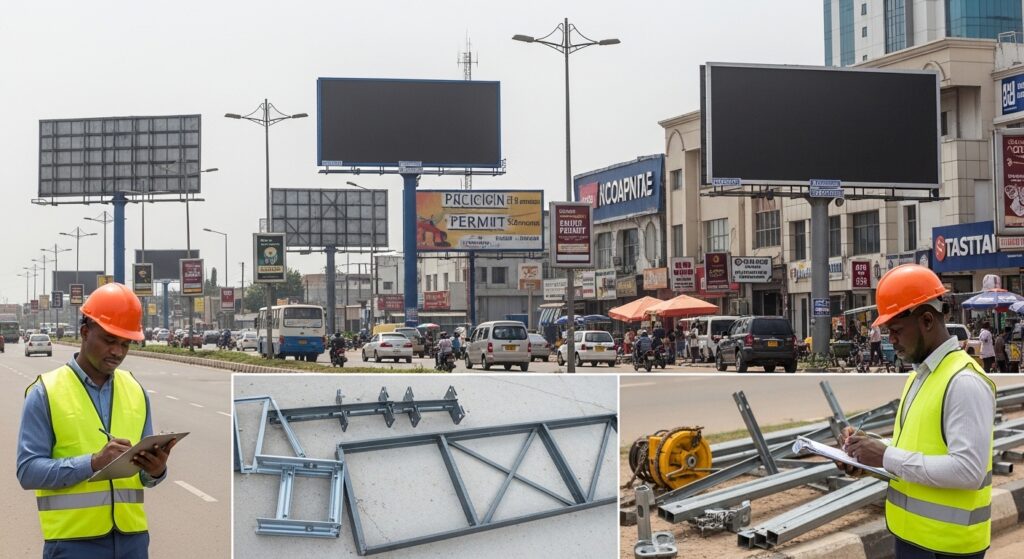

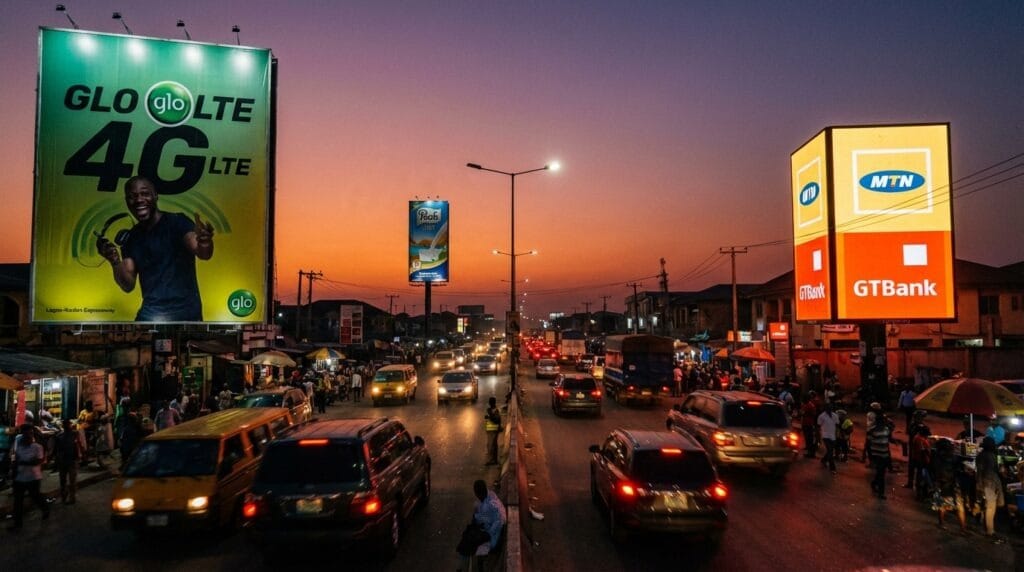
Five years ago, a brand could book a billboard on the Ozumba Mbadiwe road in Lagos, run it for three months, and consider that a serious OOH campaign.
Today, that same approach would leave significant results on the table, because how Nigerian brands plan, buy, and measure outdoor advertising has changed considerably.
The billboard advertising landscape in Nigeria is not standing still. New formats are emerging, technology is entering the market, and brands are becoming sharper about where and how they spend their outdoor media budgets.
Whether you’re a marketing manager planning a Q3 campaign or an agency advising a client on media mix, understanding these shifts is no longer optional.
Here are ten billboard advertising trends in Nigeria that are actively shaping the industry in 2025.
Why Billboard Advertising in Nigeria Is Evolving Faster Than Most Brands Realise
Nigeria has one of the most dynamic consumer markets in Africa, and its OOH advertising industry reflects that energy. The country’s urban population is growing, road infrastructure in key cities is expanding, and mobile internet penetration continues to rise.
Each of these forces is reshaping how outdoor advertising is planned and consumed.
At the same time, brands are under greater pressure to justify every naira spent. Marketing budgets are tighter, CFOs want accountability, and the era of booking billboards by gut feel is giving way to more structured, data-informed decision-making.
The ten trends below reflect that shift, from format evolution to measurement demands to geographic expansion.
10 Billboard Advertising Trends in Nigeria Shaping Campaigns in 2025

Nigeria’s OOH market is not changing in one direction; it’s evolving across format, technology, strategy, and regulation simultaneously.
Each trend below represents a real shift that is already visible in how leading brands and agencies are approaching outdoor campaigns.
1. The Rapid Rise of LED and Digital Billboards
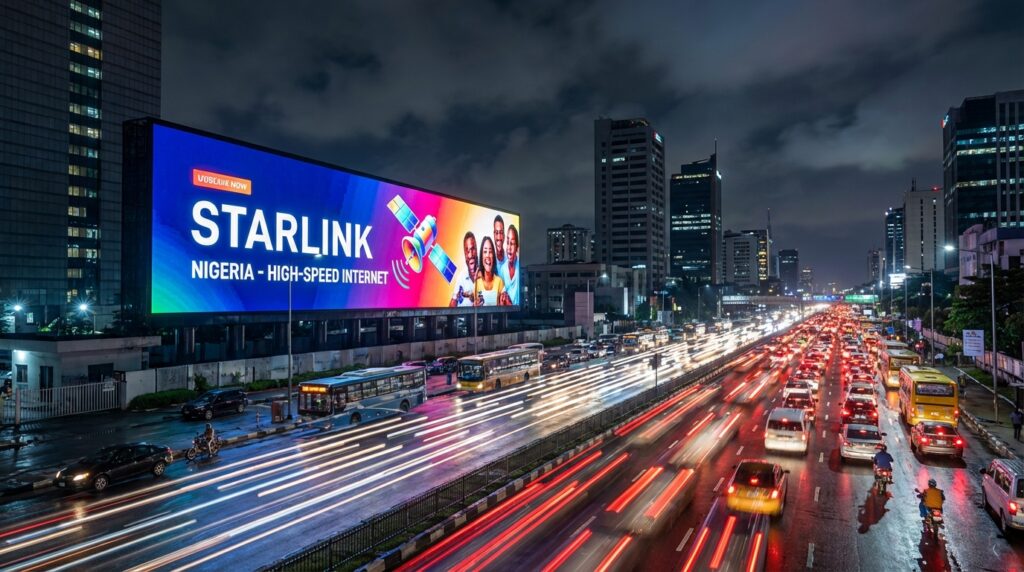
The most visible change in Nigeria’s OOH landscape over the past three years is the proliferation of LED digital billboards, particularly in Lagos, Abuja, and Port Harcourt.
LED billboards offer several advantages over traditional static boards:
- Flexibility: Artwork can be changed without reprinting or remounting
- Multiple advertisers: A single LED board can rotate between four to eight brands, reducing per-advertiser cost
- Night visibility: Self-illuminated boards maintain impact after dark without external lighting
- Dynamic content: Time-sensitive messages, countdowns, and event promotions are now possible
Premium LED locations in Lagos, particularly along Adeola Odeku in Victoria Island, Mobolaji Bank Anthony Way in Ikeja, and the Lekki-Epe Expressway, now command significant monthly rates, reflecting genuine demand from brands that want premium visibility without long-term commitments.
The trend is accelerating. Expect LED inventory to expand into secondary cities, including Ibadan, Enugu, and Kano, through 2025 and beyond.
2. Programmatic OOH Is Entering the Nigerian Market
Programmatic advertising, the automated, data-driven buying of ad placements, has dominated digital advertising globally for over a decade. It is now beginning to touch Nigeria’s OOH industry.
Programmatic OOH (also called DOOH – Digital Out-of-Home) allows advertisers to:
- Buy digital billboard slots in real time based on audience data
- Target specific times of day when their audience is most active on a given road
- Adjust spend dynamically based on performance signals
- Pause, resume, or modify campaigns without renegotiating contracts
While full programmatic DOOH infrastructure is still developing in Nigeria, forward-thinking media buyers and OOH vendors are already exploring partnerships with global programmatic platforms.
Brands that understand this trend now will have a meaningful head start when the infrastructure matures.
3. Hyperlocal Targeting Is Replacing Broad Placements
The era of “let’s put a board somewhere on the island” is fading. Nigerian brands are getting more precise about location strategy, and the results are showing.
Hyperlocal OOH targeting means:
- Placing boards within specific radii of retail locations, competitor stores, or high-footfall zones
- Selecting roads based on the demographic profile of the commuters who use them daily
- Matching billboard placement to the physical journey of the target consumer
A bank promoting a new savings product for market traders will get better returns from boards near Alaba International Market, Onitsha Main Market, or Kano’s Wapa Market than from a generic placement on a premium expressway.
Location intelligence is driving smarter decisions, and the brands making those decisions are outperforming those who aren’t.
4. Mobile and OOH Integration Is Becoming Standard Practice
Nigeria has over 150 million active mobile internet users. The smartest outdoor advertising campaigns are now designed to connect with those users, not just pass them on the road.
Mobile-OOH integration works in several ways:
- QR codes on static billboards: Linking to landing pages, product pages, or app downloads
- Social media activation: Billboards that invite audiences to share or engage online using a campaign hashtag
- Retargeting: Serving digital ads to mobile users who have been detected near specific billboard locations
- SMS and WhatsApp CTAs: Particularly effective in Nigeria, where messaging apps drive significant consumer action
Brands that treat their billboards and their digital campaigns as separate efforts miss the amplification effect that comes from connecting them. A billboard that drives mobile action multiplies its own return.
5. Brands Are Demanding More Measurement and Accountability
For years, one of the biggest criticisms of billboard advertising, in Nigeria and globally, was the difficulty of measuring results. That is changing.
Nigerian advertisers are increasingly asking their OOH vendors for:
- Traffic count data: Verified vehicle and pedestrian counts for specific locations
- Audience composition reports: Who actually passes a given board, not just how many
- Campaign reach estimates: Impressions, frequency, and coverage across a media plan
- Post-campaign analysis: Correlating OOH activity with sales uplifts, store visits, or digital traffic spikes
Some of this data remains imperfect in Nigeria’s market, but the demand itself is reshaping vendor conversations.
Media buyers who arrive at the table with measurement frameworks are getting better placements, better rates, and better accountability from their OOH partners.
6. The Shift Toward Campaign-Based Buying Over Long-Term Leases
Historically, many billboard contracts in Nigeria were structured as long-term leases, six months, twelve months, or longer. This model suited billboard owners but constrained advertisers, who were locked into locations regardless of performance.
The trend is shifting toward shorter, campaign-based buying cycles:
- 4-week and 8-week campaign windows are becoming more common
- Brands are testing locations before committing to longer terms
- Multi-city campaigns are being planned in phases rather than all at once
This shift benefits advertisers significantly, as it introduces flexibility, allows for performance-based decisions, and makes OOH more accessible to brands with smaller budgets who previously couldn’t justify long-term commitments.
7. Creative Quality Is Becoming a Competitive Differentiator
As more brands compete for attention on Nigeria’s busiest roads, the quality of outdoor creative is becoming a genuine differentiator.
A poorly designed billboard in a premium location is increasingly a wasted investment, because surrounding boards from better-funded competitors will win the visual battle.
What “creative quality” means for OOH in 2026:
- Bold, purposeful typography: Fonts that read cleanly at distance and speed
- High-contrast colour strategy: Designed for outdoor light conditions, not studio monitors
- Minimal copy discipline: Seven words or fewer, one clear message
- Brand consistency: Outdoor creative that integrates with digital and print campaigns
- Artwork testing: Reviewing at scale before final print approval
Brands that invest in OOH-specific creative, rather than repurposing social media graphics, are seeing measurably stronger recall and response rates.
8. Brands Are Expanding OOH Beyond Lagos
For years, Lagos dominated Nigerian outdoor advertising spend. That is changing rapidly.
Marketing managers are recognising that significant consumer populations, and often less saturated OOH markets, exist in Abuja, Port Harcourt, Ibadan, Kano, Enugu, Kaduna, and beyond.
Several factors are driving this geographic expansion:
- Rising media costs in Lagos are making secondary city placements more attractive on a cost-per-impression basis
- Consumer spending power in Abuja’s CBD and Port Harcourt’s GRA rivals many Lagos neighbourhoods
- National brands are under pressure to demonstrate coverage beyond the Southwest
- FMCG companies, telcos, and financial services brands are aggressively expanding into Northern and Eastern states
Brands planning national OOH campaigns now need a reliable way to discover, verify, and book billboard inventory across multiple cities, not just in Lagos.
This is one of the core problems that structured OOH platforms like Oxbillboards are built to solve.
9. ARCON Enforcement Is Tightening, and Brands Are Taking Notice
The Advertising Regulatory Council of Nigeria has been increasing its enforcement activity across the country.
Unapproved billboards are being taken down, and brands whose campaigns run on non-compliant structures are facing disruptions, fines, and reputational exposure.
What this means for advertisers in 2025:
- Verify ARCON compliance before signing any OOH contract: Ask specifically whether the structure and the campaign are both approved
- Understand state-level approvals: Lagos (LASAA), Abuja (FCDA), and other states have their own additional regulatory layers on top of ARCON
- Factor approval timelines into campaign planning: Approvals can take 7–21 days, depending on the state and the vendor’s existing relationships
- Work with vendors who can document their compliance: Not just verbal assurances
The trend toward tighter enforcement is ultimately good for the industry. It levels the playing field, removes rogue structures, and protects brands that invest properly in verified inventory.
10. Structured OOH Platforms Are Replacing Informal Vendor Networks
Perhaps the most significant structural trend in Nigerian outdoor advertising is the shift away from informal, relationship-driven billboard discovery toward structured, transparent platforms.
For decades, finding a billboard in Nigeria meant:
- Knowing the right vendor contact
- Making multiple calls with no guarantee of accurate availability information
- Receiving inconsistent pricing with no market benchmark
- Having no way to compare locations, formats, or rates across cities
That model is being disrupted. Structured OOH platforms now allow brands and agencies to:
- Search verified billboard inventory by city, road, format, and availability
- Access location data and traffic information before committing
- Compare options across multiple vendors on a single platform
- Plan national campaigns with a clear view of the full media landscape
This transparency benefits everyone; brands get better information, vendors get more qualified buyers, and the industry moves toward the kind of structured market that attracts larger advertising budgets.
Oxbillboards is at the centre of this shift, building the infrastructure layer that Nigeria’s OOH market has needed for years.
What These Trends Mean for Your Next Billboard Campaign
Understanding trends is useful. Applying them is what separates good campaigns from average ones.
Here is how to translate these ten trends into immediate action:
- Audit your location strategy: Are your current or planned billboard locations chosen based on data and audience alignment, or habit and familiarity?
- Explore LED options: If your campaign requires flexibility, time-sensitivity, or premium positioning, LED inventory is worth the higher investment.
- Connect your OOH to mobile: Even a simple QR code or campaign hashtag can extend your billboard’s reach and make it measurable.
- Plan beyond Lagos: If your market is national, your media plan should reflect that. Secondary city OOH is currently underpriced relative to its reach.
- Verify before you sign: In an environment of tightening ARCON enforcement, compliance documentation is non-negotiable.
- Use structured platforms: The era of calling vendors blindly is over. Use platforms that give you verified inventory, location data, and transparent pricing.
Frequently Asked Questions
Is billboard advertising still effective in Nigeria in 2026?
Yes, and arguably more so for brands that plan strategically.
What is DOOH, and is it available in Nigeria?
DOOH stands for Digital Out-of-Home. It is available in Nigeria, primarily in Lagos and Abuja.
How do I know if a billboard is ARCON-approved?
Ask your vendor for documentation, specifically the ARCON sticker or approval certificate for both the structure and your specific campaign. State-level approvals (such as LASAA in Lagos) may also be required.
Why are Nigerian brands expanding OOH campaigns beyond Lagos?
Two main reasons: Lagos media costs are rising, making secondary cities more cost-efficient on a per-impression basis; and national brands are recognising the scale of consumer populations in Abuja, Kano, Port Harcourt, Ibadan, and Enugu.
What is programmatic OOH advertising?
Programmatic OOH is the automated buying and selling of digital billboard slots using audience data and real-time bidding technology, similar to how digital display ads are bought online.
Conclusion
Nigeria’s billboard advertising industry is in a period of genuine transformation. LED screens are multiplying. Measurement standards are rising.
Brands are pushing into new cities. Regulatory enforcement is tightening. And the way OOH inventory is discovered and bought is fundamentally changing.
The brands that will win in this environment are not necessarily those with the biggest budgets. They are the ones paying attention, adapting their strategy to where the market is going, not where it has been.
If your OOH approach in 2026 looks exactly like it did in 2022, it’s worth asking what you might be leaving behind. The trends are clear. The direction is set. The question is whether your next campaign is built to take advantage of it.
Start with the right data, the right locations, and the right platform. That’s where smart outdoor advertising begins.