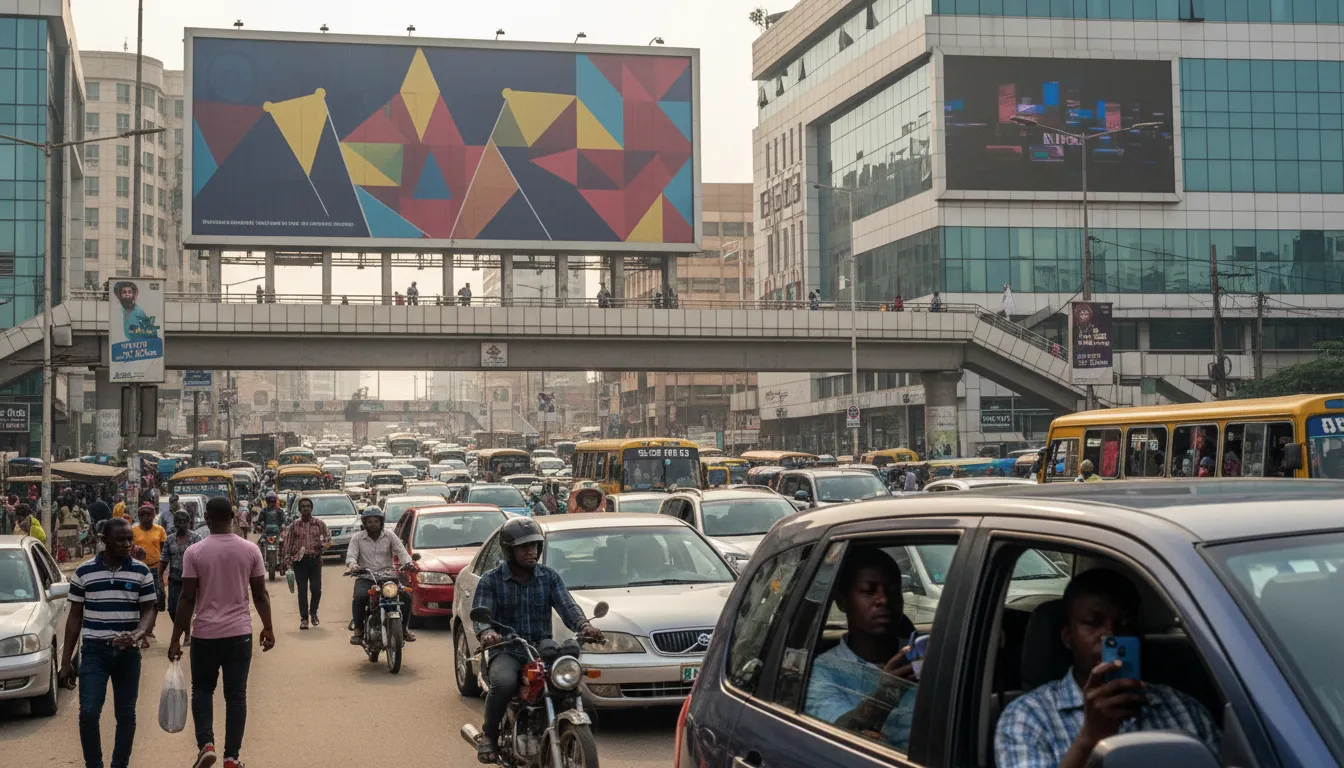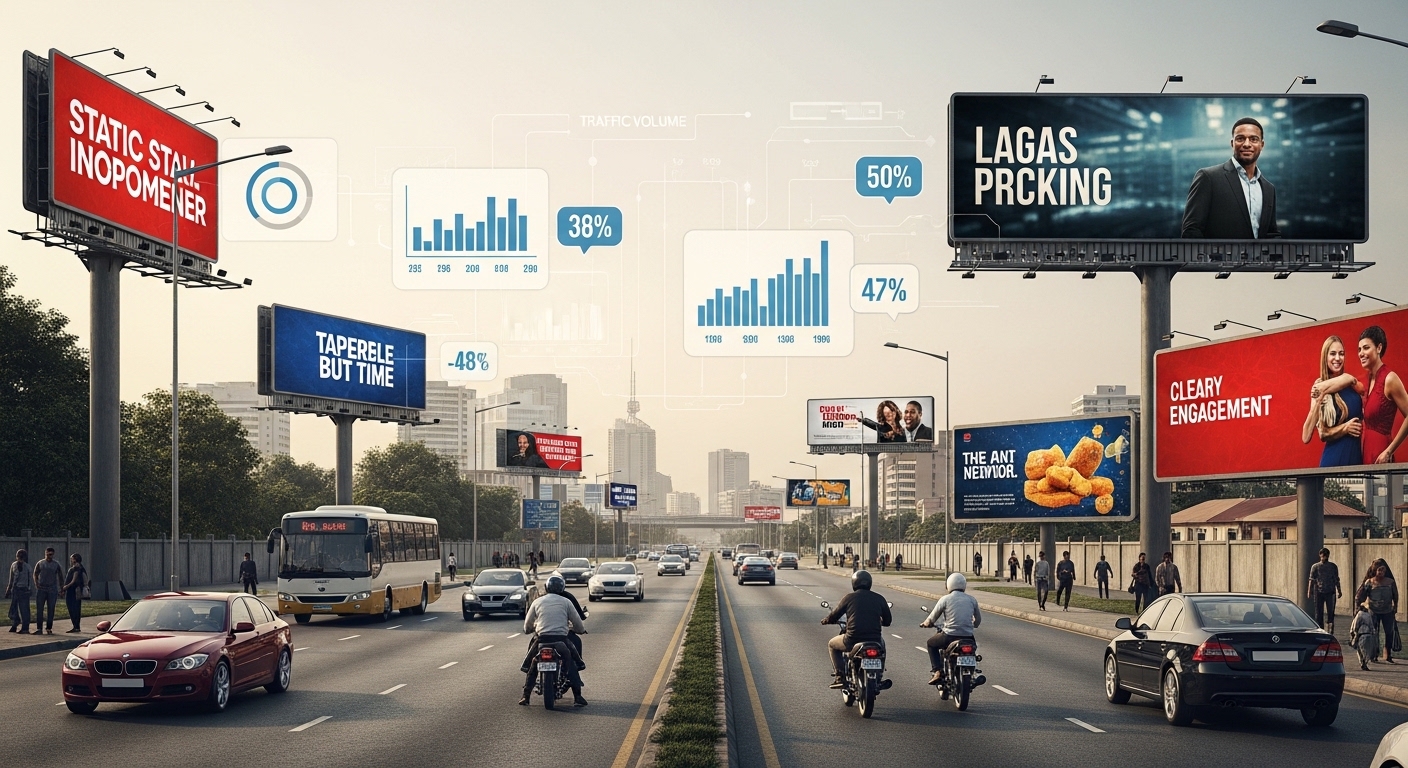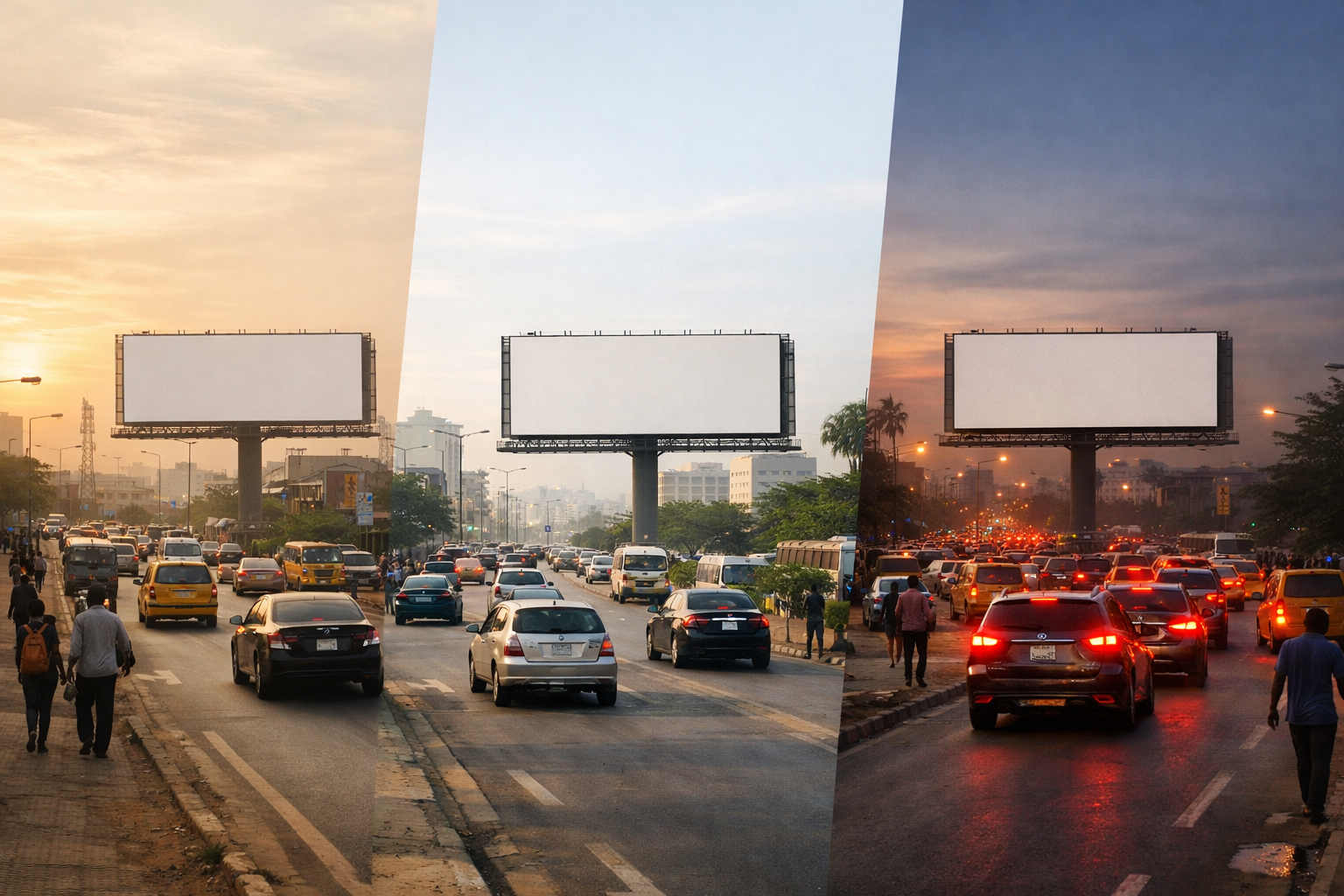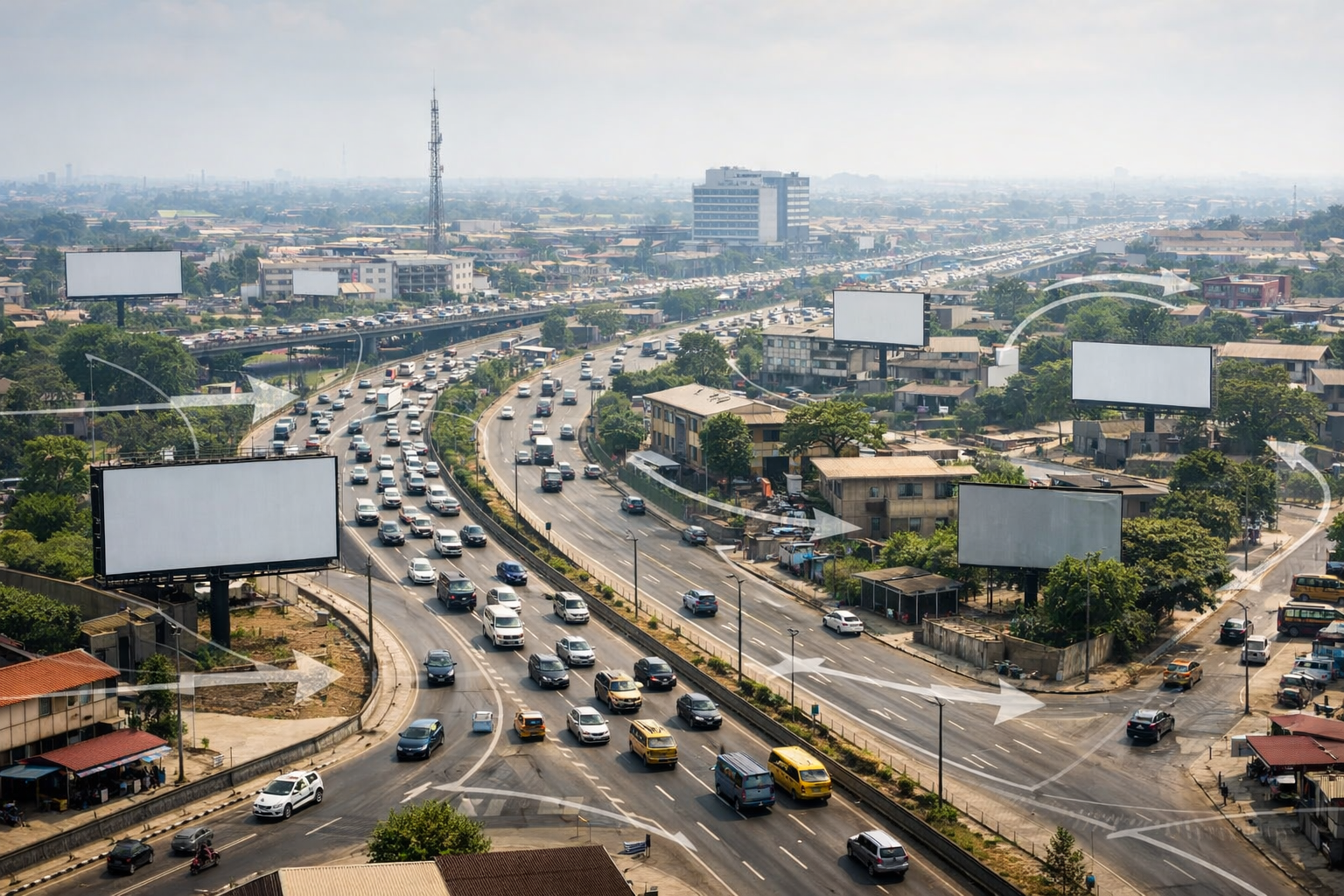


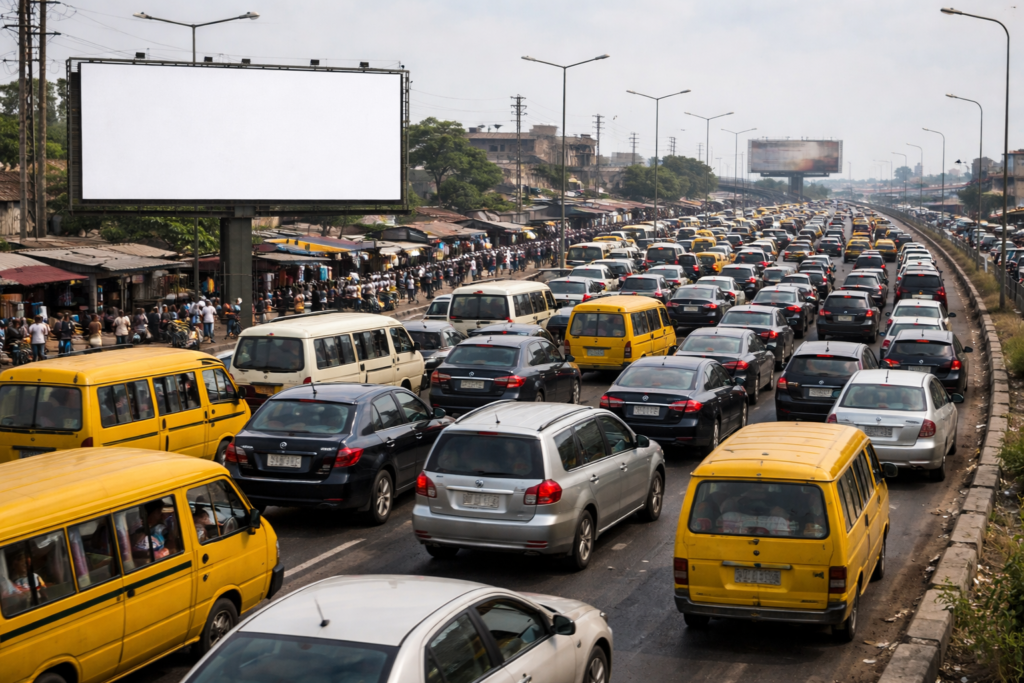
If you’ve ever sat in traffic and caught yourself reading the same billboard without even trying, you’ve already seen how traffic affects billboard advertising.
The longer people stay on a road, the more time they have to notice, recognize, and remember what’s in front of them.
In Nigeria, traffic isn’t just about movement, it shapes attention. Roads that slow people down, repeat daily routines, or funnel commuters through the same routes often deliver stronger billboard results than wide, fast-moving roads.
This is why two billboards of the same size can perform very differently, simply because of where and how traffic flows around them.
In this article, you’ll learn how traffic patterns influence billboard performance in Nigeria, why congestion and commuting habits matter, and how to choose billboard locations that work with traffic instead of against it.
Why Traffic Patterns Matter in Billboard Advertising
Most people don’t actively look for billboards. They notice them while doing something else, like driving, sitting in traffic, or moving through familiar routes.
Viewing time plays a big role. When traffic is slow or stopped, people have a few extra seconds to take in what they’re seeing.
They might read the message, notice the brand name, or recognize the colours. On faster roads, that same billboard may only get a glance before it’s gone.
This is why traffic patterns influence recall more than design alone. A simple billboard placed where people slow down regularly can stay in their minds longer than a visually impressive one placed on a fast-moving road.
Repeated exposure during daily commutes allows familiarity to build naturally, without effort.
Understanding how people move is often the difference between a billboard that works and one that fades into the background.
Slow Traffic vs Fast-Moving Roads
Not all traffic delivers the same value to a billboard. How fast or slow vehicles move past a location can change how much attention the message gets.
Why Slow Traffic Improves Billboard Performance
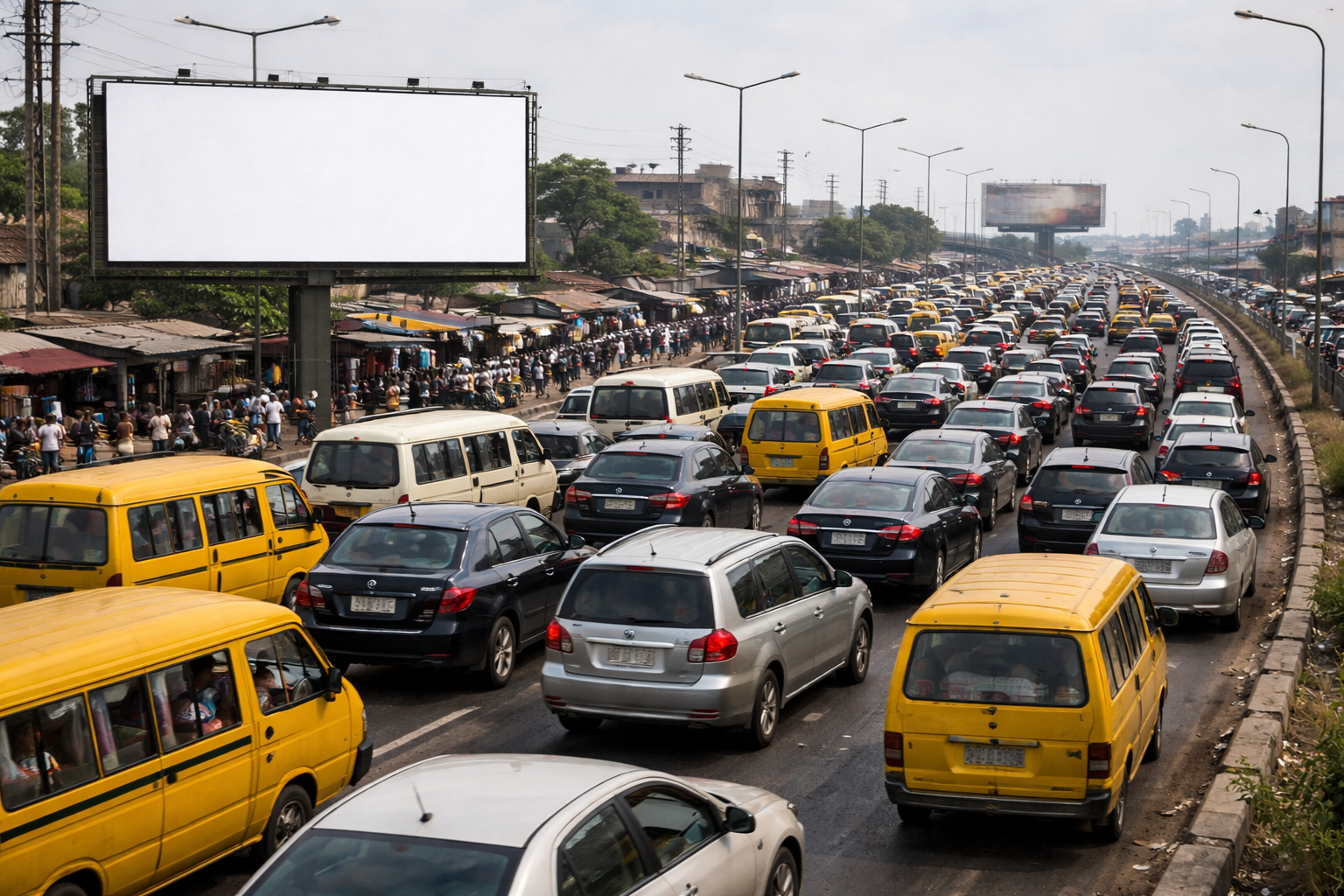
Slow traffic creates time, and time creates attention. When vehicles are stopped or crawling forward, people naturally look around. This gives billboards a better chance to be noticed, read, and remembered.
In these conditions:
- Viewing time is longer, even without effort
- People can read the message fully
- Repeated stops increase familiarity
This is why billboards placed on congested routes or near junctions often perform well. The message isn’t competing with speed.
Why Fast-Moving Roads Can Limit Impact
Fast-moving roads offer less room for attention. Drivers and passengers are focused on the road ahead, and billboards appear and disappear quickly.
On these routes:
- Exposure lasts only a few seconds
- Long or detailed messages are easily missed
- Design has to work instantly or not at all
This doesn’t mean fast roads are useless, but it does mean they demand simplicity. Without the right message and placement, billboard impact can drop significantly at speed.
Daily Commuting Patterns and Billboard Recall
One of the biggest strengths of billboard advertising is routine.
Most people in Nigeria don’t take new routes every day. They follow the same roads to work, school, markets, or business areas, often at the same time. This repetition is what allows billboards to move from being noticed to being remembered.
Morning and evening exposure play a major role here. During these periods, people are more likely to be alert and aware of their surroundings, especially when traffic slows down.
Seeing the same billboard on the way out in the morning and again on the way back in the evening doubles exposure without any extra effort from the advertiser.
This is why routine matters more than one-time reach. A billboard seen once on a busy road may get attention, but a billboard seen daily on a familiar route builds recognition over time.
In billboard advertising, consistency beats surprise. When a message becomes part of someone’s daily movement, recall grows naturally, and that’s where long-term impact comes from.
Traffic Patterns in Lagos vs Other Nigerian Cities
Traffic behaves very differently across Nigerian cities, and that difference directly affects how billboards perform.
Traffic Congestion and Exposure in Lagos
Lagos traffic is heavy and unavoidable. Long hours on the road mean people spend more time looking ahead, waiting, and moving slowly through the same routes every day.
This extended exposure gives billboards more chances to be noticed and absorbed.
Because people pass the same locations repeatedly, recall often builds faster in Lagos. A message doesn’t need months to feel familiar when it’s seen twice a day, five days a week, on the same stretch of road.
This is why billboard advertising in Lagos can feel more impactful in a shorter time.
Predictability in Smaller Cities
In many other cities in Nigeria, traffic is lighter, and movement is more predictable. There are usually fewer major routes, and people tend to rely on the same roads for daily activities. While overall exposure may be lower than in Lagos, it’s often steadier.
This steady but slower exposure means recall still builds, just over a longer period. Billboards in these cities benefit from consistency rather than volume.
With the right placement and enough time, they can still perform very well, especially for brands targeting a specific audience.
Traffic Direction, Road Angles, and Visibility
Traffic volume alone doesn’t guarantee results. Direction and visibility play a huge role in whether a billboard is actually seen.
Facing the right direction matters more than many people realize. A billboard placed on a busy road but facing the wrong direction may miss its intended audience entirely. It’s not just about how many cars pass, but who is passing and from which angle.
Entry and exit routes also affect attention. People entering busy areas are often more alert than those rushing out, especially during peak hours.
Billboards positioned along entry routes tend to get better attention than those placed where drivers are trying to leave quickly.
Junctions, stops, and intersections naturally slow traffic. These points create pauses, giving people extra time to notice what’s around them. Billboards placed near these areas often perform better than those placed along long, uninterrupted stretches of road.
Peak Traffic Hours and Billboard Performance
Not all traffic hours deliver the same level of attention. Timing plays a big role in how well a billboard performs.
When Exposure Actually Counts
Morning and evening rush hours are usually the most valuable periods for billboard exposure. During these times, people are either heading to work or returning home, often following the same routes every day.
What makes these periods effective is attention:
- Traffic moves slower, increasing viewing time
- People are alert and aware of their surroundings
- Repeated daily exposure strengthens recall
Outside these peak periods, traffic may still be heavy, but attention often drops. Faster movement and fewer pauses mean messages are easier to miss.
Digital vs Static Billboards During Peak Hours
Peak hours also highlight the difference between digital and static billboards.
Digital billboards offer timing flexibility. Messages can be scheduled to appear during rush hours, allowing brands to focus exposure when attention is at its highest.
Static billboards rely on consistency. They don’t change based on time, but they benefit from being seen repeatedly during peak traffic every day. Over time, this consistency helps the message settle naturally.
Both formats can work well, it depends on whether flexibility or steady presence better suits the campaign.
Common Billboard Mistakes Related to Traffic Patterns
Many billboard campaigns underperform not because of poor design, but because traffic behavior wasn’t properly considered.
Some common mistakes include:
- Choosing busy roads without enough viewing time, where traffic moves too fast for messages to register
- Ignoring traffic flow direction results in billboards facing the wrong audience
- Assuming all traffic delivers the same value, without considering speed, routine, or attention levels
Avoiding these mistakes starts with understanding how people actually move, not just how crowded a road looks on paper.
How to Choose Billboard Locations Based on Traffic Patterns
Choosing a billboard location shouldn’t start with how busy a road looks. It should start with how traffic behaves in that area and how that behaviour supports your campaign goal.
Matching Traffic Behaviour to Campaign Goals
For brand awareness, locations with steady, repeated traffic usually work best. These are routes people use daily, where traffic slows down enough for messages to be seen multiple times.
Over time, this repeated exposure helps the brand feel familiar and easy to remember.
For promotions, urgency matters more. High-traffic routes with strong visibility can work well, especially when the message is simple and time-sensitive.
Digital billboards are often useful here because they allow messages to appear during peak traffic hours.
Campaign duration also plays a role. Short-term campaigns benefit from locations where traffic is heavy and attention is high, allowing the message to land quickly.
Long-term campaigns perform better on routes with predictable daily movement, where repetition can build naturally over time.
When traffic behaviour and campaign goals are aligned, billboard placement stops being a guess. It becomes a deliberate decision based on how people actually move through the city.
Conclusion
Traffic patterns play a major role in how well a billboard performs.
It’s not just about how busy a road looks, but how people move, slow down, and repeat their routes. When traffic behaviour is understood, billboards stop being background noise and start becoming familiar landmarks.
Assumptions often lead to poor placement. Choosing a location simply because it looks popular can waste both time and budget.
Strategy, based on traffic flow, viewing time, and daily routines, consistently delivers better results than guesswork.
For brands planning billboard campaigns in Nigeria, working with a team that understands traffic behaviour and location strategy can make the process easier. Oxbillboards helps businesses place billboards where traffic patterns naturally support visibility, recall, and long-term impact.