

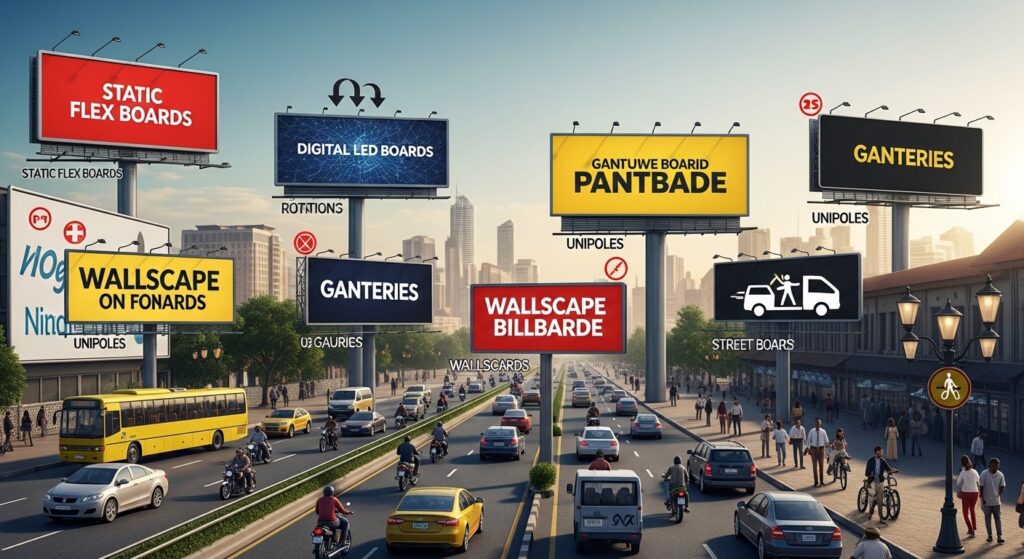
Billboard advertising remains one of the most powerful tools for brands in Nigeria. From Lagos to Abuja, advertisers are leveraging high-traffic locations to create visibility, build brand credibility, and drive conversions. But not all billboards are created equal. The format you choose can significantly impact your campaign’s effectiveness, cost, and ROI.
In this article, we break down 7 popular billboard formats, explain their advantages and disadvantages, and provide insights on how to choose the right one for your campaign.
1. Static Billboards (Flex/Banner Boards)
Static billboards are the traditional printed boards that display a fixed message. They are often made from vinyl or flex material and mounted on unipoles, gantries, or walls.
Pros:
-
Cost-Effective: Static boards are cheaper than digital alternatives, making them ideal for small businesses or short campaigns.
-
High Visibility: Once installed in prime locations, they provide constant exposure 24/7.
-
Simplicity: Easy to design and produce with minimal technical expertise.
Cons:
-
No Dynamic Content: The message cannot change once printed.
-
Limited Engagement: Cannot interact with viewers like digital boards can (e.g., QR codes or social media prompts are static).
-
Weather Sensitivity: Poor-quality materials may fade in sunlight or tear during heavy rains.
Example: Static billboards along the Lekki-Epe Expressway or Third Mainland Bridge are often used for brand awareness campaigns targeting commuters.
2. Digital LED Billboards
Digital billboards are LED-based and can display multiple messages in rotation. They are controlled remotely, allowing advertisers to schedule content and make instant changes.
Pros:
-
Flexible Messaging: You can run multiple ads, rotate campaigns, or update messages instantly.
-
Higher Engagement: Dynamic visuals attract attention more than static boards.
-
Night Visibility: Bright LEDs ensure your ad is visible even after sunset.
Cons:
-
High Cost: Digital billboards can cost up to ₦10 million per month in prime Lagos locations.
-
Technical Maintenance: Requires monitoring to prevent malfunctions or display errors.
-
Regulatory Restrictions: Some areas have strict guidelines on brightness and rotation speed.
Example: LED boards at Victoria Island and Lekki Toll Gate show rotating ads for tech products, banks, and real estate brands.
3. Gantries
Gantries are large billboard structures spanning over highways or expressways. They are usually elevated to ensure visibility from a distance.
Pros:
-
Maximum Visibility: Drivers and passengers cannot miss them due to their height and location.
-
Premium Impression: Large size and prime placement make them ideal for brand credibility.
-
High Traffic Coverage: Perfect for campaigns targeting thousands of commuters daily.
Cons:
-
Extremely Expensive: Costs for gantry installations and monthly rent can reach tens of millions of naira.
-
Installation Complexity: Requires professional engineering and regulatory approval.
-
Limited Locations: Only a few gantries are available in high-traffic areas, limiting availability.
Example: Third Mainland Bridge gantries in Lagos see hundreds of thousands of daily impressions and are often used by telecoms and FMCG companies.
4. Unipoles
Unipoles are single-pole billboards commonly installed along highways or busy roads. They are smaller than gantries but still highly effective for visibility.
Pros:
-
Cost-Efficient Alternative: Cheaper than gantries but still reaches highway traffic effectively.
-
Flexible Locations: Can be installed in both urban and suburban areas.
-
High Exposure: Tall structures make them visible over vehicles and other obstacles.
Cons:
-
Smaller Display Area: Limited space for messaging compared to gantries or large billboards.
-
Competition for Attention: Multiple unipoles in a row can reduce individual impact.
-
Regulatory Compliance: Permits must be obtained from LASAA in Lagos.
Example: Unipoles along the Lagos-Ibadan Expressway are often rented by banks and educational institutions for promotional campaigns.
5. Mobile Billboards
Mobile billboards are advertisements displayed on vehicles such as trucks or vans. They move around, reaching different locations in a single day.
Pros:
-
Flexible Reach: Can target multiple neighborhoods or events in a day.
-
Attention-Grabbing: Movement naturally draws attention.
-
Ideal for Local Campaigns: Perfect for restaurants, retail stores, or product launches.
Cons:
-
Limited Impressions per Location: Each area only sees the ad briefly compared to fixed billboards.
-
Logistics and Fuel Costs: Maintaining a vehicle and driver increases expenses.
-
Weather Dependence: Outdoor conditions may affect visibility.
Example: Beverage companies in Lagos use mobile trucks with vibrant LED displays to promote new products in high-foot-traffic areas.
6. Wallscapes / Building Wraps
Wallscapes cover the sides of buildings with giant advertisements. They are often used for high-visibility campaigns in urban areas.
Pros:
-
Massive Impact: Large visual surfaces can create iconic brand impressions.
-
Extended Exposure: Visible to both pedestrians and vehicle traffic.
-
Urban Prestige: Associating with iconic buildings enhances brand perception.
Cons:
-
High Production Costs: Custom printing, scaffolding, and installation increase expenses.
-
Regulatory Approval: Must comply with zoning and building regulations.
-
Limited Availability: Only select buildings can accommodate large wraps.
Example: Multi-story buildings in Lagos Island and Victoria Island often feature telecom and luxury brand campaigns.
7. Street Lamp/Post Billboards
Smaller boards are mounted on lamp posts or street poles along roads. They are compact and often used for local or directional advertising.
Pros:
-
Affordable: Lower cost compared to large billboards.
-
Targeted Exposure: Ideal for reaching pedestrians and local commuters.
-
Regulatory Compliance: LASAA provides clear zoning and fee structures for street pole boards.
Cons:
-
Limited Visibility: Smaller size means less impact at high speeds.
-
Clutter: Multiple poles in a short stretch reduce the attention each receives.
-
Design Limitations: A small area requires concise messaging and graphics.
Example: Retail stores in Lekki use street pole billboards to advertise weekend promotions.
How to Choose the Right Billboard Format
Choosing the right billboard format depends on your campaign goals, budget, and target audience:
-
Brand Awareness: Use gantries, wallscapes, or digital LED boards in high-traffic urban areas.
-
Local Promotions: Mobile billboards and street poles provide flexibility and affordability.
-
High ROI: Combine digital boards with static unipoles or gantries for multi-location coverage.
-
Creative Messaging: Consider wallscapes or large-format boards if your campaign relies heavily on visuals.
Conclusion
Nigeria’s billboard advertising landscape offers diverse formats for every brand and budget. Each format has its advantages and trade-offs, whether it is the high-impact gantries or the flexible mobile billboards. Understanding the pros and cons ensures that your campaign achieves maximum visibility, engagement, and ROI.
Strategic placement, creative messaging, and smart format selection are the keys to making your billboard campaign effective in Nigeria’s dynamic urban environment.