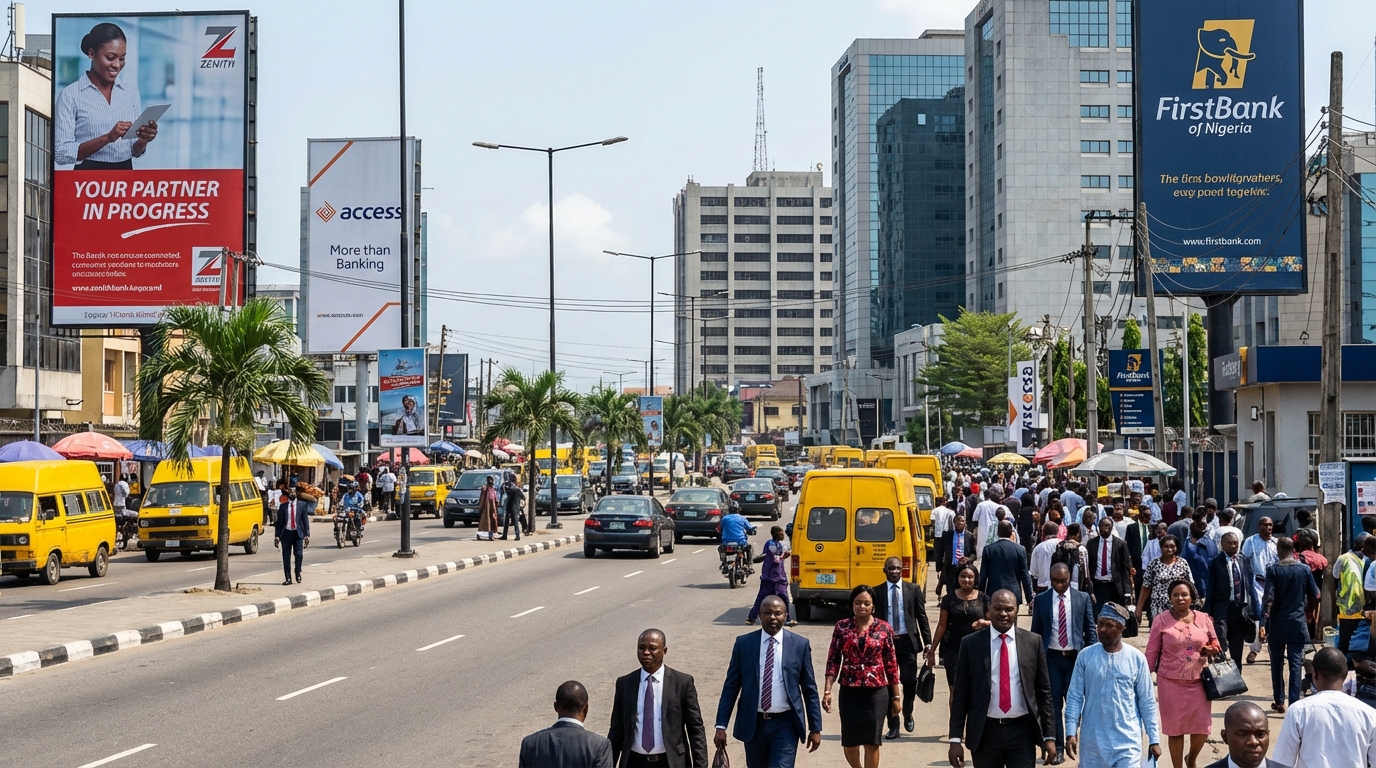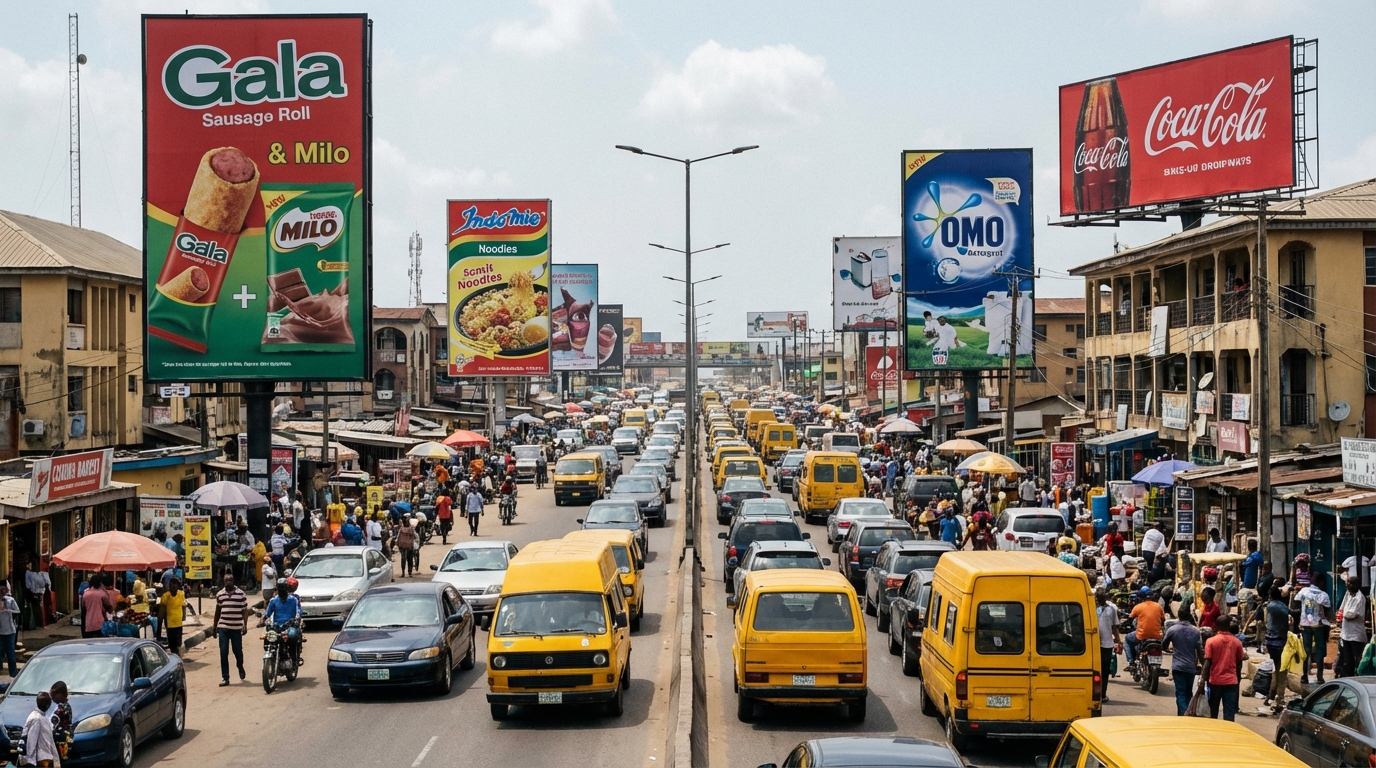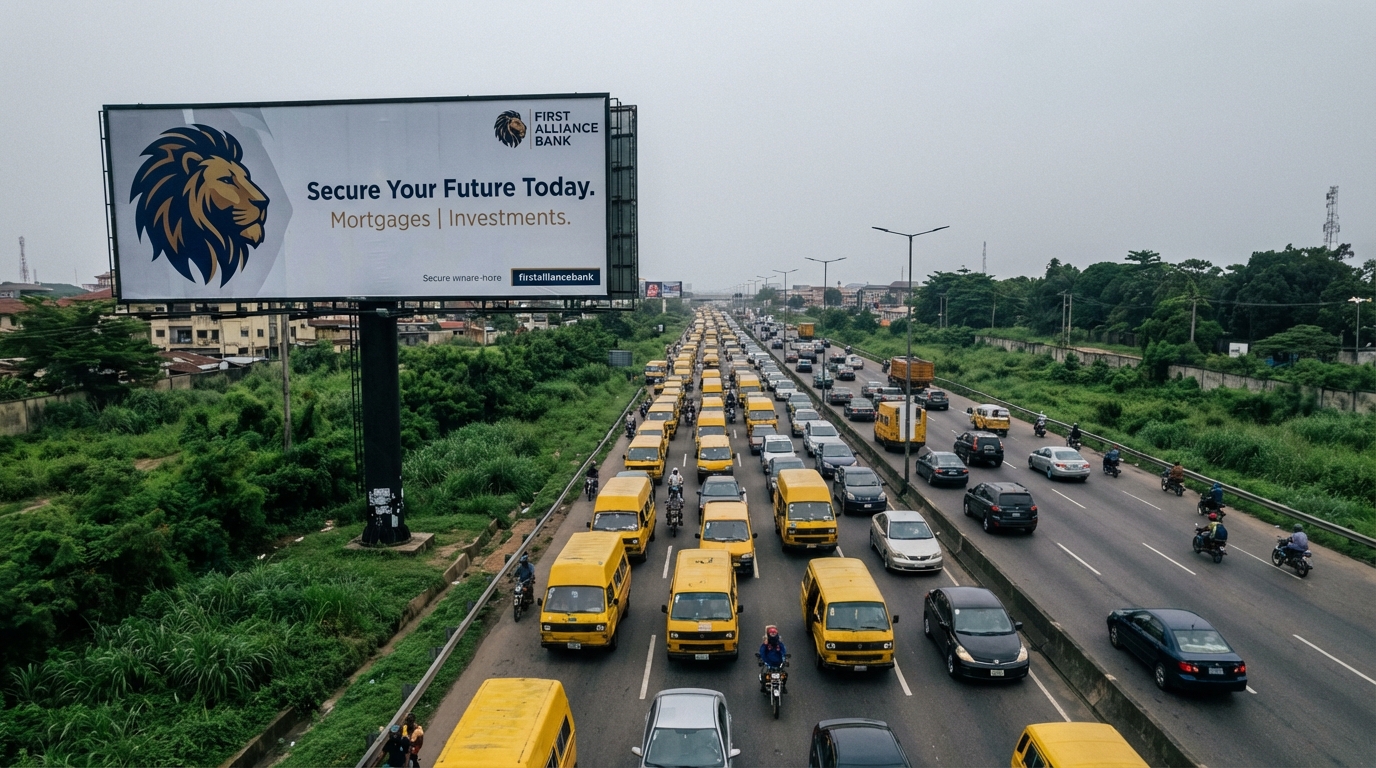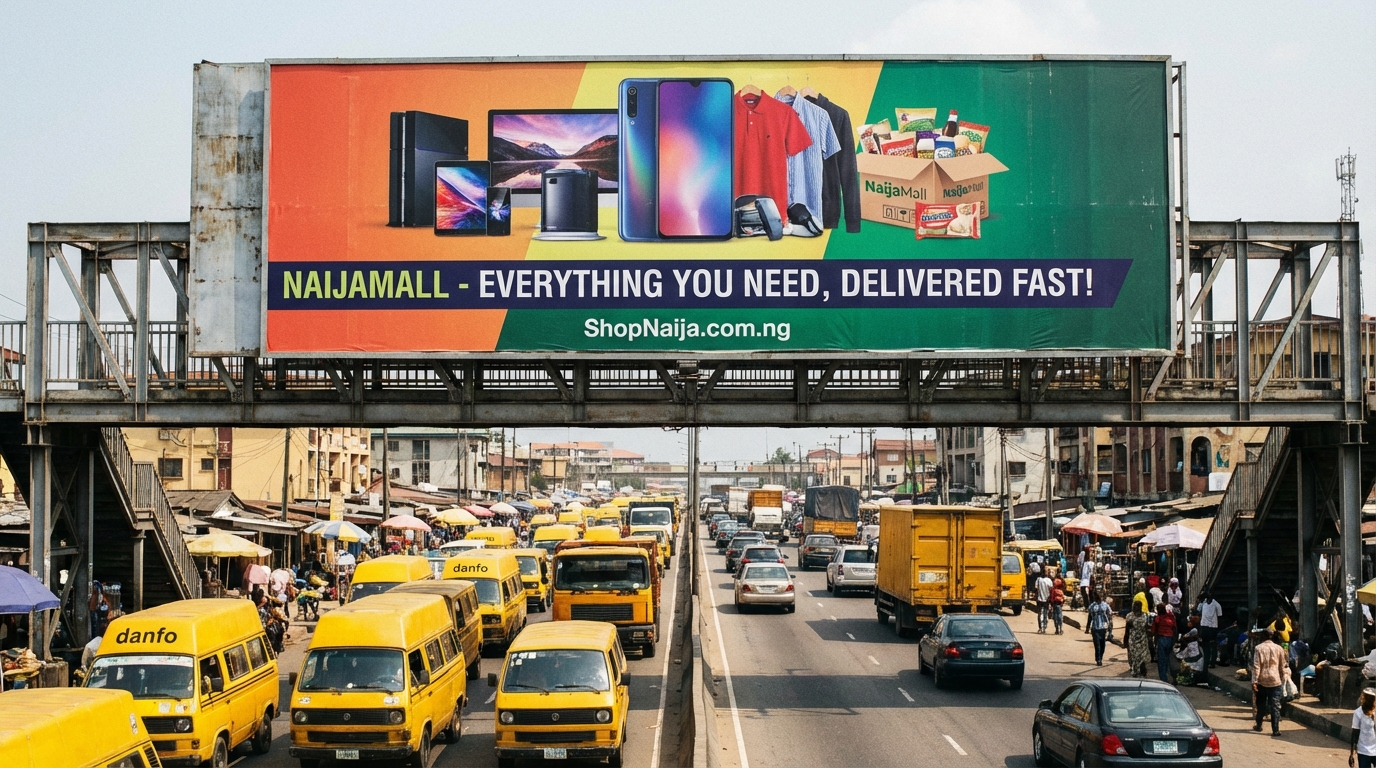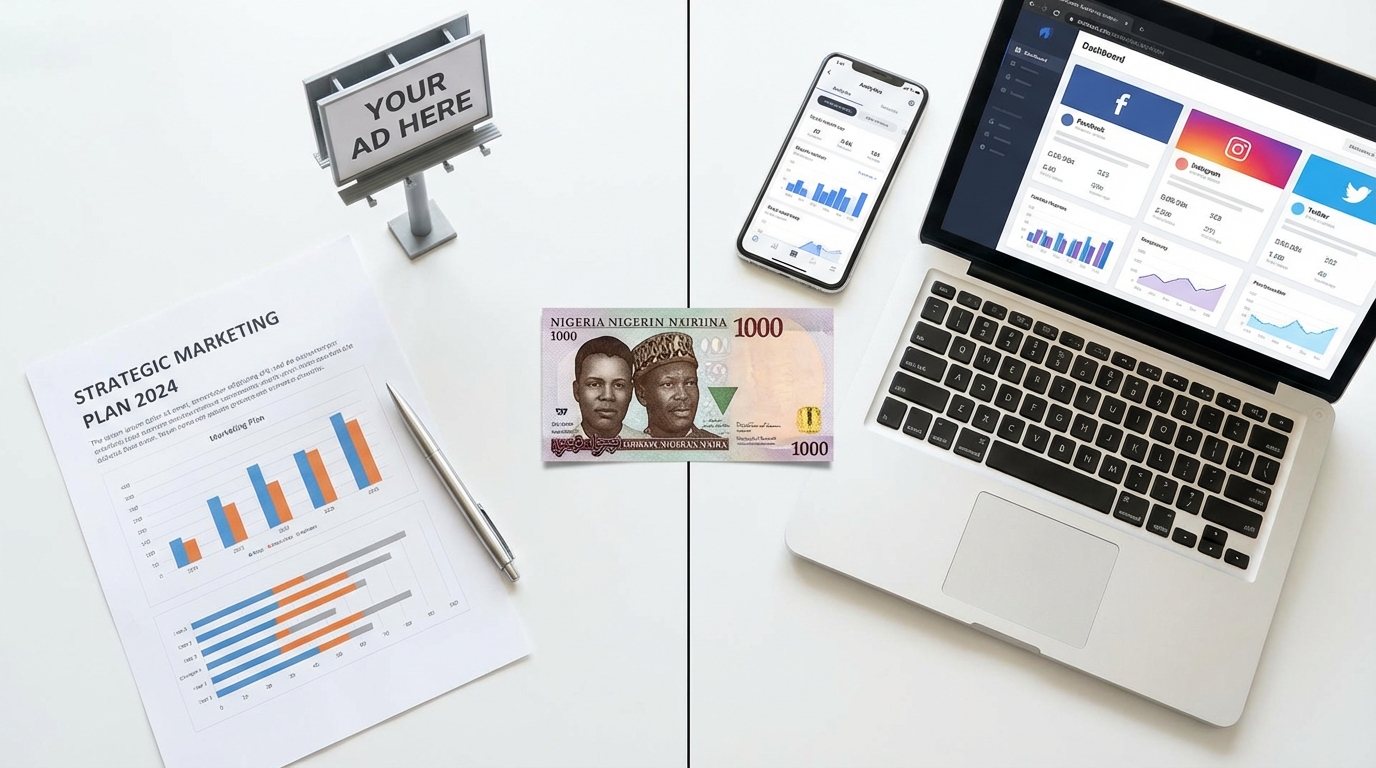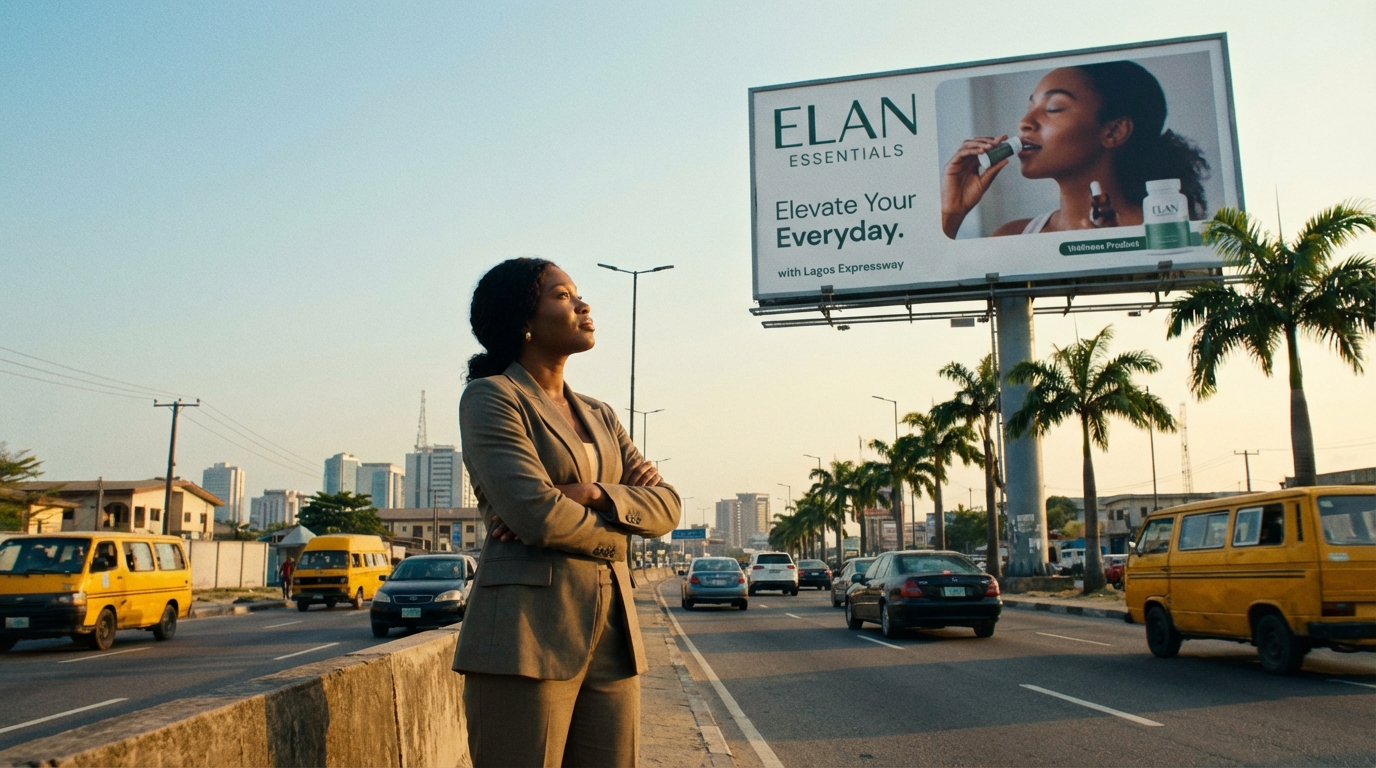

It is a Monday morning, somewhere between 7:30 and 8:15 AM. A marketing manager is stuck in traffic on the Third Mainland Bridge in Lagos.
Her car is barely moving. She has already scrolled through Instagram, half-read a WhatsApp broadcast, and tapped out of a YouTube ad in under five seconds.
But there it is, to her left, towering over the expressway: a massive billboard for a new investment platform. It has a clean design and a simple promise. And just enough curiosity to make her take a picture of the brand before the traffic finally inches forward.
That woman is the Nigerian middle class. And that moment, that involuntary encounter with your brand, is exactly why billboard advertising for the Nigerian middle class is one of the most underrated strategies in the Nigerian marketing playbook.
This article is for brand managers, business owners, and marketing teams who want to reach this specific demographic without wasting their budgets on the wrong people in the wrong places. Let us break it down.
Who Exactly Is the Nigerian Middle Class?

Before you spend a single naira on outdoor advertising, you need to understand who you are talking to. The Nigerian middle class is not defined solely by income, though that matters too.
It is a lifestyle, a mindset, and a set of aspirations that shapes how people spend, where they go, and what brands they trust.
Income, Lifestyle, and Mindset
We are talking about the mid-level bank employee in Abuja, the tech professional working remotely for a fintech company in Port Harcourt, the married couple in a two-bedroom flat in Lekki Phase 1 who just bought their first car, and the civil servant in Enugu who sends her kids to a private school.
These are people earning roughly between 150,000 and 700,000 naira per month. They shop at supermarkets and open markets, use both Android phones and iPhones, and care about quality, but they are also practical about price.
Why Their Daily Movement Matters to You
Most importantly, they move through specific, predictable corridors every day: from home to work, from work to church or mosque, from church to the mall on weekends.
This predictability is your biggest advantage when planning a billboard advertising campaign. Unlike digital audiences that can be anywhere, these consumers can be mapped physically, and that is where out-of-home advertising wins.
Why Billboards Work Exceptionally Well for This Audience
The Nigerian middle class is exhausted by digital ads. They have installed ad blockers, they skip YouTube pre-rolls, and their Instagram feeds are so saturated with sponsored posts that they barely notice them anymore. But a billboard cannot be skipped, muted, or closed.
The Credibility Factor
There is a subconscious prestige attached to seeing a brand on a large billboard along a major route. When the Nigerian middle class sees your product on a 48-sheet or 96-sheet billboard, it registers credibility.
It signals that this brand is serious, established, and not just a random page selling from home. That perception alone is worth the investment, especially for newer brands trying to break into a competitive market.
The Frequency Advantage
Studies in out-of-home advertising consistently show that consumers need multiple impressions before a brand sticks. A middle-class commuter who passes the same billboard five days a week for four weeks has seen your message more than 20 times.
The repetition builds familiarity, and familiarity builds trust. That kind of frequency is almost impossible to achieve at the same cost on digital platforms without triggering serious ad fatigue.
Choosing the Right Locations for Billboard Advertising in Nigeria
This is where most brands get it wrong. They buy billboard space where it is available and affordable, not necessarily where their target audience actually travels. For billboard campaigns targeting the Nigerian middle class, location is not just important; it is everything.
Key Corridors by City
Here is a practical breakdown of the most effective locations by major city:
- Lagos: Lekki-Epe Expressway, Ozumba Mbadiwe Avenue, Victoria Island, Ikorodu Road, Maryland, and Ikeja. The Third Mainland Bridge remains one of the most viewed outdoor placements in the country.
- Abuja: Wuse 2, Maitama, Gwarinpa, and the Airport Road corridor, where government workers, professionals, and business people make up the capital’s middle class.
- Port Harcourt: The GRA roads, Aba Road, and the connector routes between Island and Mainland areas.
- Ibadan: Dugbe, Ring Road, and Bodija, where working professionals and business owners are concentrated.
Beyond the Roads: Ambient Placements
Smart brands do not stop at roadside billboards. Think about the environments where the middle class gathers outside of their commute:
- Shopping malls and retail parks
- Airport terminals and arrival halls
- Petrol stations along major expressways
- Fast food restaurant interiors and drive-throughs
- Private hospital waiting areas
These are called ambient or experiential out-of-home placements, and they allow you to reach your audience when they are relaxed and receptive, rather than distracted behind a steering wheel.
Crafting the Right Message for the Nigerian Middle Class
Your creative matters as much as your location. The Nigerian middle class responds to specific emotional triggers that are distinct from what works with other consumer segments.
Understanding these triggers is the difference between a billboard that people remember and one that blends into the background.
Lead with Aspiration, Not Features
Do not show the Nigerian middle class where they currently are. Show them where they want to be.
A financial services company that shows a family in a tastefully furnished home with the tagline ‘Your next move starts here’ will consistently outperform one that leads with interest rates and fine print. Aspiration sells. Features inform. There is a time for both, but the billboard is not where you dump information.
Speak Their Language
The Nigerian middle class wants to feel like they are part of a sophisticated, forward-thinking group. Certain language choices resonate strongly with this audience:
- Words like ‘smart,’ ‘secure,’ ‘modern,’ and ‘designed for people like you’ tend to land well
- Sprinkling in a culturally resonant Yoruba, Igbo, Pidgin, or Hausa phrase, depending on the region, creates a powerful moment of local connection
- Keep headlines short and punchy. You have about three seconds of attention from a moving vehicle
English is the primary language of middle-class advertising in Nigeria, but regional language touches signal: we see you specifically, not just Nigerians in general. That specificity builds loyalty.
Timing and Campaign Duration
For billboard campaigns targeting the Nigerian middle class, timing matters more than many brands realise. Certain periods drive significantly higher spending and brand consideration, and aligning your campaign with these windows can dramatically improve results.
High-Impact Periods to Plan Around
- Back-to-school season (August to September): Massive for education, finance, food, and family-oriented products
- Christmas and New Year (November through January): Peak spending season when the middle class loosens budgets for gifts, travel, and lifestyle upgrades
- End-of-quarter payroll periods (March, June, September, December): Higher impulse spending and brand consideration
How Long Should a Campaign Run?
A four-to-six-week campaign on a prime billboard site is the minimum needed for meaningful brand recall. Anything shorter barely registers.
The brands that dominate middle-class consciousness in Nigeria typically run billboard presences for three months or more, often renewing in the same strategic locations because the repetition compounds over time. Think of your first month as planting the seed and subsequent months as watering it.
Integrating Billboards with Your Digital Strategy

Here is an insight that many brands in Nigeria have not fully figured out yet: billboards and digital advertising are not competitors; they are partners. The most effective campaigns use billboards to build awareness and digital to close the deal.
Creating a Surround-Sound Brand Experience
When the middle-class commuter sees your billboard on Lekki-Epe Expressway in the morning, then sees a retargeted Instagram ad in the afternoon with the same visual language, and then receives a WhatsApp message from a friend who also noticed the billboard, you have created something powerful.
That is a surround-sound brand experience, and it generates the kind of conversion that neither channel achieves alone.
Bridging the Physical and Digital Worlds
You can also use your billboard to drive specific digital actions. A few approaches that work well in the Nigerian market:
- Add a short, memorable URL that curious commuters can type in later
- Include a QR code for those willing to stop or take a photo
- Use a branded hashtag that ties your billboard to a social conversation
- Feature a specific promo code to directly track billboard-driven sales
The middle class is curious and digitally active. Give them a bridge between the physical and the digital, and they will cross it.
Measuring the Impact of Your Billboard Campaign
One of the most common objections to out-of-home advertising in Nigeria is the perceived difficulty of measuring results. But this is changing fast, and modern brands have more measurement options than ever before.
What You Can Actually Track
- Traffic count data from outdoor advertising vendors, which shows how many vehicles pass a specific site daily
- Brand recall surveys conducted before and after a campaign to measure uplift in awareness
- Social listening tools that track spikes in brand mentions and website searches correlating with billboard placements
- Unique URLs and promo codes that directly attribute leads and sales to specific billboard sites
Earned Media as a Bonus Metric
The Nigerian middle class is also vocal online. A well-executed and visually striking billboard often generates organic social media posts, WhatsApp shares, and Twitter comments from people who noticed and appreciated it.
That kind of earned media cannot be purchased on any digital platform. It is brand validation by real people, and it carries more weight than any paid impression.
Conclusion
The Nigerian middle class is one of the most valuable and fastest-growing consumer segments in Africa. They are ambitious, brand-conscious, and digitally connected. They move through specific corridors every day, and billboard advertising allows you to meet them exactly where they are, on their own terms, without competing for attention against a hundred other ads.
The question is not whether billboards work for reaching the Nigerian middle class. The question is whether your brand is showing up in the right places to capture their attention when it matters most.
READ MORE:
How to Choose a Billboard Advertising Agency in Nigeria
Digital Out-of-Home (DOOH) Advertising in Nigeria
How 4 Nigerian Brands Used Billboard Advertising to Build Empires