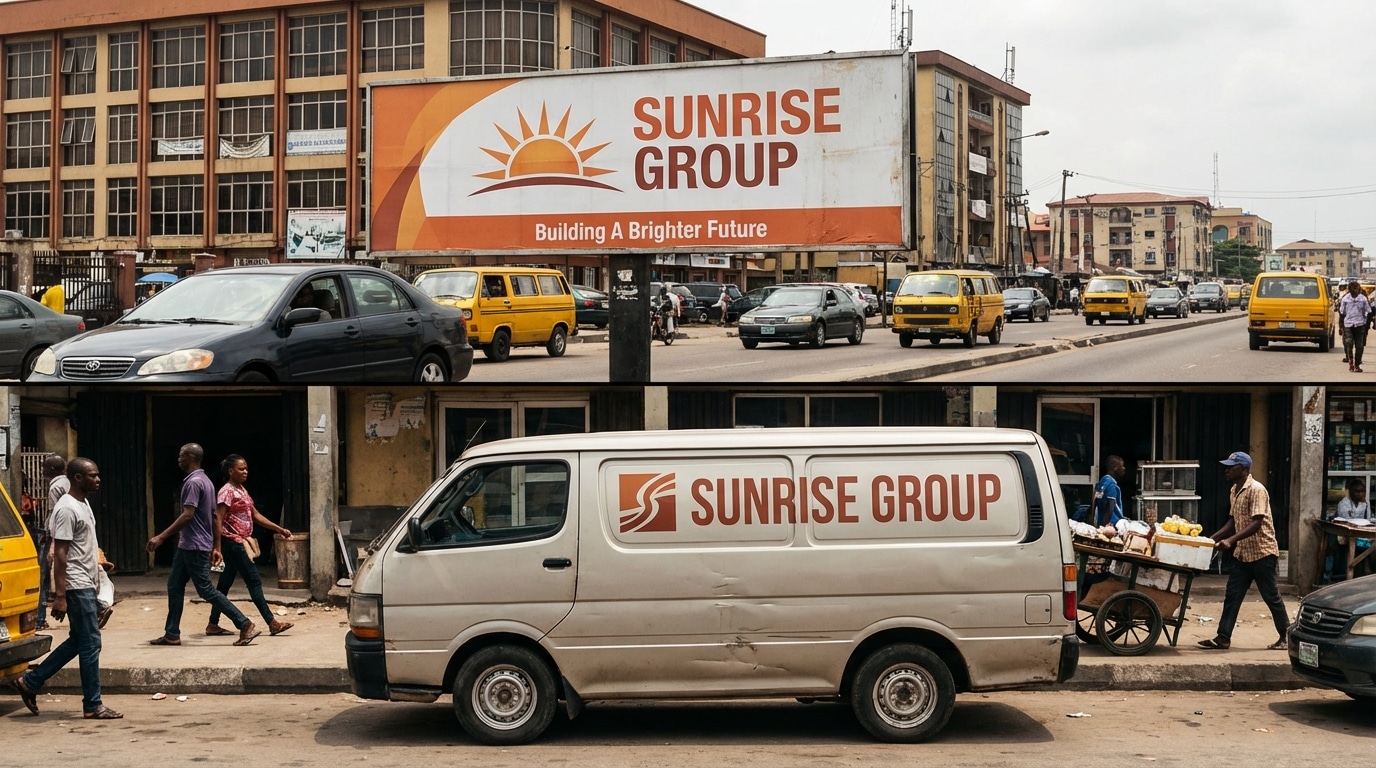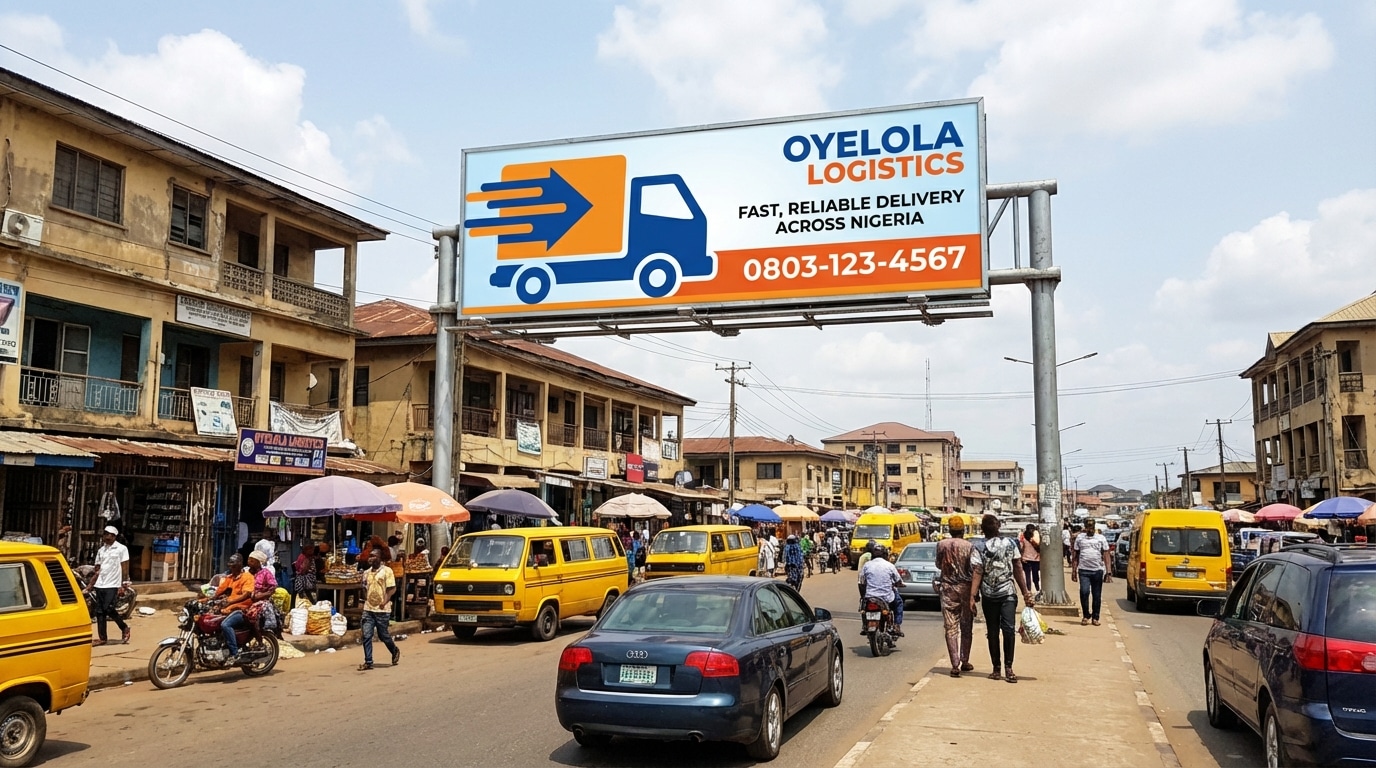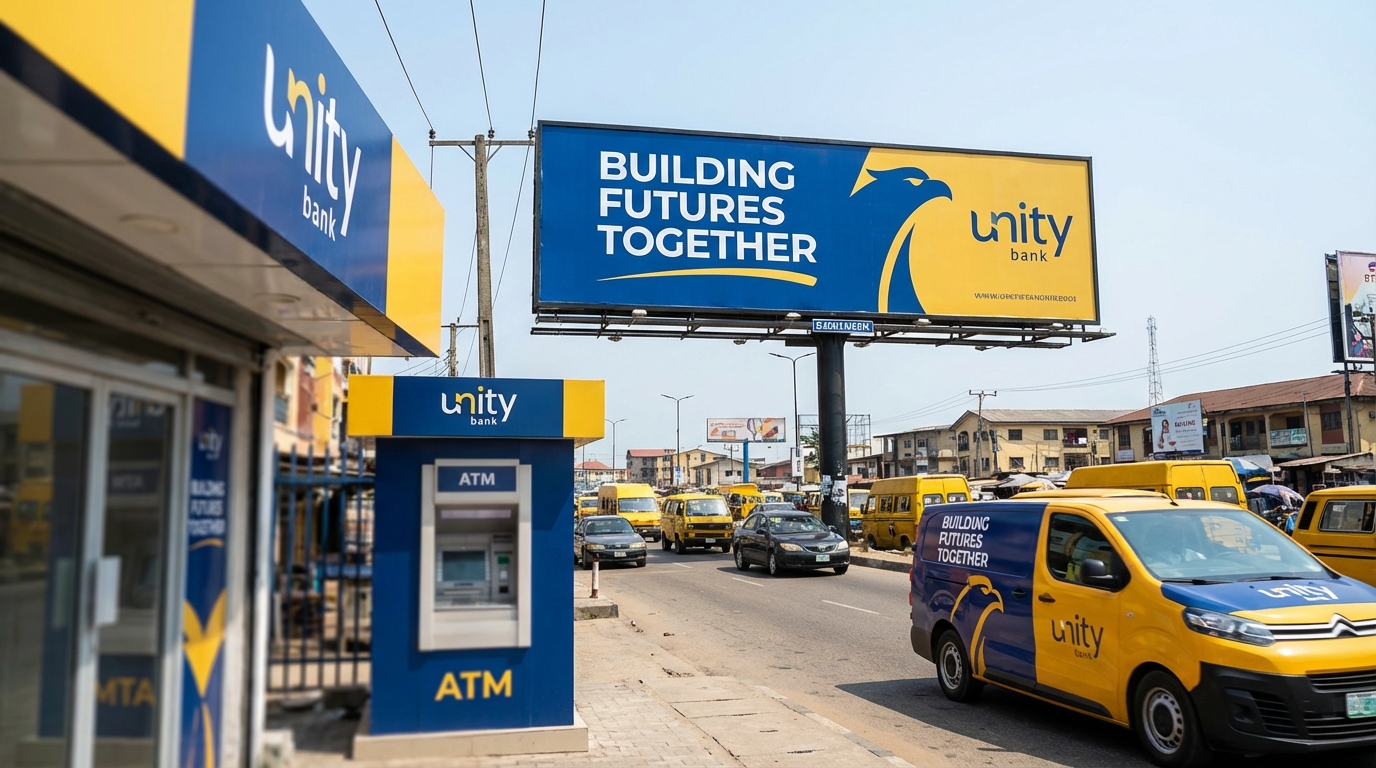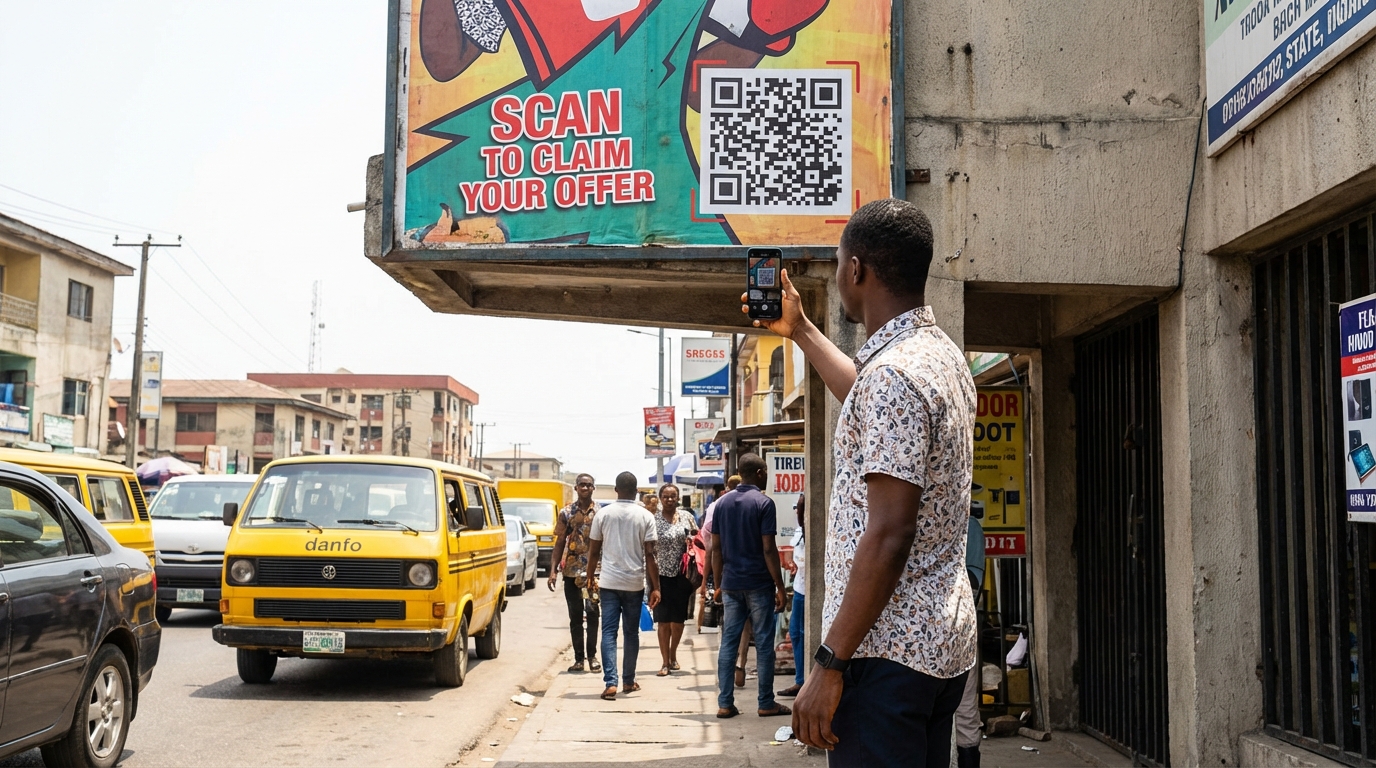

Most small business owners have driven past a billboard and thought: ‘that is not for me’. ‘Too expensive’. ‘Too corporate’.
That assumption is costing them more than they realise, because it is simply not true.
Billboard advertising in Nigeria has entry points that fit budgets most SME owners have never been told about. This article shows you exactly where those entry points are and how to use them effectively.
Why Most Small Businesses in Nigeria Think Billboard Advertising Is Not for Them
The perception that billboard advertising is exclusively for large corporations is understandable.
The boards you see on Ozumba Mbadiwe in Lagos or Ahmadu Bello Way in Abuja are booked by banks, telecoms companies, and multinational consumer brands with media budgets that dwarf what most SMEs spend on advertising in an entire year.
But those premium locations represent one end of a very wide spectrum. Nigeria has hundreds of cities, towns, and commercial corridors where billboard advertising is priced for the market that surrounds it.
A billboard in Owerri, Ilorin, or Benin City costs a fraction of what the same format costs in Lagos Island, and it reaches a real, commercially active local audience that a growing Nigerian business can actually convert.
The other part of the problem is information. Nigerian OOH pricing has historically been opaque, passed between vendors and agencies with no published rate structure that a small business owner can find and plan against. When you cannot find the price, you assume it is beyond your budget and move on.
It is often not.
What Billboard Advertising Actually Costs at the Entry Level in Nigeria
Before any strategy conversation, here are realistic entry-level figures for billboard advertising across different markets in Nigeria. These are monthly rental rates for standard static boards, excluding production costs.
Secondary City Rates
| City | Monthly Rental Range (Standard Static) |
| Ibadan | N80,000 to N600,000 |
| Enugu | N80,000 to N600,000 |
| Benin City | N70,000 to N600,000 |
| Ilorin | N60,000 to N700,000 |
| Owerri | N70,000 to N800,000 |
| Kano | N80,000 to N700,000 |
| Uyo | N70,000 to N700,000 |
At the lower end of these ranges, a one-month billboard campaign in a secondary Nigerian city is within the advertising budget of most growing SMEs.
Lagos and Abuja Entry-Level Options
Lagos and Abuja are more expensive but still have entry-level options outside the premium corridors.
| Location Type | Monthly Rental Range |
| Lagos mainland, non-premium road | N80,000 to N2,000,000 |
| Lagos Island, non-premium location | N80,000 to N4,000,000 |
| Abuja satellite towns (Kubwa, Lugbe) | N80,000 to N2,000,000 |
| Abuja non-CBD locations | N80,000 to N4,000,000 |
Add production costs of between N60,000 and N200,000 for vinyl printing and mounting on a standard static board, and a complete one-month Lagos mainland or secondary city campaign is achievable for between N150,000 and N2,000,000 total.
That is not a corporate budget. That is a real SME advertising investment.
6 Smart Strategies for Billboard Advertising on a Small Budget in Nigeria
Having a small budget does not mean having a weak campaign. It means making smarter decisions about where, when, and how you spend. These six strategies are specifically designed for Nigerian businesses working with limited outdoor advertising budgets.
Strategy 1: Advertise in Secondary Cities First
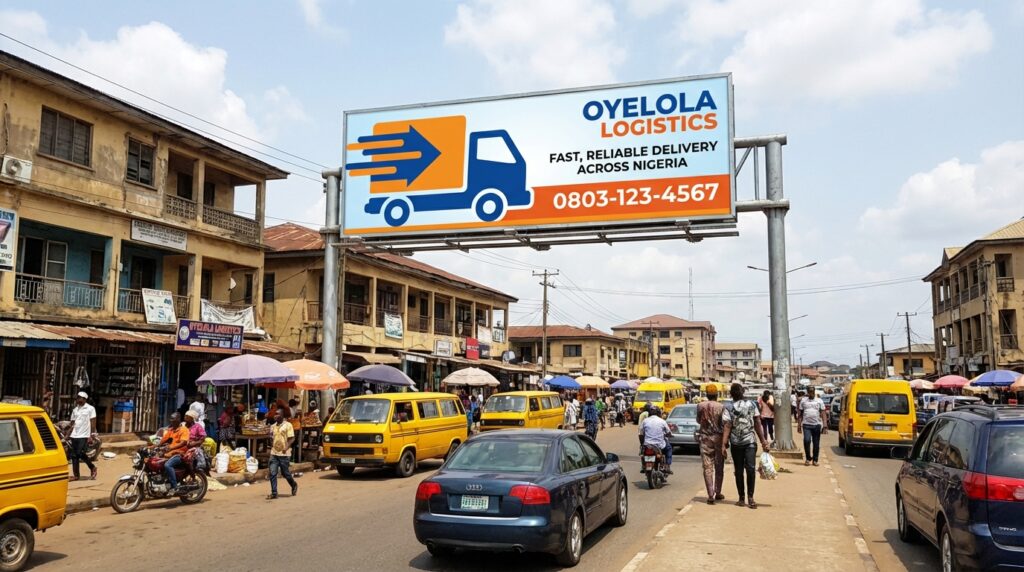
If your business operates in or serves a secondary city in Nigeria, that is your most efficient entry point into outdoor advertising. The audiences are real, the commercial activity is significant, and the cost per impression is substantially lower than in Lagos or Abuja.
A growing logistics company in Enugu, a pharmacy chain expanding in Ilorin, or a fintech product targeting users in Owerri will find that a well-placed secondary city billboard delivers strong local reach at a fraction of the Lagos equivalent cost.
Secondary city advertising also offers a strategic advantage: less competitive clutter.
Major brands concentrate their OOH spend in Lagos and Abuja. In many secondary cities, your billboard may face significantly less competition for visual attention, making your brand more memorable to the audience passing it.
Strategy 2: Use Short Campaign Bursts Around Key Periods
A continuous 12-month campaign is how large brands build sustained awareness. It is not the only way billboard advertising works, and it is not the right approach for a limited budget.
Short, high-intensity campaign bursts timed around specific business moments generate strong impact for a fraction of the annual cost. Effective burst timing for Nigerian SMEs includes:
- Product or service launches
- Festive season promotions, particularly October through December
- Local events, trade fairs, or market periods relevant to your industry
- New branch or store openings in a specific city
A two-month burst campaign around a peak trading period, planned and executed well, can deliver more meaningful business impact than a continuous low-budget campaign spread thinly across twelve months.
Strategy 3: Book a Rotating LED Slot Instead of a Full Static Board
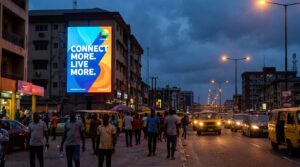
LED digital billboards in Nigeria operate on a rotation model, displaying multiple advertisers’ content in sequence on the same screen. Instead of renting a full static board for a month, you can buy a rotating slot on an LED screen, typically one of four to six advertisers sharing the same display time.
The cost of a single LED rotation slot is significantly lower than a full static board rental at the same location, while still delivering exposure to the same audience. For a small business that wants LED presence on a major Nigerian road without the full LED rate, this is the most cost-efficient entry point into premium outdoor formats.
When booking an LED slot, confirm the rotation frequency, how many other advertisers share the screen, and the total number of times your creative will display per hour. This gives you the data to calculate your actual cost per display and compare it against other format options.
Strategy 4: Choose Street Furniture and Bus Shelter Formats
Street furniture, including bus shelters, kiosks, and pedestrian-level panels, is consistently underutilised by Nigerian advertisers relative to its actual effectiveness for certain audiences and campaign types.
These formats sit at eye level in locations with high pedestrian footfall: bus stops, market approaches, shopping centre entrances, and commercial street junctions. For businesses targeting urban commuters, retail shoppers, or market traders, street furniture delivers close-range, high-dwell-time visibility at rates significantly below those of large-format billboards.
Monthly rates for bus shelter panels in Lagos range from N80,000 to N200,000 depending on location. In secondary cities, the same format can be booked for N40,000 to N100,000 per month. For a small budget campaign targeting a specific urban audience, a cluster of well-placed bus shelter panels can outperform a single large-format board at a similar or lower total cost.
Strategy 5: Negotiate for Off-Peak Periods
Billboard advertising rates in Nigeria are not fixed. Demand fluctuates across the year, and vendors are generally open to negotiation during lower-demand periods, typically January through March after the festive season, and mid-year between April and July.
An SME with flexibility on timing can often secure significantly better rates by booking during these windows. A board that costs N300,000 per month in November may be available for N200,000 in February. The audience does not change. The traffic does not disappear. The rate simply reflects the lower competition for the space.
If your campaign does not have a fixed timing requirement, ask your vendor directly what the current availability looks like and whether there is flexibility on rate for an immediate or off-peak booking.
Strategy 6: Focus on One Strong Location Instead of Many Weak Ones
The instinct when working with a limited budget is to spread it across as many locations as possible to maximise coverage. In outdoor advertising, this instinct usually works against you.
A single well-chosen billboard location, booked for two or three months, builds frequency with its audience. People who pass that board regularly see your brand repeatedly. That repetition is what creates the recognition and recall that makes outdoor advertising effective.
Three billboard locations booked for one month each at the same total budget deliver one exposure cycle to three different audiences. One location booked for three months delivers multiple exposure cycles to the same audience, which is significantly more valuable for a brand that is still building recognition.
For a small budget campaign, one strong location held long enough to build frequency almost always outperforms a fragmented multi-location approach.
How to Make a Small Budget Billboard Campaign Work Harder
Budget efficiency in outdoor advertising is not just about where you spend. It is also about what you put on the board. Small budget campaigns cannot afford creative that underperforms.
For a limited budget billboard to work, the creative must:
- Communicate one single message clearly. Not two messages. Not three. One.
- Use high contrast colours that are visible in all lighting conditions, including harmattan haze and direct midday sun
- Include a specific call to action that tells the audience exactly what to do next: a phone number to call, a location to visit, or a social handle to follow
- Be legible from the expected viewing distance in three seconds or less
A small budget campaign with strong, clear creative will always outperform a large budget campaign with confused, cluttered artwork. The board is the same size regardless of what you paid for it. The creative determines whether it works.
Frequently Asked Questions
What is the minimum budget for a billboard campaign in Nigeria?
For a secondary city market, a complete one-month billboard campaign including rental and production can be executed for between N150,000 and N350,000.
Is it better for a small business to use one billboard or multiple locations?
For a limited budget, one strong location held for two to three months almost always delivers better results than multiple locations held for one month.
Can a small business in Nigeria compete with large brands on billboards?
Not in the same locations at the same time. But on the right roads, in the right cities, and with strong creative.
How do I find affordable billboard locations in Nigeria?
Working with a structured OOH platform that aggregates verified inventory across multiple cities in Nigeria is the most efficient way to find and compare available locations and rates without spending weeks calling individual vendors.
Conclusion
Billboard advertising in Nigeria is not reserved for brands with unlimited budgets. It has always had entry points accessible to growing businesses. The problem has been visibility: small business owners could not find the pricing, the formats, or the strategies that make outdoor advertising work at their budget level.
The fundamentals do not change with budget size. Choose the right location for your audience. Keep the creative clear and direct. Book long enough to build frequency. Time your campaign around a moment that matters to your business.
A well-planned small budget billboard campaign in the right Nigerian city, on the right road, with the right creative, will outperform a large budget campaign that ignores any one of those principles.
Oxbillboards gives Nigerian businesses of every size access to verified outdoor advertising inventory across the country, with the transparency and location data needed to make smart decisions regardless of budget size.