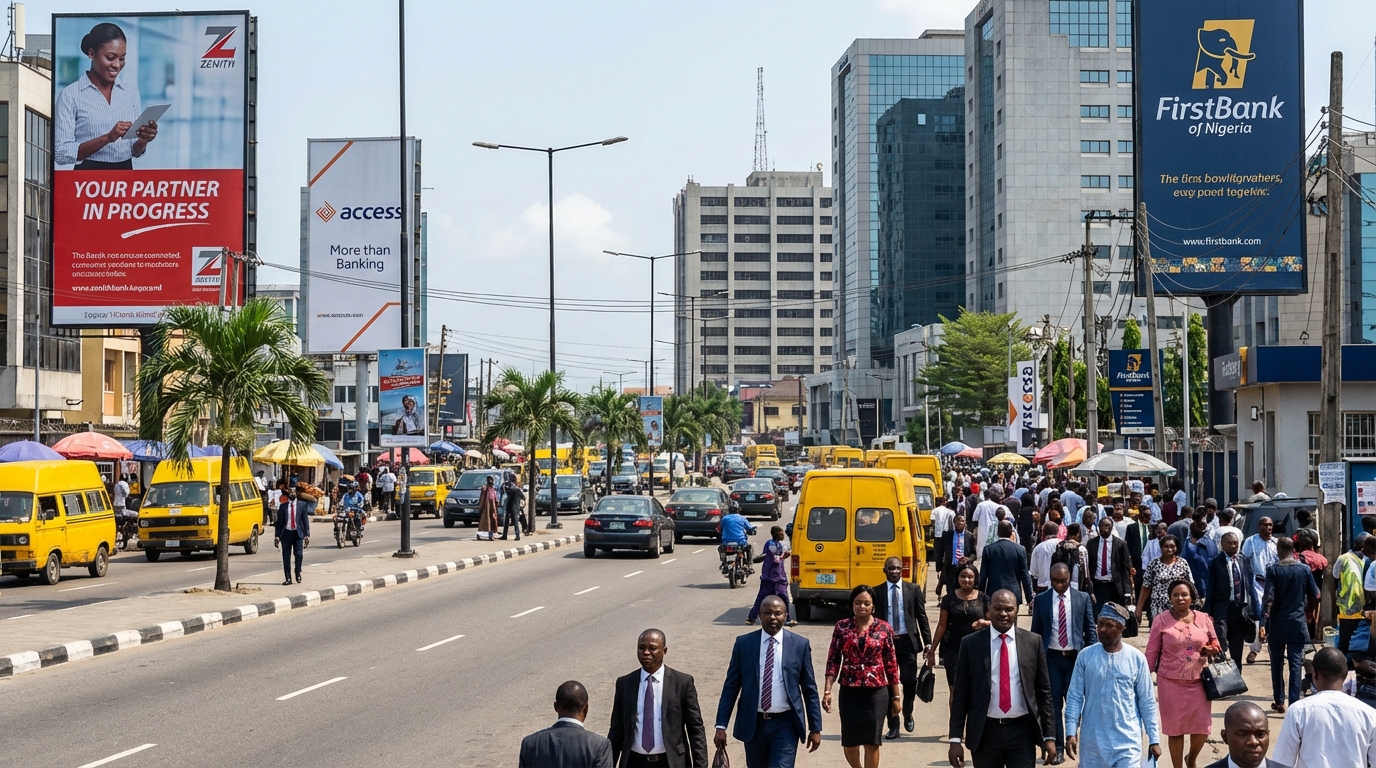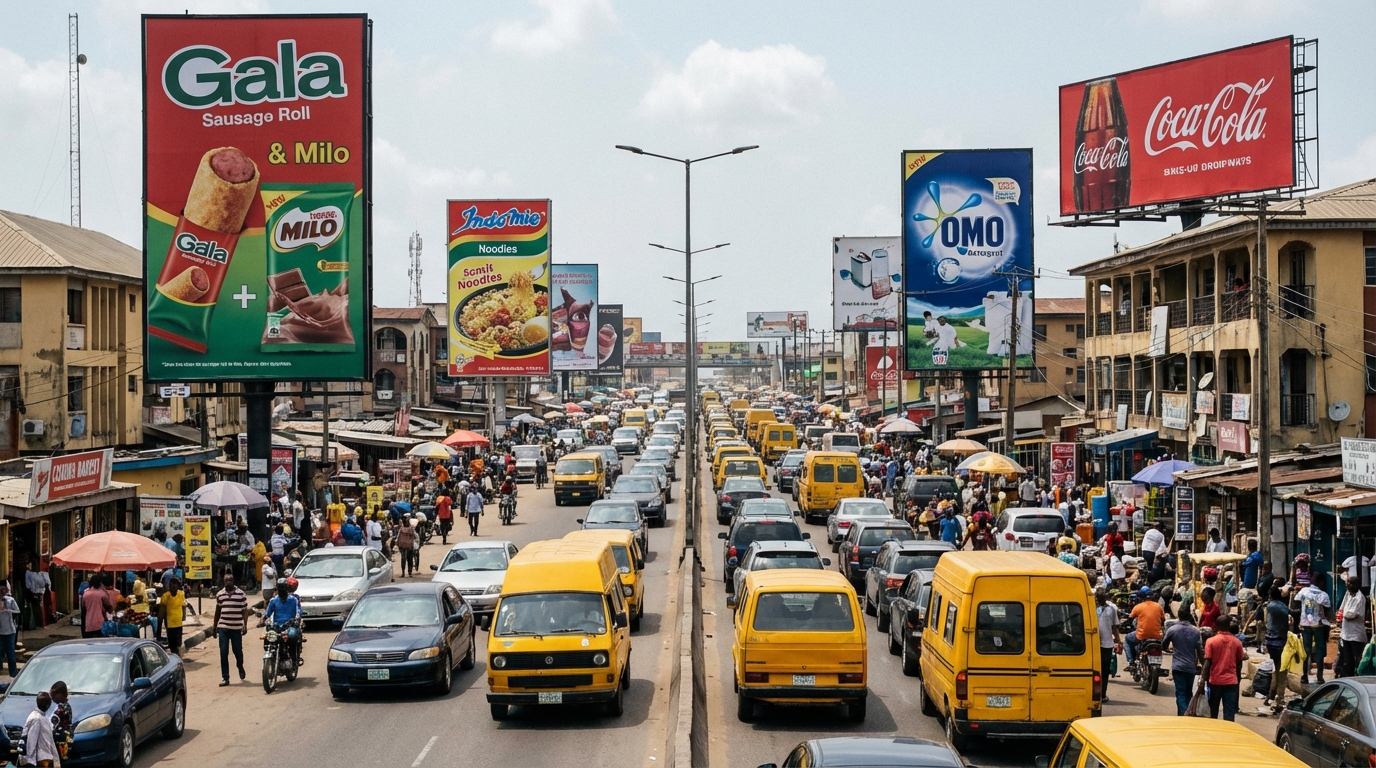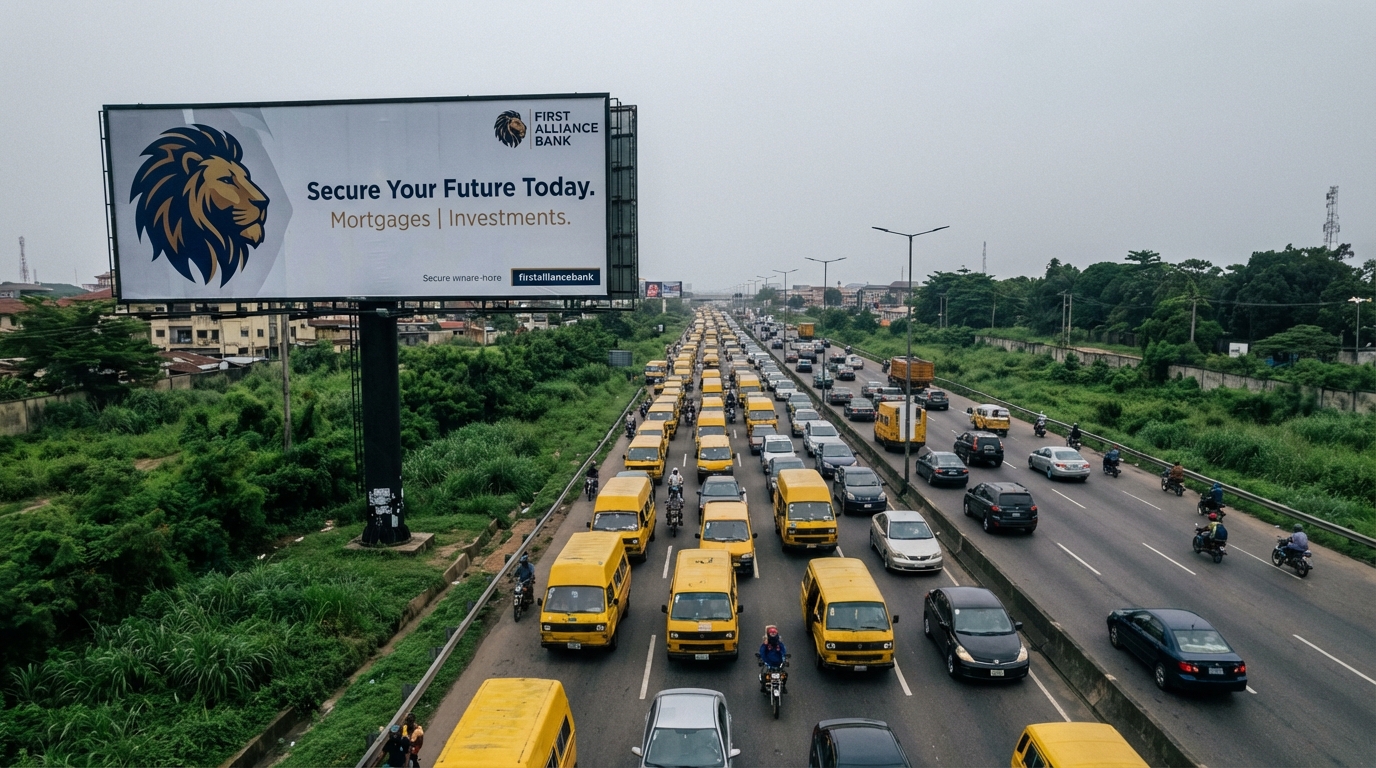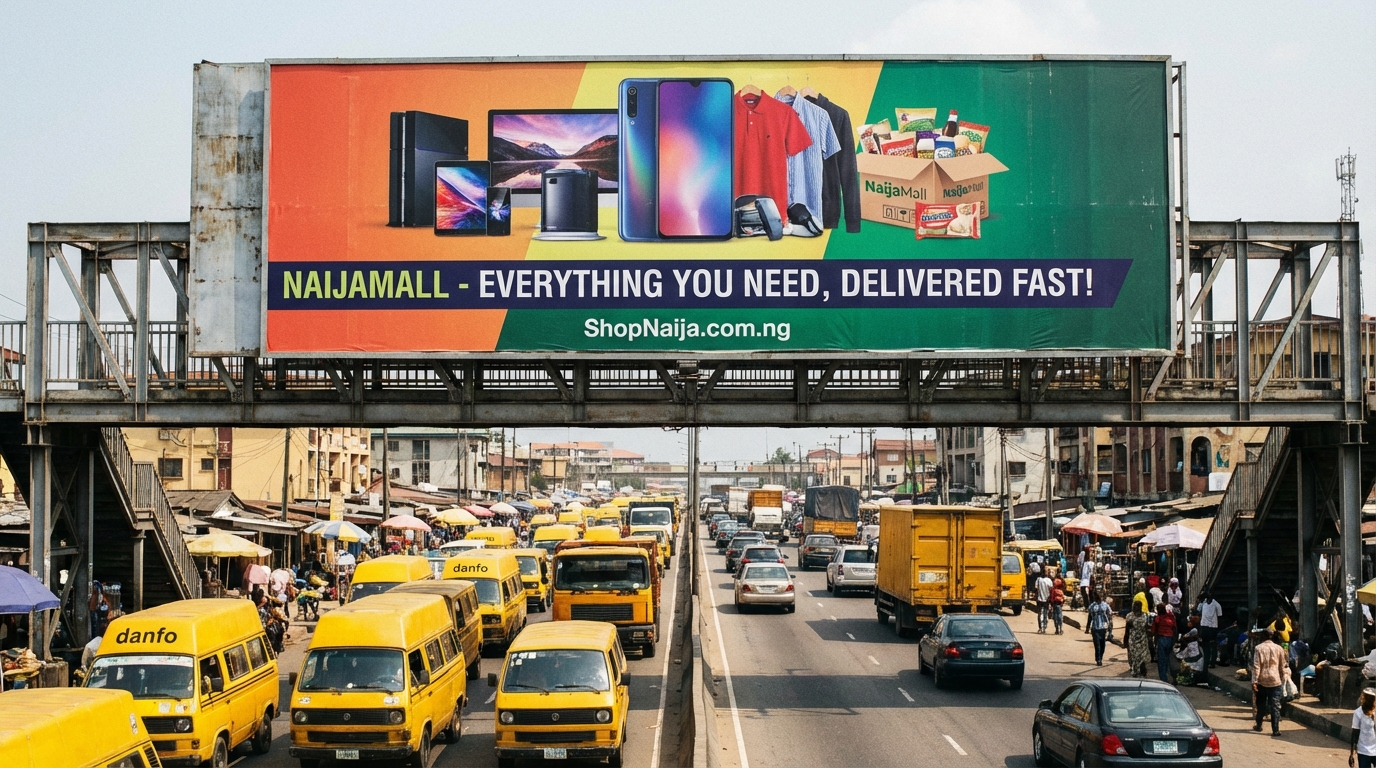

What does a noodle brand, a telecom giant, a fintech startup, and an e-commerce platform all have in common? They each used billboard advertising to become names every Nigerian knows.
In this article, we look at four Nigerian brands across four completely different industries and break down exactly what every startup, SME, and CEO in Nigeria can learn from how they used billboard advertising to dominate their markets.
Billboard advertising in Nigeria is one of the most powerful and consistently underrated tools available to brands of every size.
In a country where Nigerians spend an average of two hours daily commuting, out-of-home (OOH) advertising is not just a campaign channel; it is a daily conversation between brands and the people they want to win.
A 2021 study by the Outdoor Advertising Association of Nigeria found that 79% of Nigerians noticed a billboard in the past 7 days, and 63% said they notice the brand or message “all of the time.”
OOH advertising in Nigeria also outperforms both TV and online advertising in prompting consumers to buy a product or recommend a brand to a friend.
Yet many startups, SMEs, and even experienced executives still treat billboard marketing as a luxury, something you do “when you’ve already arrived.” This article is here to challenge that entirely.
We looked at four brands: GTBank, Zenith Bank, Indomie, and OPay, and examined exactly how outdoor advertising in Nigeria played a decisive role in their growth.
Some started from nothing and used billboards to announce their arrival. Others used outdoor advertising to maintain brand recognition Nigeria-wide, even as competition intensified. Every story holds a lesson you can apply to your own brand right now.
In Nigerian business culture, if you’re not on a billboard, you’re not seriously in business. Banks know it. Telcos know it. Even churches and politicians know it.
MTN Nigeria: How Nigeria’s Biggest Telecom Built Brand Awareness From Day One
When MTN Nigeria launched its commercial operations on August 8, 2001, it did something that most brands in Nigeria at the time would not have done: it started advertising before the network even went live.
In the streets, thoroughfares, and highways of Lagos, Abuja, and Port Harcourt, MTN’s outdoor advertising activities began even before the official launch of the brand, with the signature yellow colour already appearing on billboards, lamppost banners, and below-the-line materials across major cities in Nigeria.
By the time Nigerians heard MTN’s first television commercial, they had already seen the yellow on the street. The brand felt familiar before it was even accessible.
That was not an accident. It was a masterclass in using billboard advertising in Nigeria to build anticipation, recognition, and trust before a single SIM card was activated.
The Billboard Strategy
MTN’s approach to outdoor advertising in Nigeria was sustained, colour-disciplined, and strategically evolving.
From the early 2000s through to today, the yellow brand colour has been a permanent fixture on Nigerian roads. Whether the campaign was about consumer SIM offers, enterprise solutions, or emotional brand storytelling, the outdoor presence never wavered.
One of the most iconic moments in the history of billboard advertising in Nigeria came in 2018 when MTN launched the #ManInTheBox campaign, described by industry observers as Nigeria’s first truly innovative outdoor advertising campaign.
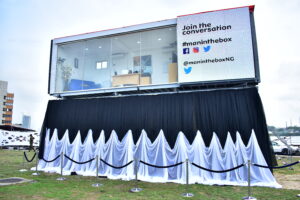
The concept was extraordinary: MTN and its agency DDB Lagos literally turned a billboard in Lekki, Lagos, into a functioning office space, suspended above the street.
For two months, between May 7th and July 9th, small business owners and entrepreneurs occupied the elevated office 24 hours a day, showcasing their products and services to the thousands of commuters passing below.
The advertisement served two purposes: first, it provided the most emotional demonstration of MTN’s enterprise solutions by using a billboard to actually solve a problem for the very SMEs the campaign was targeting.
Locally, #ManInTheBox was hailed as groundbreaking precisely because it proved that billboard advertising in Nigeria did not have to be passive. A billboard could be interactive, could be a platform, and tell a story that people wanted to watch unfold.
MTN’s advertising expenditure across all channels has reflected this commitment to visibility year after year. In 2020 alone, the company spent ₦15.14 billion on advertising, sponsorships, and sales activities, and the outdoor component has consistently been a core part of that investment.
As of 2023, MTN Nigeria had a total active customer base of 76.7 million subscribers. The yellow brand is arguably the most recognised colour associated with any corporate entity in Nigeria.
The Result
From being a newcomer to a competitive telecom market, MTN has grown to become Nigeria’s leading network, with the most recognisable brand color.
Its outdoor advertising, starting before launch and sustained for over two decades, played a defining role in that journey. No other brand in Nigeria has used the street as consistently and creatively as MTN.
The Lesson for Your Business
Don’t wait until you’re big to go big on visibility. MTN started with billboards before they had a single active customer.
If you’re launching a product, entering a new market, or trying to shift perception, outdoor advertising in Nigeria can build familiarity and credibility faster than almost any other channel.
And if you’re already established, campaigns like #ManInTheBox show that a billboard does not have to be static. Creativity on the street can generate conversation, press coverage, and social media engagement simultaneously.
Jumia: How an E-Commerce Brand Used Billboards to Make Online Shopping Feel Safe
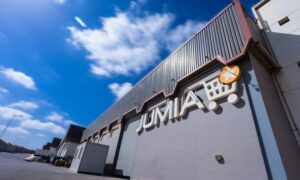
Jumia launched in Nigeria in 2012 with a problem that no amount of online advertising could easily solve:
Nigerians did not trust buying things online. Cash was king, physical markets were deeply embedded, and the idea of paying for a product before seeing it was deeply counterintuitive for most consumers.
Jumia’s response was comprehensive, and a significant part of it involved taking their brand offline, onto Nigerian streets, and into the physical environment of the very consumers they were trying to convert.
The Billboard Strategy
Jumia used billboard advertising in Nigeria as a tool for legitimisation. A brand that only existed on a website or an app could be dismissed as temporary, unverified, or risky.
A brand that also appeared on a billboard on a major Lagos expressway, or on lamppost banners along a busy Abuja road, felt real. It felt established. It felt like something you could trust.
This was a smart and underappreciated use of outdoor advertising in Nigeria. Jumia deployed OOH campaigns around key shopping moments, particularly during its flagship Black Friday Nigeria campaigns, which became some of the most anticipated retail events in the country.
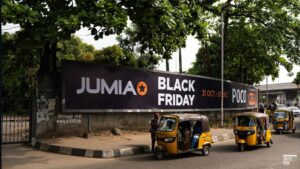
Those Black Friday billboards and outdoor advertising campaigns generated awareness not just for specific deals but for the idea that online shopping in Nigeria was legitimate, accessible, and worth trying.
Jumia worked with major outdoor advertising agencies and media planning partners to ensure their campaigns had a broad geographic reach across Lagos, Abuja, Port Harcourt, and other key cities in Nigeria.
Major outdoor advertising firms confirmed Jumia as one of their notable clients, alongside other Nigerian brands, reflecting the scale of investment Jumia made in outdoor advertising as part of its integrated marketing strategy.
The result of combining online campaigns with outdoor advertising was a brand that consumers encountered in multiple contexts, on their phones, laptops, and during their daily commute.
That multi-channel presence is what built the kind of familiarity that eventually drove millions of Nigerians to try online shopping for the first time.
The Result
Jumia became the dominant e-commerce platform in Nigeria, and one of the largest in Africa, with over 4 million active consumers by 2019.
Its brand became synonymous with online retail in Nigeria, so much so that “Jumia” became shorthand for online shopping, the same way “Indomie” became shorthand for noodles.
It is consistently cited as one of the brands that transformed Nigerian consumer behaviour. Outdoor advertising was a key part of making that transformation possible.
The Lesson for Your Business
If your business lives online, your brand still needs to live on the street. Jumia proved that even a digital-first company benefits enormously from physical visibility.
If you are building an app, a platform, or an e-commerce brand, billboard advertising in Nigeria can do something your digital ads cannot: it can make you feel real to people who have never interacted with you. That feeling of legitimacy is priceless, and it converts.
Indomie: How Indomie Used Billboard Advertising in Nigeria to Own a Whole Food Category
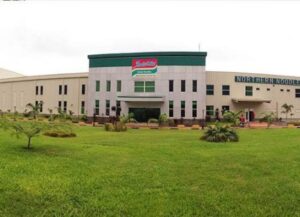
Here is something remarkable: Indomie is an Indonesian product. It launched in Nigeria in the late 1980s through Dufil Prima Foods, entering a market where instant noodles were barely part of the local diet. No one was waiting for it.
Today, over 70% of Nigerians who eat instant noodles eat Indomie. The brand has become so culturally embedded that most Nigerians call any instant noodle brand “Indomie”, regardless of who made it. Annual production exceeds 8 billion packets. It is one of the top noodle producers on the planet.
That transformation didn’t happen by chance. It was built through decades of intelligent, multi-channel marketing, and outdoor advertising in Nigeria was a core part of the strategy.
The Billboard Strategy
Indomie’s outdoor advertising strategy in Nigeria was built on one central insight: reach the mothers, win the children, own the market. From its early campaigns, the brand deployed billboards, lamppost banners, and transit advertising alongside TV and radio to place its message in front of Nigerian families wherever they were.
The brand’s billboard messaging was always warm, emotionally charged, and family-centred.
Campaigns like “Show some Love” appeared not just on television but on the physical walls of Nigerian cities, near markets, near schools, on roads that mothers and children travelled every day.
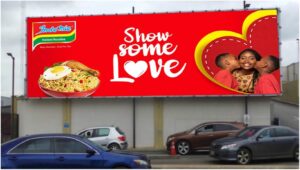
This was not generic outdoor advertising. It was strategically positioned to catch the viewers at the most crucial times.
Research in the FMCG space has shown that Indomie’s multi-platform advertising, including OOH advertising in Nigeria, had a significant and measurable impact on purchasing decisions, particularly among younger consumers.
The Result
A foreign product achieved something almost no other brand in Nigerian history has managed: it became a cultural institution.
Indomie is not just food in Nigeria. It is a childhood, a memory, a feeling of home. That level of brand recognition in Nigeria is only possible when a brand shows up persistently, consistently, and emotionally across every available channel, including the streets.
The Lesson for Your Business
Billboards work best when they carry a story. Indomie did not just advertise a noodle product. It advertised love, family, and togetherness, and it carried that emotion onto billboards across Nigeria.
What feeling does your brand want to own in your customer’s mind? Make sure your outdoor advertising creative communicates it.
OPay: How a Startup Used Outdoor Advertising in Nigeria to Build Trust Fast

When OPay launched in Lagos in 2018, few people had heard of it. Backed by Opera Software and funded by Chinese investors, it was entering a fintech space already crowded with established players.
By 2019, it had raised $120 million, nearly one-fifth of all venture capital raised for African startups that year. By 2021, it had raised a further $400 million. Today, OPay is one of Nigeria’s most widely used fintech platforms with millions of active users.
The speed of that growth was breathtaking. And a significant part of it came from OPay doing something many digital-first startups at the time were reluctant to do: taking their brand to the street.
The Billboard Strategy
OPay’s approach to billboard advertising in Nigeria was aggressive and calculated. Rather than relying solely on digital acquisition channels, they plastered cities in Nigeria with their brand on billboards, lampposts, bus stops, and transit media. The goal was straightforward: be impossible to ignore.
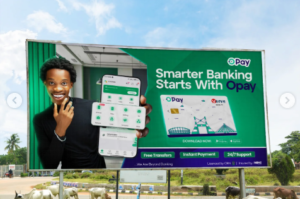
Academic research specifically examining OPay’s outdoor advertising in Nigeria, focused on its campaign in Akure, Ondo State, found that most residents were exposed to OPay’s billboard advertising.
The study found that patronage of OPay’s services “increased dramatically” in the six months following the outdoor advertising campaign. Respondents recalled OPay’s messaging with high accuracy, a direct indicator of billboard advertising’s effectiveness in building brand recall in Nigeria.
The study concluded that OPay’s outdoor advertising had “considerable effectiveness” in driving market expansion and recommended the company continue using outdoor media to outperform competitors.
This is not a theoretical argument. It is a peer-reviewed finding about a real Nigerian startup that used billboard advertising and saw it work.
OPay’s outdoor advertising also served a deeper strategic purpose. Their agent banking network was expanding into communities across Nigeria, and their billboard presence in those same communities made the brand feel established, trustworthy, and permanent.
In a market where millions of people are being asked to trust a new platform with their money, physical visibility is one of the fastest ways to build credibility. Digital advertising reaches people on their phones. Billboard advertising in Nigeria reaches people in their world.
The Result
OPay went from a startup nobody knew in 2018 to one of the most recognised fintech brands in Nigeria. Their outdoor advertising played a decisive role in building trust in markets where digital-only advertising would not have been sufficient on its own.
The Lesson for Your Business
For startups, especially, physical visibility builds trust faster than digital alone. If your target audience is spending two hours a day on Nigerian roads, and they are, those hours belong to your billboard. Don’t overlook the streets in your pursuit of the feed.
The Data Behind Billboard Advertising in Nigeria
If the four case studies above haven’t convinced you, let the numbers do the work:
- 79% of Nigerians noticed a billboard in the past 7 days (Outdoor Advertising Association of Nigeria / GeoPoll, 2021)
- 63% say they notice the brand or message on a billboard ‘all of the time’
- OOH advertising in Nigeria outperforms TV and online advertising in prompting app downloads, brand purchases, and brand recommendations
- According to the Digital 2025 Nigeria Report (Krestel Digital), Billboards are a top-3 channel for brand discovery in Nigeria, alongside TV ads and word of mouth
- Outdoor advertising accounted for 28% of total media spend in Nigeria, second only to TV
- Nigerians spend an average of two hours a day commuting; every hour is a window for your billboard message
- Static billboard advertising in Nigeria costs between ₦250,000 and ₦700,000+ per month. Digital (LED) billboards range from ₦1,000,000 to ₦3,000,000+ monthly, making it an accessible channel for brands at various budget levels
How to Use Billboard Advertising in Nigeria Like These Brands
You don’t need MTN’s budget. You need MTN’s thinking.
Here are the principles that made each of these brands successful with outdoor advertising in Nigeria, distilled into practical steps you can apply today.
1. Choose Location Like a Strategist
The brands that win with billboard advertising in Nigeria don’t just find available space; they find the right space. Understand where your target customer commutes, shops, and spends time.
In Lagos, a billboard on Lekki-Epe Expressway reaches a very different demographic from one in Ikorodu or Mushin. In Abuja, Wuse attracts different audiences from Lugbe. Know your customer’s geography before you spend a naira.
2. Design for 3 Seconds, Not 3 Minutes
A billboard is not a flyer. You have approximately 3 to 5 seconds to communicate with a person in motion. Your headline must be short, your visual must be bold, and your brand identity must be unmistakable.
GTBank never used small fonts. Indomie never cluttered their outdoor creative. If your billboard requires careful reading, it is not working.
3. Be Consistent, Don’t Flash and Disappear
One of the biggest mistakes brands make with billboard advertising in Nigeria is treating it as a one-off campaign. MTN’s yellow has been on Nigerian streets for over three decades. Indomie has been at major junctions for just as long.
Consistency builds familiarity, and familiarity builds trust. Budget for a sustained outdoor presence, not a seasonal one. Even one or two well-placed locations, held consistently, will outperform a scattered short-term spend.
4. Integrate Your Billboard With Your Broader Brand Message
OPay’s outdoor advertising reinforced the same message their agent banking network delivered on the ground: “We are here. We are accessible. We are trustworthy.”
Indomie’s billboard advertising reinforced the same emotional narrative their TV campaigns were building: family, love, and warmth. Your billboard should not feel like a different brand from your social media, your packaging, or your customer service. Every channel should tell one consistent story.
5. Start Where You Can, and Grow With Intention
You do not need to start with a unipole on the Third Mainland Bridge. Lamppost banners, mall digital screens, wall panels, and roadside placements are all accessible entry points for outdoor advertising in Nigeria.
A lamppost on a key street can start from as low as ₦75,000 per month. A static wall panel on a busy road can range from ₦300,000 to ₦700,000 monthly.
The goal is to establish a visible presence in the markets you care about, then scale as your revenue grows. Many of Nigeria’s biggest brands started with small outdoor placements and expanded systematically from there.
Ready to Put Your Brand on the Streets of Nigeria?
If this article has shown you the power of billboard advertising in Nigeria, the next step is simple: understand your audience’s movement, map the locations they pass through, and partner with an outdoor advertising company that knows how to place you in front of them consistently.
At Oxbillboards, we specialise in ambient, outdoor, and non-traditional advertising across shopping malls, key destinations, and high-traffic outdoor locations in Lagos, Abuja, Port Harcourt, and across Nigeria.
From lampposts to digital LED screens to premium wall panels, we connect your brand with your audience, in the places that matter, at the times that count.
Get in touch with us today and let us help you build your outdoor advertising strategy.