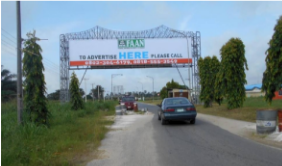



You’ve probably driven past a stretch of road where the same brand followed you from one pole to the next. Ten seconds later, you could already recall the message without trying.
That’s not accidental. That’s strategy.
Lamp post advertising in Nigeria is becoming a powerful part of modern outdoor campaigns, especially in busy urban corridors where attention is short but repetition is strong.
While many brands focus only on large billboards, street-level formats like lamp post ads play a different and strategic role in the broader billboard landscape.
In this article, you’ll discover what lamp post advertising really is, how it works, how it compares to traditional billboards, what it costs, common mistakes brands make, and how to plan it properly within a structured OOH strategy in Nigeria.
What Is Lamp Post Advertising in Nigeria?
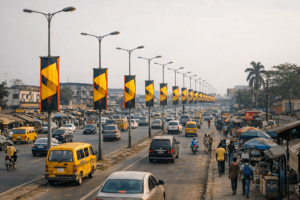
Lamp post advertising in Nigeria is a street-level outdoor advertising format that uses branded banners mounted on light poles along busy roads and commercial corridors.
The strength of lamp post ads lies in frequency; drivers, pedestrians, and commuters see the same message several times within a short distance, which improves brand recall and visibility in high-traffic urban areas.
How Lamp Post Advertising Works
Lamp post advertising works through frequency and positioning.
Instead of placing one large board in a single location, a brand books multiple poles along a defined route. The banners are installed at eye level, making them visible to drivers in slow-moving traffic and pedestrians on busy streets.
For example, imagine a new supermarket opening in Lekki. If their message appears on 25 consecutive lamp posts leading to the store, commuters are repeatedly reminded of the launch before they even arrive. That repetition builds awareness faster than a single display would.
The strategy depends heavily on:
- Route selection
- Traffic density
- Clustering of poles
- Campaign duration
When planned correctly, lamp post advertising in Nigeria becomes a strong reinforcement tool within a wider outdoor campaign.
Common Locations for Lamp Post Ads in Nigerian Cities
Location determines performance. Not all roads deliver the same value.
In Nigeria, lamp post ads are commonly found in:
- Commercial districts in Lagos (e.g., major business and retail corridors)
- High-traffic routes in Abuja
- Event and hospitality zones in Port Harcourt
- Market clusters and city centers in Ibadan
They perform best in areas with:
- Slow-moving traffic
- Dense pedestrian activity
- Retail-heavy surroundings
- Event-driven footfall
Why Lamp Post Advertising Is Gaining Popularity in Nigeria
Urban traffic in Nigeria has changed how outdoor visibility works. In cities like Lagos and Abuja, vehicles move slowly during peak hours, and pedestrians dominate commercial areas. This shift has made street-level advertising more powerful than many brands realize.
Lamp post advertising in Nigeria thrives in dense, high-movement environments where repetition matters more than size.
High-Frequency Street-Level Visibility
Lamp post ads are positioned closer to eye level. Drivers sitting in traffic, pedestrians crossing the road, and commuters waiting at bus stops see the message clearly and repeatedly.
If a brand occupies 30 consecutive poles on a busy road, that message is reinforced multiple times within minutes. This frequency improves recall and makes the campaign harder to ignore.
Cost Accessibility for SMEs
Large billboards require higher budgets, especially in prime locations. Lamp post ads offer a more accessible entry point.
For small and medium-sized businesses, this means:
- Lower upfront investment
- Ability to dominate a specific corridor
- Flexible campaign duration
Instead of competing for one premium billboard, an SME can own a full stretch of road.
Ideal for Event and Short-Term Campaigns
Lamp post advertising works well for time-sensitive campaigns.
Product launches, concerts, political rallies, store openings, and seasonal promotions benefit from corridor branding. When people repeatedly see a countdown message on their daily commute, awareness builds quickly.
Strong Presence in Urban Commercial Zones
Lamp post ads perform best in retail-heavy areas.
Think about busy shopping districts, market clusters, banking hubs, and restaurant corridors. These locations already have high commercial intent. Street-level visibility in these zones increases the chance of immediate action.
Lamp Post Ads vs Traditional Billboards in Nigeria
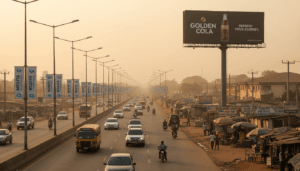
Lamp post ads and traditional billboards serve different strategic purposes. Choosing one over the other without understanding their roles can limit campaign performance.
While both are forms of outdoor advertising in Nigeria, they differ in scale, reach, and impact.
Visibility and Reach
Billboards dominate from a distance. They are elevated, large, and designed for mass visibility.
Lamp post ads operate at a closer range. Their strength lies in repetition rather than size.
Cost Structure
Traditional billboards often require higher investment per structure, especially in premium highways and city gateways.
Lamp post advertising in Nigeria typically follows a per-pole pricing model, making it more flexible. Bulk bookings often reduce the cost per unit.
Campaign Objectives
Billboards are ideal for:
- Brand dominance
- Nationwide recognition
- High-impact visual campaigns
Lamp post ads are ideal for:
- Corridor awareness
- Retail proximity marketing
- Event promotion
- Local brand reinforcement
National Scalability
Scaling billboard campaigns across multiple cities requires structured inventory access and coordinated planning.
Lamp post campaigns can scale, but coordination becomes complex without a centralized planning system, especially when dealing with different states and approval processes.
| Factor | Lamp Post Ads | Traditional Billboards |
| Visibility Type | Eye-level, repeated exposure | Elevated, large-format dominance |
| Reach | Corridor-based | Wide-area coverage |
| Cost Model | Per pole | Per board |
| Budget Entry Level | Lower | Higher |
| Best For | Events, retail zones, localized campaigns | Mass awareness, brand authority |
| Scalability | Route-focused | City-to-city expansion |
| Impact Driver | Frequency | Size and prominence |
Cost of Lamp Post Advertising in Nigeria
One of the first questions brands ask is simple: how much does lamp post advertising in Nigeria cost? The answer depends on several planning variables.
Unlike fixed-price media channels, outdoor advertising is influenced by location quality, traffic strength, and regulatory factors.
Understanding what drives pricing helps brands plan smarter and avoid overpaying for low-impact routes.
What Determines Pricing?
Several key factors influence the cost structure:
Location
Prime commercial roads in Lagos cost more than secondary streets in smaller cities. High-demand corridors command higher rates because of their visibility and traffic concentration.
Traffic Volume
The higher the daily traffic count, the higher the exposure value. Roads with consistent congestion often attract premium pricing because they guarantee longer viewing time.
Duration
Lamp post advertising is usually priced monthly. Longer bookings may attract better negotiation leverage, especially for bulk campaigns.
Quantity
Most providers charge per pole. Booking 10 poles will cost significantly less than booking 100. However, effective campaigns often rely on clustering rather than scattered placements.
State Permits and Regulatory Fees
Outdoor advertising in Nigeria requires regulatory compliance. Permit fees and approval processes can influence total campaign cost, especially across multiple states.
Without structured inventory systems, comparing pricing across cities can be difficult. Transparent planning improves budget clarity.
Average Cost Considerations in Major Cities
While exact pricing varies, here’s what typically affects city-based cost differences:
- Lagos: Premium pricing in high-traffic commercial zones and major corridors.
- Abuja: Strong rates in central business districts and government-heavy routes.
- Port Harcourt: Competitive rates in oil and commercial corridors.
- Ibadan and other cities: Generally more affordable but highly dependent on route quality.
Brands should focus less on the cheapest poles and more on strategic routes. A well-selected 30-pole corridor can outperform 80 poorly placed poles.
What Most Brands Get Wrong About Lamp Post Advertising
Lamp post campaigns often underperform, not because the format is weak, but because the strategy is flawed. Many brands approach it casually, without proper structure.
Here are the most common mistakes.
Treating It as a Standalone Strategy
Lamp post advertising in Nigeria works best as a reinforcement tool. When used alone without billboard support or digital amplification, its impact may be limited.
It performs strongest when integrated into a broader OOH strategy.
Ignoring Location Clustering
Scattered poles across unrelated areas dilute impact.
Effective campaigns dominate a defined route. Repetition within a single corridor builds recall. Random placements weaken visibility.
Poor Creative Design
Lamp post banners are smaller than billboards. Overcrowded designs fail quickly.
Best practices include:
- Minimal text
- Large fonts
- Strong contrast
- One clear message
If drivers cannot read it in three seconds, it will not work.
Overlooking Approval Requirements
Regulatory compliance is often underestimated.
Outdoor advertising requires proper approvals, including ARCON oversight and state-level authorization. Delays and removals happen when this step is ignored.
Brands that plan avoid interruptions and protect campaign investment.
How to Plan an Effective Lamp Post Advertising Campaign in Nigeria

Lamp post advertising in Nigeria delivers results when planning is intentional. Because it relies on repetition and corridor dominance, random execution reduces impact. A structured approach ensures the campaign is visible, compliant, and aligned with business goals.
Here’s how to plan it properly.
Define Campaign Objective
Start with clarity.
Are you promoting:
- A new store opening?
- A limited-time offer?
- An event?
- A brand awareness campaign?
If the goal is retail traffic, poles should lead toward the store location.
If it’s event awareness, banners should dominate routes leading to the venue.
Clear objectives determine placement density and route selection.
Choose Strategic Locations
Not every busy road is strategic.
Focus on:
- High-traffic corridors
- Commercial districts
- Routes with slow-moving vehicles
- Areas close to your target audience
For example, a fintech brand targeting young professionals may focus on business districts rather than residential areas. Location strategy matters more than the number of poles.
Ensure Regulatory Compliance
Outdoor advertising in Nigeria operates within regulatory frameworks. Approval processes vary by state and may involve oversight from regulatory bodies such as the Advertising Regulatory Council of Nigeria (ARCON), along with local authorities.
Delays, removals, or penalties can occur when compliance is ignored. Early coordination prevents campaign disruption and protects the budget.
Integrate with Broader OOH Strategy
Lamp post ads are powerful reinforcement tools.
They work best when combined with:
- Static billboards
- LED billboards
- Transit advertising
- Digital campaigns
For example, a brand launching nationwide can use billboards for city dominance and lamp post ads for corridor reinforcement in key commercial areas. Layered visibility increases recall and strengthens campaign impact.
The Role of Structured OOH Platforms in Lamp Post Campaigns
Nigeria’s outdoor advertising industry is still fragmented. Inventory is often scattered across different owners, with inconsistent documentation and varying pricing models. This makes campaign coordination difficult, especially for brands operating across multiple cities.
Structured planning platforms reduce this complexity.
Verified Inventory
Access to verified lamp post locations ensures:
- Accurate placement
- Clear documentation
- Reliable availability
- Reduced risk of duplication
Verified listings improve planning confidence.
Transparent Planning
Without transparency, brands struggle to compare:
- Locations
- Traffic value
- Pricing structures
- Campaign duration options
Structured directories bring clarity to decision-making and reduce guesswork.
National Coordination
Scaling lamp post advertising in Nigeria across Lagos, Abuja, Port Harcourt, and other cities requires coordination.
A centralized infrastructure makes it easier to:
- Plan multi-city campaigns
- Standardize creative deployment
- Align timelines
- Monitor execution
National campaigns demand structured oversight.
Approval Guidance
Regulatory compliance differs across states. Structured OOH platforms simplify this by guiding approval requirements and documentation processes.
This reduces delays and ensures smoother campaign rollout.
In a fragmented landscape, structure becomes a competitive advantage. Brands that plan with verified data and coordinated systems execute more confidently and achieve stronger campaign outcomes.
Conclusion
Lamp posts advertising in Nigeria are not a replacement for billboards. It is a reinforcement tool.
It strengthens corridor presence, increases frequency, and improves recall.
For brands planning structured, multi-location outdoor campaigns, visibility must be strategic, verified, and coordinated.
The future of OOH in Nigeria belongs to brands that plan with data, location clarity, and national coordination in mind.
FAQs About Lamp Post Advertising in Nigeria
What is lamp post advertising in Nigeria?
It is a street-level outdoor advertising format using banners mounted on light poles.
How much does lamp post advertising cost in Nigeria?
Costs vary by location, duration, and quantity of poles booked.
Are lamp post ads effective?
Yes, especially for high-frequency corridor exposure and event promotions.
Do lamp post ads require ARCON approval?
Yes. Regulatory compliance is necessary before installation.
Are lamp post ads better than billboards?
They serve different purposes. The best strategy often combines both.
READ MORE:
How to Launch a Billboard Campaign in Nigeria
LASAA & ARCON Regulatory: Permit, Fees, and Categories