

Billboards in Nigeria remain one of the most powerful tools for visibility, brand building, and audience influence. With Nigeria’s unique urban traffic patterns and high commuter exposure, outdoor advertising consistently delivers high impact, but assessing return on investment (ROI) has historically been a challenge.
This article breaks down everything you need to understand about measuring ROI for billboard advertising in Nigeria. We’ll walk through the key drivers of ROI, modern tracking methods, how impressions and engagement are quantified, real conversion metrics, practical case examples, common challenges, and how to maximize the impact of your billboard campaigns.
Why Billboard Advertising Still Works in Nigeria
Before we talk about ROI measurement, you need to understand why the medium delivers value in the first place.
Nigeria’s outdoor advertising environment is shaped by several structural realities:
1. High Visibility & Traffic Congestion
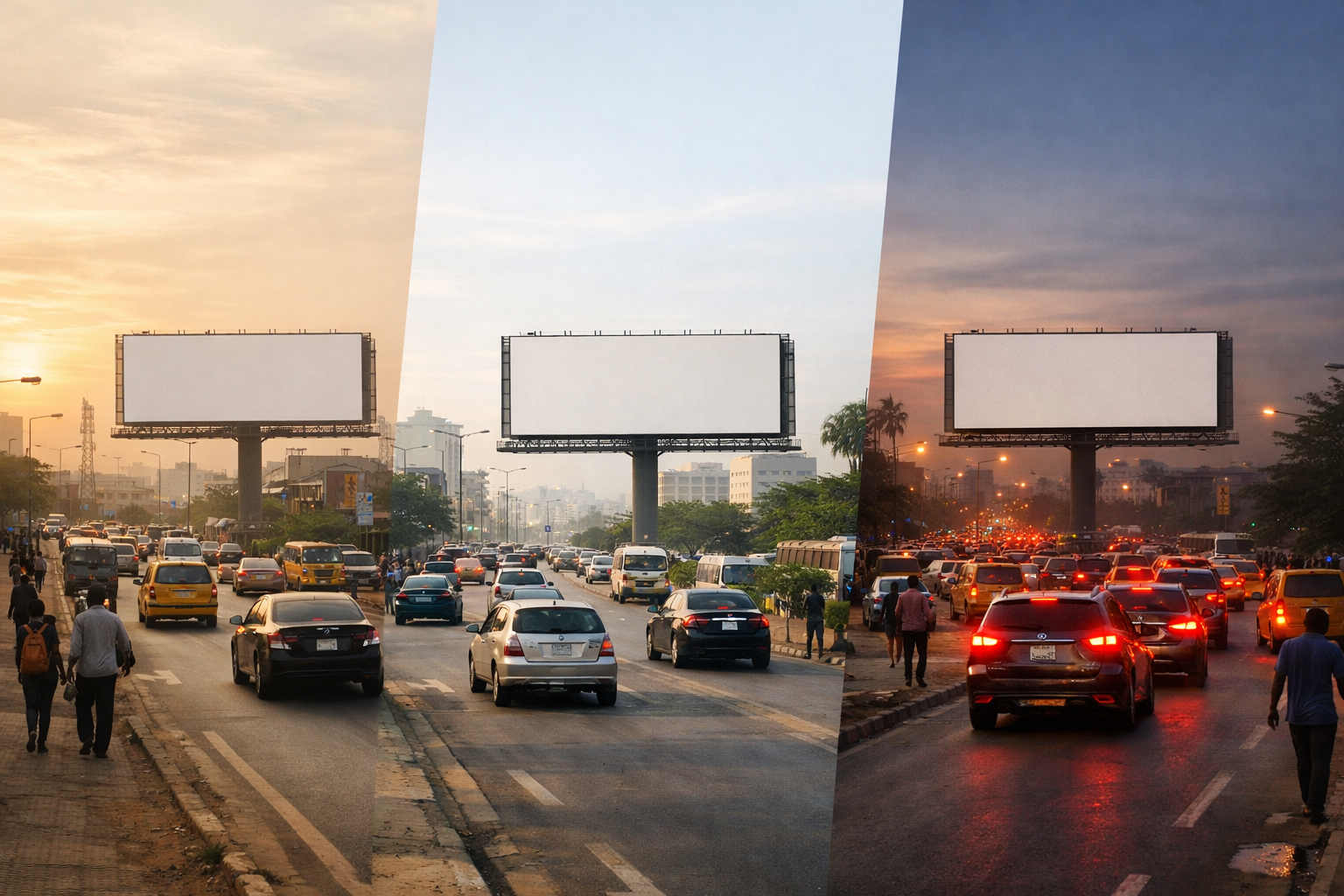
Billboards in major urban corridors such as the Lekki-Epe Expressway and Third Mainland Bridge command attention because of heavy, daily commuter traffic. These roads are often slow‑moving or congested, giving viewers extended exposure to ad content. Large daily impression counts, often hundreds of thousands per prime site, provide the raw visibility potential that drives ROI.
2. Constant Exposure Without Interruptions
Billboards operate 24/7. They can’t be skipped like online ads or turned off like the radio. This always‑on visibility means even intermittent viewers repeatedly see campaigns, reinforcing message retention organically.
3. Brand Perception and Credibility
Large-format media such as unipoles and gantries signify scale and prestige. In markets like Lagos and Abuja, a campaign’s physical presence often translates into perceived stability and professionalism, which in turn influences brand trust and purchase decisions.
4. Audience Reach and Awareness
Local research in Nigeria shows that OOH formats, especially billboards, rank highly in consumer awareness, often second only to more measurable media. Respondents in a GeoPoll study reported noticing billboards regularly, and many acted on the information seen, such as recalling brands or seeking further details.
All of this explains why outdoor advertising continues to attract investment, but it does not yet answer how to measure ROI.
Understanding ROI in Billboard Advertising
Traditionally, billboard ROI was more art than science. For decades, advertisers were happy to talk about “reach” and “brand lift” without hard numbers. That is no longer acceptable for serious marketers.
ROI = (Gains from Investment − Cost of Investment) / Cost of Investment × 100
So if a billboard campaign costs ₦1,000,000 and generates ₦5,000,000 in measurable outcomes, the ROI is:
(₦5,000,000 − ₦1,000,000) / ₦1,000,000 × 100 = 400% ROI
But the key to ROI is measuring outcomes — and that’s what this section focuses on.
1. Core ROI Drivers in Nigeria
High Traffic & Visibility
Because billboards in Nigeria are placed along congested transport corridors, they benefit from extended dwell time. That increases the likelihood of message retention compared to faster or more transient media.
In Lagos, for example, heavy commuter traffic extends exposure duration. This improves opportunities to imprint brand messages and creates more chances to act later.
Demographic Targeting Through Location
Billboards can be placed purposefully to reach specific demographic segments. Premium commercial zones like Victoria Island or Lekki attract professional, high‑income audiences, while neighborhood streets capture residents and shoppers. This targeting improves the likelihood of converting impressions into action.
Brand Credibility and Recall
Consumer studies indicate that clear, well‑designed billboards are remembered and associated with credibility. While online ads often generate passive views, outdoor ads create a lasting mental model for viewers.
2. Modern Methods to Measure Billboard ROI
Gone are the days when billboard ROI was estimated using rough formulae alone. Today, marketers use both quantitative and qualitative data to assess performance.
Below are the most effective methods currently used:
A. QR Codes & Unique URLs
Adding QR codes or branded landing pages/features to a billboard allows direct tracking of interaction. This method generates clear attribution:
-
QR scans are linked to specific campaigns
-
Unique URLs allow tracking of web traffic tied to billboards
-
Promo codes tied to billboards can directly measure conversions
Tools like Google Analytics or dedicated QR analytics platforms can break down user sessions that originate from billboard interactions.
How to calculate direct ROI:
-
Track total conversions from QR scans or unique URL visits
-
Multiply by average revenue per conversion
-
Subtract campaign cost
-
Divide by campaign cost and convert to a percentage
This gives a measurable ROI number tied to specific consumer actions.
B. Call Tracking with Dedicated Phone Numbers
By assigning a unique phone number to a campaign, marketers can attribute incoming calls to billboard viewers. Call tracking software captures:
-
Call volume
-
Duration
-
Call source
-
Conversion outcomes
This is especially useful for service‑based businesses where phone inquiries lead to consultations or appointments.
C. Foot Traffic Tracking and Sales Lift Analysis
For physical retail stores, billboards can drive foot traffic. Tools that measure footfall before, during, and after campaigns reveal whether billboard exposure influences consumer presence, and local sales data can confirm revenue impact.
Some firms like Retinad Limited’s analytics provide location‑based foot traffic insights, enabling precise attribution of increased store visits to billboard exposure.
D. Brand Awareness Surveys
Surveys conducted before and after billboard exposure offer insight into how well a campaign improved awareness and recall. Cloud surveys or mobile surveys targeting specific geographic areas can reveal changes in brand recognition due to the campaign.
E. Digital Integration and Multi‑Channel Attribution
Combining OOH with digital tracking tools, such as using UTM parameters on unique URLs, bridges offline exposure with online behavior. If billboard viewers visit your site and convert, you can often trace that sequence with web analytics tools.
3. Quantifying Impressions and Audience Reach
Unlike digital platforms that report exact click counts, billboard metrics are calculated using:
Impressions (Daily Effective Circulation / DEC)
Traffic data along billboard locations informs estimates of impressions, a key input to ROI analysis. For example, if a prime Lagos site is estimated at 500,000 daily impressions, a 30‑day campaign would theoretically deliver ~15 million opportunities to see.
Opportunities to See (OTS)
This measure reflects how many times an average person might encounter the ad over a campaign period.
Impressions and OTS together give you the reach and frequency statistics needed for media planning.
4. Conversions: Leads, Foot Traffic, Revenue
To turn impressions into measurable ROI, marketers track:
-
Leads: Calls, form submissions, landing page visits
-
Foot Traffic: Store visits or location visits
-
Qualified Sales: Revenue generated directly after billboard exposure
Example: A 12‑week billboard campaign using six strategic sites generates 847 leads, with a 23% conversion rate and resulting sales revenue attributable to billboard exposure (your provided statistic).
5. Cost vs. Return Benchmarks in Nigeria
Typical costs for billboard advertising in Nigeria (2024–2025 estimates) include:
-
Digital LED Boards: ₦1 million – ₦10 million+ monthly
-
Static Billboards: ₦160,000 – ₦3.5 million monthly
-
Gantry/Large Installations: Up to ₦50 million for premium cases
ROI potential varies by campaign design, location, and integration with digital and offline channels. Some benchmarks suggest campaigns can deliver several times return on every naira spent, with high‑performing efforts reaching up to 6x ROI or more when direct response tracking is effectively implemented.
6. Factors That Impact ROI
Location Matters Most
Prime, high‑traffic locations cost more but deliver higher‑quality impressions and better conversion potential. A billboard near a congested expressway will generate far more impressions and potential actions than one on a quiet road.
Creative Design and Clarity
Billboards are read in seconds. The “three‑second rule” applies; if your message is not absorbed within a few seconds, it won’t convert. Clear, bold visuals backed with strong calls to action (QR codes, phone numbers, simple URLs) improve response rates.
Format Choice: Static vs Digital
Digital boards allow scheduling by time of day and dynamic messaging. This flexibility often boosts ROI by matching creative content to audience context throughout the day.
7. Practical Challenges to Measuring ROI
Even with modern tools, certain challenges persist:
-
Non‑linear Attribution: Many customers see billboards and later interact with another channel first (search, social), complicating attribution models.
-
Data Integration: Bridging offline exposures with CRM and web analytics requires planning.
-
Traffic Variability: Not all traffic converts; understanding the demographics behind impressions is key.
-
Regulatory Compliance: All billboard ads must be vetted by APCON in Nigeria, ensuring proper display, but adding an approval layer to campaigns.
8. Strategic Framework to Maximize Billboard ROI
Based on best practices and local market realities, here are actionable strategies:
A. Use High‑Traffic Locations with High Dwell Time
Target congested expressways and commercial routes for maximum exposure.
B. Combine with Digital Channels
Bridge offline impact with online analytics using QR codes, URLs, and branded landing pages.
C. Choose the Right Billboard Format
Use large, bold boards for brand awareness and digital LED boards for direct response or time‑sensitive campaigns.
D. Negotiate Long‑Term Placements
Longer campaigns reduce cost per effective impression and allow better frequency that improves recall.
E. Track Multiple KPI Layers
Don’t rely on one metric; combine traffic estimates, QR engagement data, call tracking, sales figures, and brand survey lift metrics for a holistic view.
Conclusion
ROI measurement for billboard advertising in Nigeria is no longer a guessing game. With the adoption of QR codes, call tracking, unique URLs, foot traffic analytics, and multi‑channel attribution frameworks, brands can now tie outdoor exposure directly to leads, sales, and engagement metrics.
In Nigeria’s high‑traffic urban culture, where millions of commuters interact with outdoor ads daily, billboards provide high visibility and a reliable platform for brand reach and conversion. By integrating modern measurement tools and strategic planning, marketers can unlock transparent and accountable ROI, bridging offline exposure with real business outcomes.