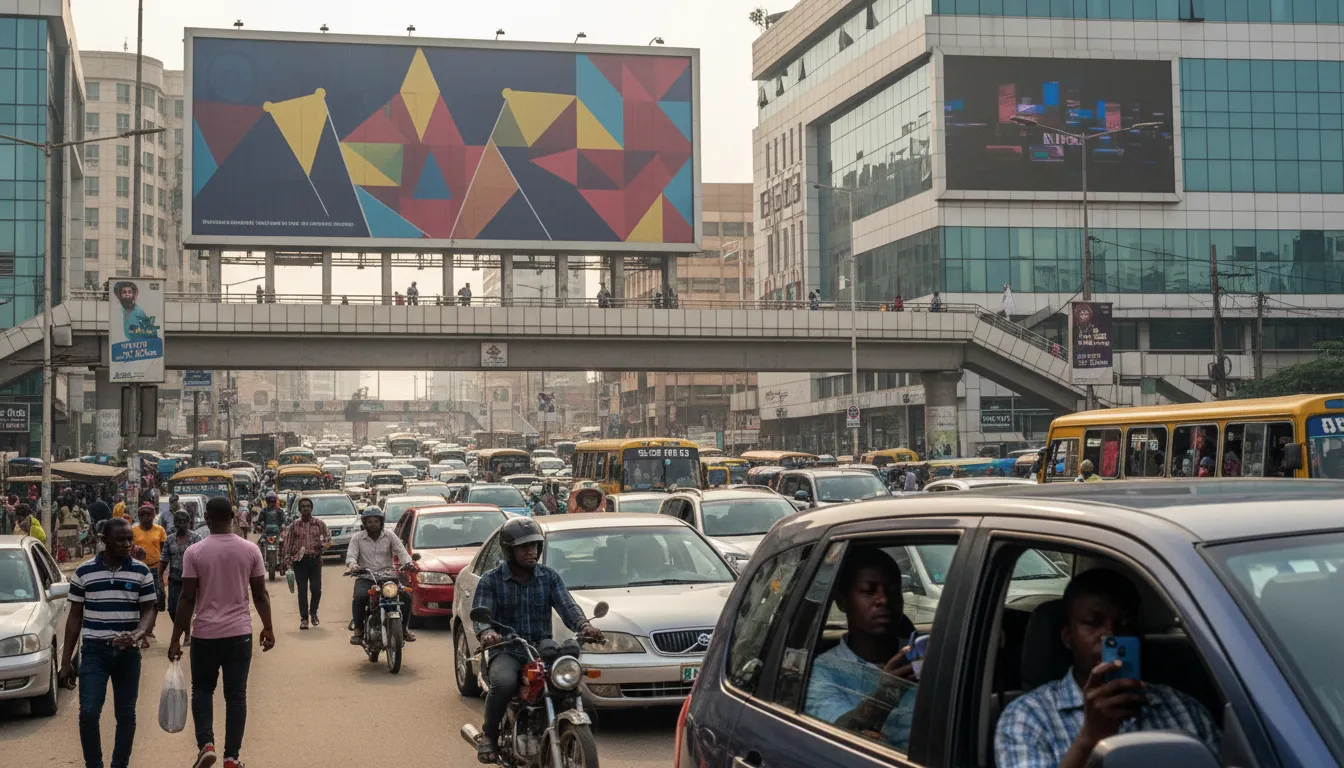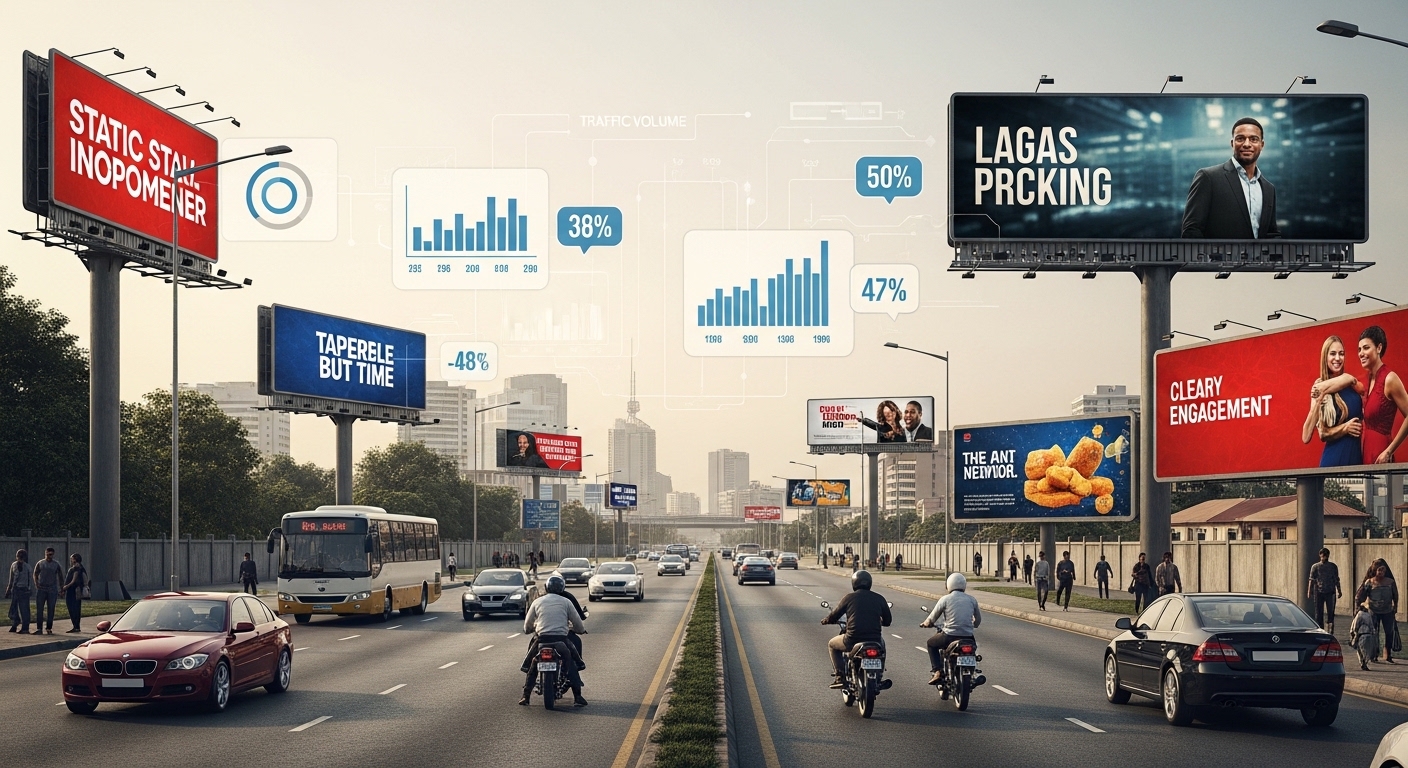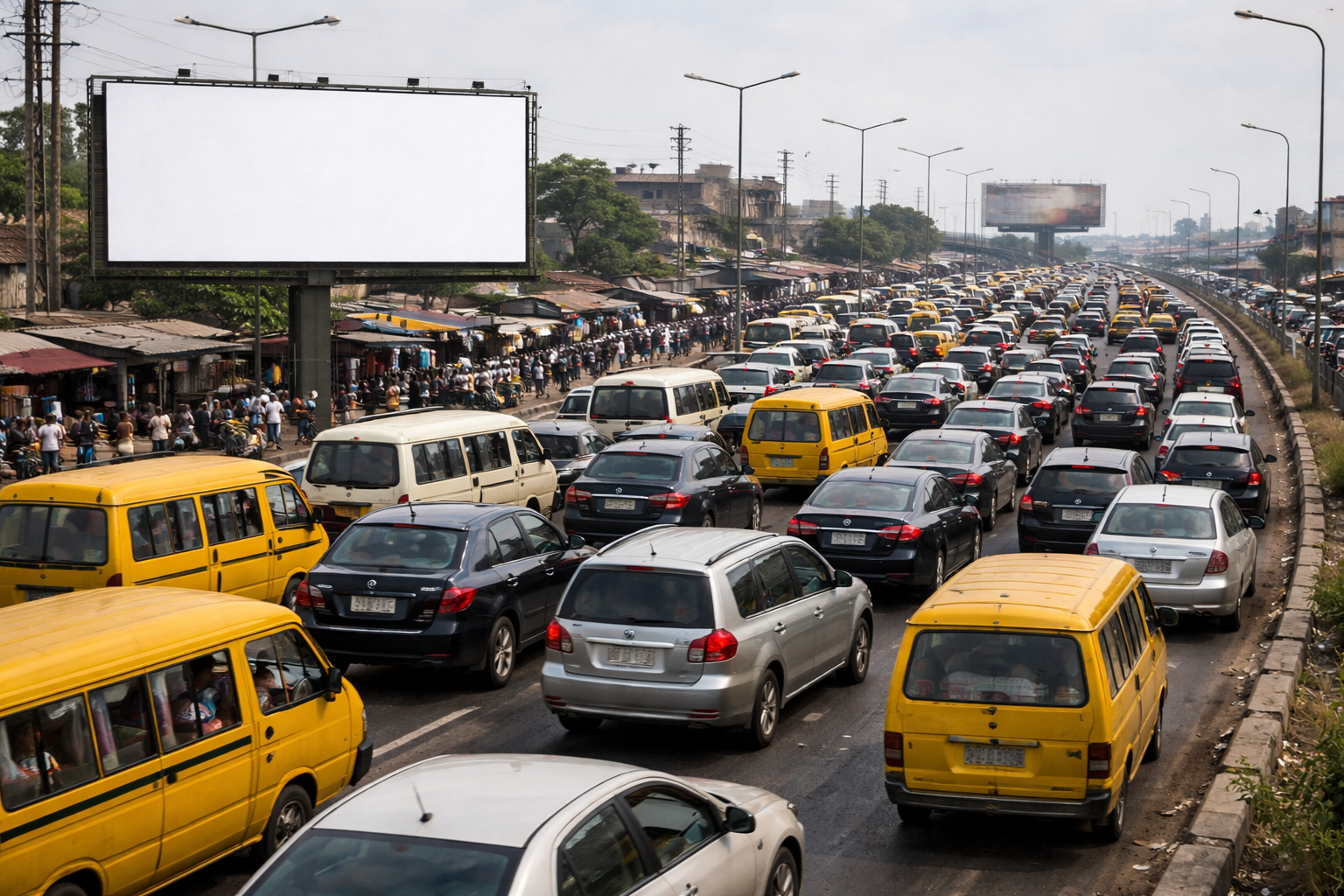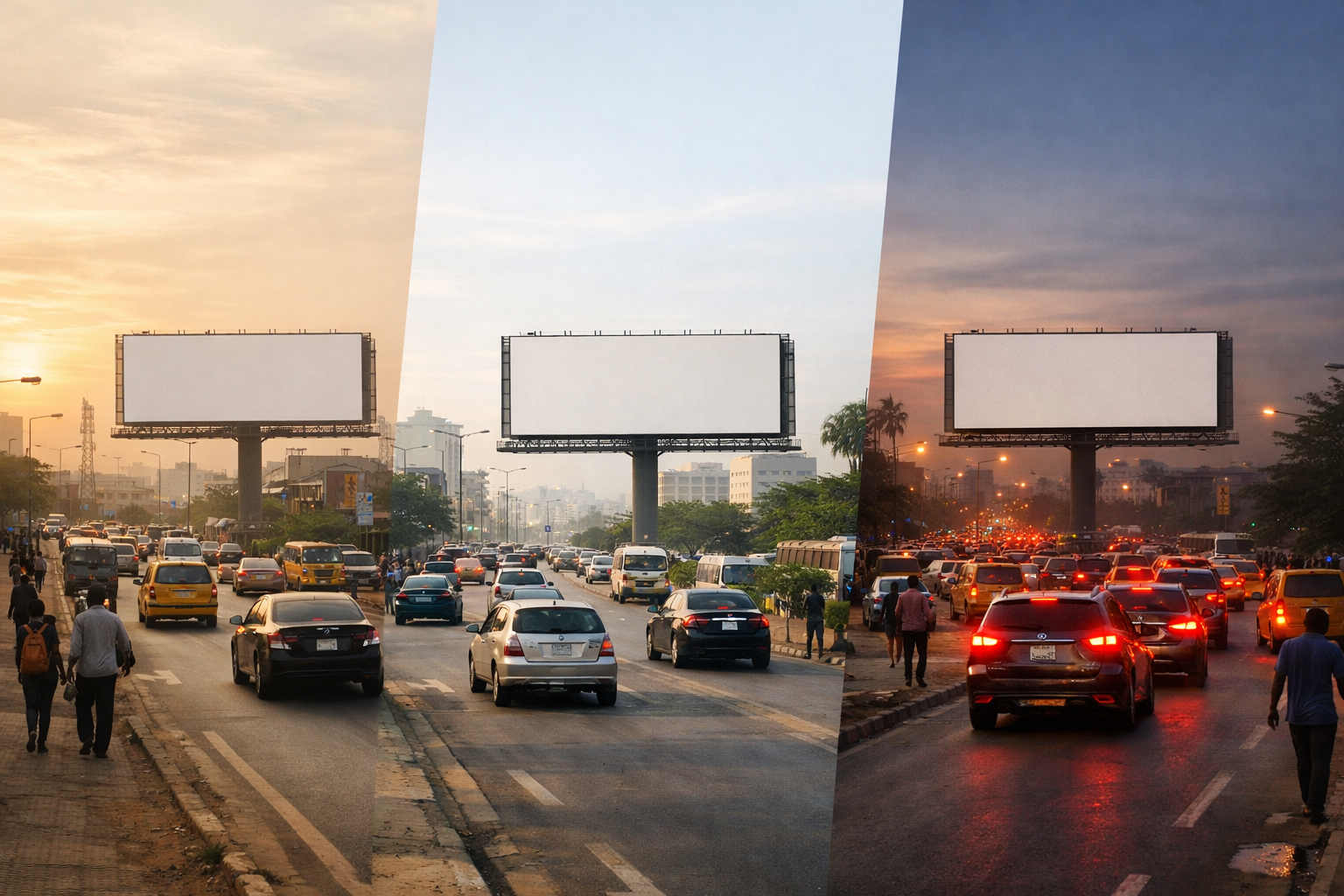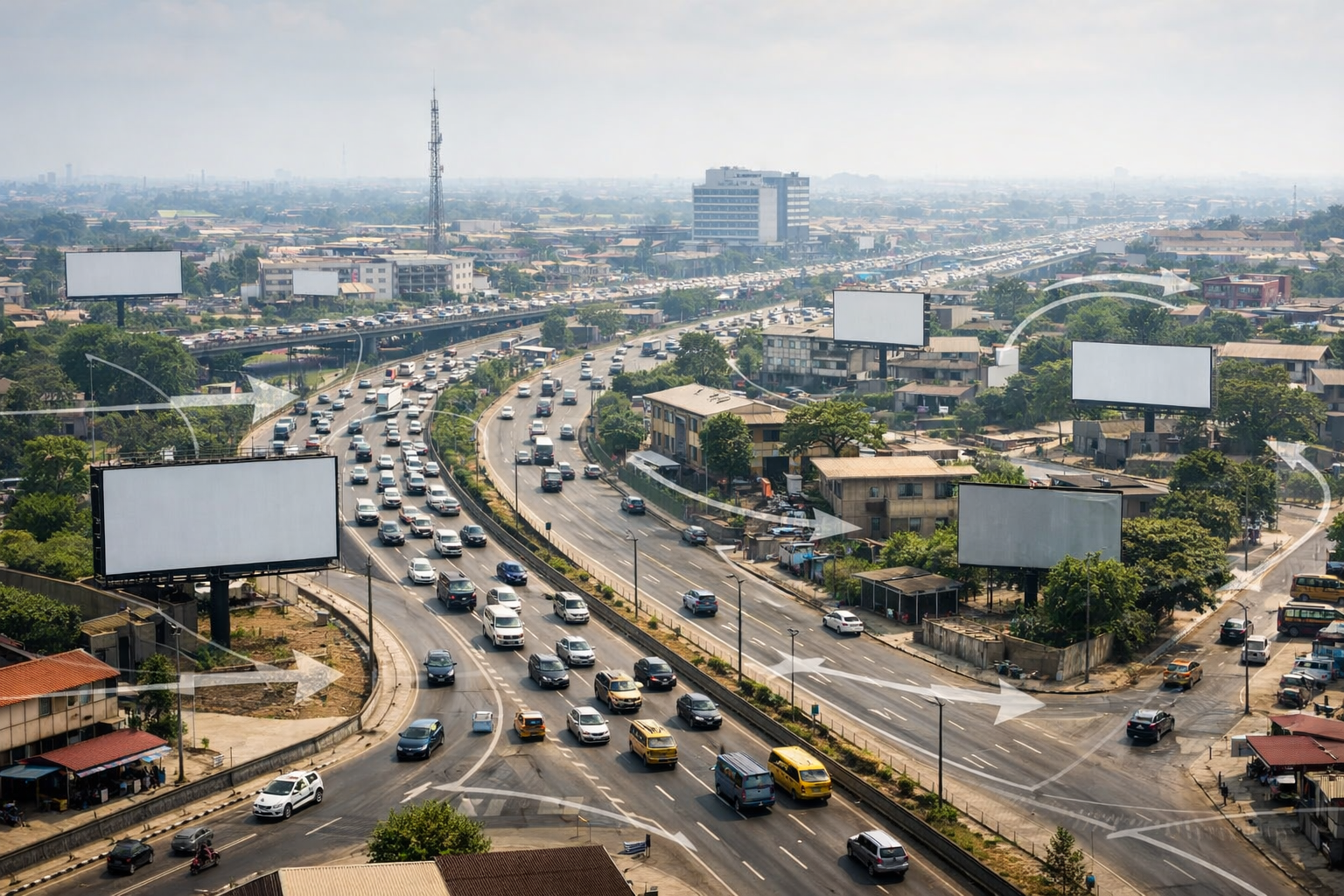


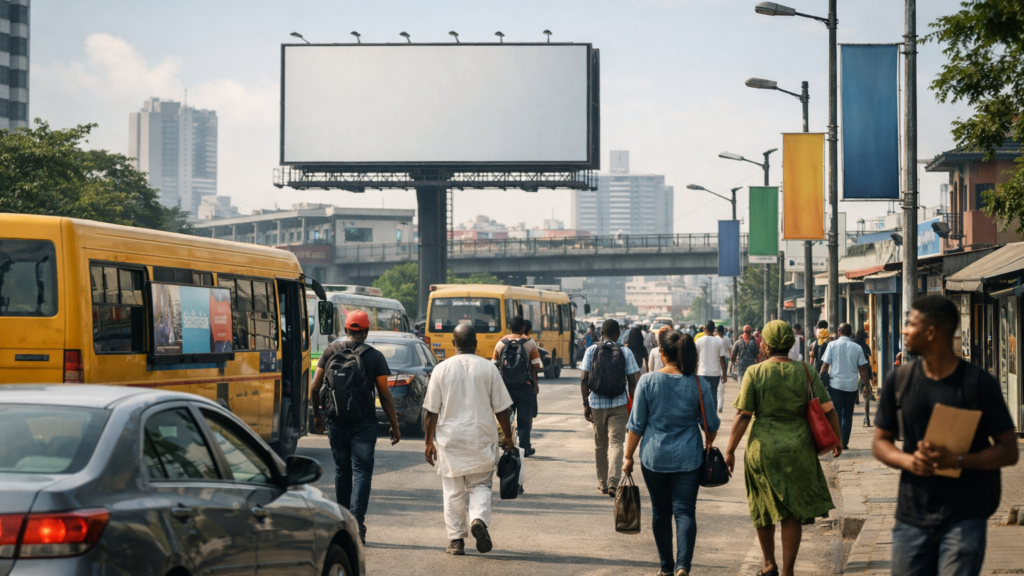
If you’ve ever been stuck in traffic in Lagos, you already understand billboard advertising, even if you didn’t think about it that way.
You’re sitting in one spot for minutes, sometimes hours, and the same signs keep staring back at you until you can almost recite them from memory.
That’s exactly how billboard advertising works. Billboard advertising is the use of large outdoor signs placed along roads, highways, and busy areas to promote a brand, product, or message to people as they move around their daily lives.
In this article, we’ll break down what billboard advertising really means in the Nigerian context, why businesses use it, and how it fits into a broader outdoor advertising (OOH) strategy.
What Is Billboard Advertising in Nigeria?
Billboard advertising in Nigeria is a form of outdoor advertising where businesses place large advertising boards along roads, highways, and busy public areas to display their message to people as they move around.
These boards are designed to be seen repeatedly by drivers, commuters, and pedestrians during their daily routines.
Once a billboard is installed, it stays visible for weeks or months, allowing the same people to see the message over and over again as they pass that location.
This is very different from online ads or radio commercials. Digital ads compete for attention on screens and can be skipped, while radio ads are heard once and forgotten.
Billboard advertising doesn’t interrupt people; it becomes part of their environment. Whether someone is driving to work, stuck in traffic, or walking past a busy road, the billboard is simply there, quietly reinforcing the message.
What Is the Purpose of Billboard Advertising?
The main purpose of billboard advertising is to keep a brand visible in people’s everyday lives. Unlike ads people scroll past or skip, billboards stay in one place, quietly doing their job over time.
Below are the key reasons businesses use billboard advertising in Nigeria.
Brand Awareness and Visibility
One of the strongest reasons for using billboard advertising is repetition. In Nigeria, people often pass the same routes every day, going to work, school, or business. Seeing the same message repeatedly helps it stick.
Billboards help with:
- Repetition and recall, as people see the same ad multiple times
- High daily exposure, especially in traffic-heavy areas
Over time, even without trying, people begin to recognize the brand simply because it’s always there.
Supporting Marketing Campaigns
Billboards are often used to support other marketing efforts, not replace them. When people see a message offline and then encounter the same brand online, it feels familiar.
They are commonly used for:
- Product launches that need wide awareness
- Promotions and limited-time offers
- Event awareness, such as concerts, openings, or campaigns
In many cases, billboards act as a reminder that keeps a campaign top of mind.
Building Trust and Brand Presence
In Nigeria, physical presence still matters. Seeing a brand displayed boldly on a billboard can influence how people perceive it.
Billboards help with:
- Creating a sense of credibility and seriousness
- Showing that a brand is established and confident
- Balancing physical presence against digital-only advertising
While digital ads come and go, a billboard feels solid and real. For many audiences, that physical visibility builds trust faster than online ads alone.
Billboard Advertising as Part of Outdoor Advertising (OOH)
Billboard advertising doesn’t exist on its own. It is part of a broader group of advertising formats known as outdoor advertising, often called out-of-home (OOH) advertising.
Understanding this helps businesses see where billboards fit and how they work alongside other outdoor options.
What Is OOH Advertising in Nigeria?
OOH (Out-of-Home) advertising in Nigeria refers to any form of advertising that reaches people when they are outside their homes. This includes ads people see while commuting, walking, shopping, or moving around the city.
Common OOH formats in Nigeria include:
- Billboards along highways and major roads
- Transit ads on buses, taxis, and BRT vehicles
- Lamp post banners along streets and estates
- Bridge panels and wall-mounted ads
All these formats share one thing in common: they target people in real-world locations, not on screens.
How Billboard Advertising Fits Into an OOH Strategy
In an OOH strategy, billboards often serve as anchor placements. Because they are large and fixed, they create a strong, consistent presence in key locations. Other OOH formats then support that presence by extending reach and frequency.
For example, a business might use:
- A major billboard on a busy road to establish visibility
- Lamp post banners nearby to reinforce the message
- Transit ads to carry the campaign across different areas
When combined properly, billboard advertising strengthens the entire outdoor advertising effort. Instead of working alone, it helps other OOH formats feel connected and more effective.
Billboard Advertising vs Other OOH Formats
Outdoor advertising comes in different forms, and each one serves a purpose. Understanding how billboards compare with other OOH formats helps businesses choose what works best for their goals instead of guessing.
Billboards vs Transit Ads
Transit ads are placed on moving vehicles like buses, taxis, and BRTs. They travel across different routes and expose the message to multiple locations.
Billboards, on the other hand, stay in one fixed location and focus on repeated exposure. People see the same message every day along the same route, which helps with recall.
In simple terms:
- Transit ads are good for movement and coverage
- Billboards are better for consistency and strong location presence
If the goal is steady visibility in a specific area, billboards usually perform better.
Billboards vs Lamp Post Banners
Lamp post banners are smaller ads mounted along streets and estates. They are useful for local awareness and short-distance targeting.
Billboards are much larger and designed to be seen from a distance. They dominate their environment and attract attention even in busy areas.
The key difference is scale:
- Lamp post banners work well for neighborhood-level messages
- Billboards work best for broader awareness and a stronger impact
When Billboards Work Best
Billboard advertising works best when:
- The goal is brand awareness rather than instant action
- The message needs repeated exposure over time
- The target audience passes through the same routes daily
- The brand wants a strong physical presence in a key location
In many OOH strategies, billboards act as the main visibility driver, while other formats support and extend the message.
Why Billboard Advertising Still Works in Nigeria
Despite changes in media and technology, billboard advertising continues to work in Nigeria because it fits naturally into how people live, move, and commute every day.
Traffic Congestion
Traffic is a daily reality in many cities in Nigeria. Long hours spent on the road mean people have more time to notice what’s around them. When vehicles slow down or stop, billboards remain in full view, giving messages repeated attention without competing for clicks or screen space.
Urban Population Density
Major cities are densely populated, with large numbers of people moving through the same roads and intersections daily. This concentration of people increases the chances of the same message being seen by thousands of individuals over and over again.
Daily Commuting Patterns
Most people follow predictable routines, home to work, work to home, school runs, and market trips. Because these routes rarely change, billboards placed along them benefit from consistent exposure. Over time, the message becomes familiar simply because it’s always there.
Lagos vs Other Cities
Lagos stands out because of its population size, traffic volume, and commercial activity. Billboards in Lagos often receive more daily exposure than in other cities.
However, billboard advertising still works in places like Abuja, Port Harcourt, and Ibadan, especially when placements align with local movement patterns. The key difference is scale, not effectiveness.
When Should Businesses Use Billboard Advertising?
Billboard advertising is not something businesses should use randomly. It works best when there is a clear reason behind it and when expectations match what the medium is designed to do.
Campaign Goals
Billboards are most effective when the goal is visibility rather than instant action. They work well for building awareness, reinforcing brand presence, and supporting larger campaigns.
Businesses often use billboard advertising when they want people to recognize a name, product, or message over time.
Budget Considerations
Billboard advertising requires planning, not just spending. While some formats are more affordable than others, businesses should choose options that fit their budget without cutting campaign duration too short.
A well-planned billboard in the right location often performs better than an expensive one placed without strategy.
Duration and Timing
Timing plays a major role in billboard effectiveness. Short campaigns may not allow enough exposure for people to remember the message, while longer placements build familiarity.
Billboards work best when they run long enough to create recall and are timed to match audience movement, such as work commutes or seasonal activity.
Common Misconceptions About Billboard Advertising
Billboard advertising is often misunderstood, especially when compared to digital channels. These misconceptions usually come from expecting billboards to behave like online ads, which they are not designed to do.
“Billboards don’t convert”
Billboards are not meant to generate instant clicks or direct responses the way digital ads do. Their strength lies in awareness and recall.
A billboard works by keeping a brand visible so that when people are ready to make a decision, the brand already feels familiar. Conversion often happens later, through other channels.
“Digital ads are better”
Digital ads and billboard advertising serve different purposes. They are great for targeting and immediate actions, while billboards focus on broad visibility and repeated exposure.
In many successful campaigns, billboards and digital ads work together rather than competing with each other.
“Billboards are outdated”
Billboards may be traditional, but they are far from outdated. In Nigeria, where people spend long hours commuting and moving through busy areas, physical visibility still carries a strong influence.
Modern formats like digital billboards have also made outdoor advertising more flexible and relevant.
Conclusion
Billboard advertising in Nigeria is simply about placing a brand where people already are and allowing repeated exposure to do its work.
When used correctly, it helps businesses build awareness, stay visible, and support wider marketing efforts without competing for attention on screens.
The real value of billboard advertising comes from strategy, not random placement. Choosing the right locations, matching the format to campaign goals, and allowing enough time for recall make a noticeable difference. Billboards work best when they are planned thoughtfully and used as part of a broader outdoor advertising approach.
For businesses considering billboard advertising in Nigeria, working with a team that understands locations, formats, and audience movement can simplify the process.
Oxbillboards supports brands by helping them plan and execute billboard campaigns that align with real-world behavior and marketing objectives.
READ MORE:
Types of Billboard Advertising in Nigeria And Their Use Cases
30 OOH and Billboard Advertising Glossary of Terms in Nigeria